Do Drain Flies Look Like House Flies? Identification Guide
A detailed, analytical comparison helping homeowners tell drain flies from house flies, with visuals, lifecycle cues, and practical prevention steps.


Do drain flies look like house flies? No—drain flies look noticeably different. Drain flies are tiny, fuzzy mothlike insects a few millimeters long, while house flies are larger, smooth-bodied, and more robust. They rest with wings held rooflike over the body and are strongly associated with damp drains, not kitchen counters or open trash. For homeowners, the visual clues are the easiest first step for identification.
Do Drain Flies Look Like House Flies? Visual Clues and Quick Distinctions
A close look at identification often starts with answering the question: do drain flies look like house flies? In many homes, the answer is no. Drain flies (also called moth flies) are tiny and fuzzy, with moth-like wings that rest roofwise over the body. House flies are clearly larger, with a smooth, striped thorax and swift, darting flight patterns. The contrast in size, wing texture, and typical habitats helps homeowners separate these pests at a glance. This section will unpack the key morphological cues and situational cues that you can use in real-world settings, from the bathroom to the kitchen sink.
Note how the wings lie flat and give a triangular silhouette when at rest; that is a common hallmark of drain flies, while house flies display a broader, more reflective wing surface when perched.
Morphology and Visual Differentiation: Size, Wings, and Body Texture
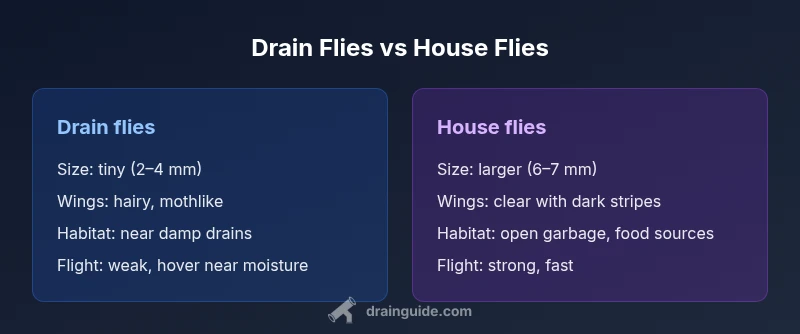
When asking do drain flies look like house flies, it helps to compare three concrete features side by side: size, wing texture, and resting pose. Drain flies are diminutive and hairy, with wings that appear fuzzy under normal room lighting. House flies are noticeably larger and have a smooth, almost glossy exoskeleton with distinctive thoracic stripes. In practice, this triad—tiny fuzzy wings, mothlike appearance, and proximity to moisture—points you toward drain flies and away from common house fly scenarios. Hydration and humidity levels around plumbing fixtures often accompany drain flies, reinforcing the identification cues.
Lifecycle, Habitat, and What That Means for Identification
A critical aspect of distinguishing drain flies from house flies is recognizing their life cycle habits and preferred habitats. Drain flies breed in organic biofilm inside drains, where moisture and debris create a perfect nursery. House flies breed in open waste, garbage, and compost, and they are usually found away from the immediate drain system. By tracking where you see active adults—near drains versus near food sources—you gain a practical clue about who is present in your home. Drain Guide emphasizes the connection between habitat and morphology as a reliable ID approach.
Species Overview and Subtle Distinctions
There are a few common drain fly species in homes, and their common trait is the hairy, mothlike wing structure. House flies, by contrast, belong to a larger family with smoother wing surfaces and more vivid color contrasts. Although identification in indoor settings can be challenging, focusing on wing shape, body hairiness, and typical landing sites will usually prevent misidentification. Drain flies seldom develop away from moisture, while house flies can appear in outdoor and indoor spaces linked to food and waste.
Common Misidentifications and How to Verify
Misidentification happens when you only glance at the insect. The most frequent mistake is mistaking tiny, fuzzy drain flies for tiny fruit flies or other small Diptera. A reliable check is to observe wing posture at rest, when the insect is disturbed, and when it rests near a drain. If you notice a mothlike silhouette, a hairy body, and frequent moisture in the environment, you are more likely dealing with drain flies. Drain Guide suggests confirming by inspecting the nearest drain and the organic buildup that accompanies it.
Visual Cues by Environment: Kitchen, Bathrooms, and Drains
In kitchens and bathrooms, drain flies tend to congregate around damp areas with organic buildup, whereas house flies are more attracted to exposed food sources and trash. Look for the tiny, fuzzy wings in dim lighting at the mouth of a drain, or near the P-trap where moisture collects. House flies will be more active in brighter spaces, around open garbage or standing food. Observational notes—time of day, light, and proximity to water—greatly aid differentiation.
Practical Steps for Identification and Verification
Start with a careful visual check against a size benchmark (a common household coin helps) and examine the wings for hairiness and resting posture. Next, observe the environment: are these insects seen chiefly at damp drains, or around food waste? If in doubt, capture a specimen briefly and place it on a white sheet to inspect wing shape and color more clearly. Drain Guide provides a quick-reference ID checklist that aligns morphology with habitat cues.
What to Do If You Suspect Drain Flies vs House Flies
Once identification is tentatively established, act to reduce breeding sites—drains, biofilm, and moisture—before considering chemical measures. For drain flies, cleaning the drain with enzymatic cleaners and flushing with hot water can disrupt reproduction. For house flies, focus on securing food sources, garbage management, and proper screens. The combined approach minimizes pest pressure and supports longer-term prevention.
Prevention and Cleanup: Reducing Moisture and Debris
Prevention hinges on reducing moisture and digestible organic matter near indoor drains. Regular cleaning, proper venting, and routine drain maintenance help keep drain flies at bay. Additionally, sealing access points and keeping surfaces dry reduces opportunities for both drain flies and house flies to establish themselves in living spaces. Drain Guide recommends a seasonal maintenance routine to maintain a dryer, cleaner home environment.
Quick Identification Checklist
- Tiny, hairy wings with a mothlike silhouette
- Resting posture with wings held rooflike over the body
- Proximity to damp drains and organic buildup
- Sign of weak flight near moisture rather than rapid, darting moves
- Size noticeably smaller than a typical house fly
Comparison
| Feature | Drain flies | House flies |
|---|---|---|
| Size (approx) | Very small (2–4 mm) | Medium to large (6–7 mm) |
| Wings at rest | Hinged rooflike over body; hairy appearance | Flat or slightly spread with clear wing stripes |
| Body texture | Hairy, fuzzy surface | Smooth, often glossy with thoracic stripes |
| Primary habitat | Near damp drains and biofilm | Open garbage, food sources, outdoor areas |
| Flight pattern | Weak, hovering near moisture | Strong, fast, exploratory flights |
| Typical signs | Mothlike silhouette; odor from drains | Visible garbage and food sources nearby |
Positives
- Improved ID accuracy reduces unnecessary treatments
- Targeted prevention focuses on root causes
- Low-cost, DIY-friendly identification cues
Cons
- Misidentification possible without careful observation
- Similar-looking species can blur distinctions
Drain flies are distinct from house flies; rely on morphology and habitat to identify accurately.
Use wing structure, hairiness, and drain proximity to distinguish. Then implement drain-focused prevention to reduce recurrence.
Got Questions?
Are drain flies dangerous to humans?
Drain flies are not known to bite or transmit diseases. They can be a nuisance and indicate moisture or biofilm problems that should be addressed.
No, drain flies don't bite or spread disease; they signal damp areas needing cleaning.
Do drain flies bite?
No. Drain flies do not bite or sting. They primarily feed on microorganisms in the film around drains.
No bites here—just a moisture issue to fix.
How can I tell drain flies from small fruit flies?
Drain flies have hairy, mothlike wings and a fuzzy body, while fruit flies are typically smaller with red eyes and a more smooth body.
Look for hairy wings versus clear, red-eyed fruit flies.
Can drain flies survive away from drains?
They reproduce best in moist, organic matter around drains, but adults can wander away from their breeding sites.
They prefer moist drains but may wander to other damp spots.
What is the best prevention method?
Clean drains regularly, fix leaks, improve ventilation, and seal entry points to prevent moist breeding sites.
Keep drains clean and dry to prevent them.
How long do drain flies typically live?
Adult drain flies live for a short period, but repeated breeding can occur if moisture remains. Addressing the moisture breaks the cycle.
Adults are short-lived, but breeding can continue if moisture remains.
The Essentials
- Identify by wing texture and resting pose
- Prioritize moisture control for drain flies
- Observe environment to confirm suspect pest
- Use a side-by-side visual check with a simple guide
- In doubt, consult a pest-identification resource