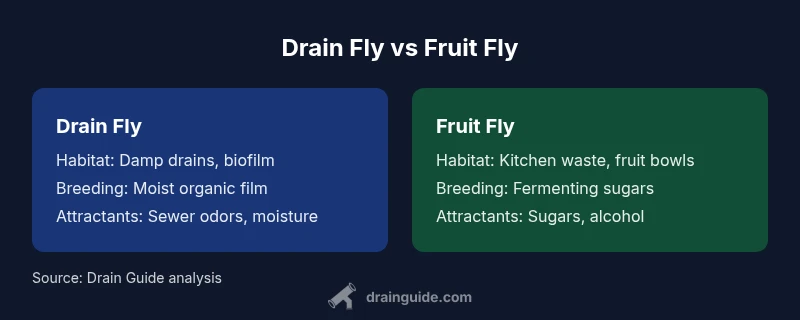
Drain Fly vs Fruit Fly: A Practical Home Guide
Learn to distinguish drain flies from fruit flies, identify breeding sources, and apply safe, effective control. Drain Guide explains step-by-step sanitation, traps, and prevention to stop infestations.


Drain fly or fruit fly? This comparison unpacks the key differences in appearance, breeding sources, and control approaches, helping homeowners identify and address infestations quickly. By focusing on distinct habitats and life cycles, you’ll apply targeted sanitation and traps for faster relief. Drain Guide provides practical, home-centered steps to prevent future problems and reduce chemical exposure.
What are drain flies and fruit flies? Definitions and quick IDs
Drain flies, also known as moth flies or sewer gnats, belong to the family Psychodidae. They favor damp, organic buildup in drains, sewer lines, and moist areas behind appliances. Fruit flies, in contrast, are small Drosophila species drawn to fermenting sugars around ripe fruit, beer, and other kitchen residues. If you’re deciding between drain fly or fruit fly, the quicker identification often points to different breeding sites and behaviors. The Drain Guide team notes that distinguishing them early saves time and money and prevents wasted treatments. Drain flies typically display moth-like, hairy wings held roofwise, while fruit flies are small, tan-bodied with red eyes. Recognizing these traits alongside nearby sources speeds up effective control.
Why the distinction matters in home pest control
Understanding the difference between drain fly and fruit fly problems changes everything about your plan. Each pest originates from different sources and responds to different sanitation and trapping methods. Misidentifying them can lead to ineffective products and extended harassment in your home. For example, treating a drain with generic pesticides may temporarily reduce numbers but won't remove larvae hiding in organic buildup. Conversely, ignoring overripe fruit and kitchen liquids can allow fruit flies to rebound after you’ve addressed a drain issue. A precise diagnosis lets you tailor sanitation steps, trap choices, and a realistic timeline. Drain Guide’s analysis shows that addressing both life cycles and sources yields the fastest relief, especially when moisture-rich areas support drain fly populations and kitchen waste attracts fruit flies.
Habitat and breeding sites: drain flies vs fruit flies
Drain flies breed in moist, organic films inside drains, catching basins, and plumbing gaps where residue accumulates. They prefer consistently damp, dark spaces and often cluster near bathroom or kitchen drains, garbage areas, or wet basements. Fruit flies breed on fermenting material such as overripe fruit, juice spillage, beer rings, and waste in compost or trash bins. They can also exploit damp mop heads, sink rims, and even unclean drains if organic buildup exists. Distinguishing habitat helps you target remediation: drain fly problems usually track to plumbing and moisture, while fruit flies track to food waste and fermentation sources. Drain Guide emphasizes mapping infestation hotspots to guide sanitation and trap placement.
Life cycle, reproduction, and seasonal patterns
Both pests cycle through egg, larval, and adult stages, with warm temperatures accelerating development. Drain flies thrive where moisture and organic films persist; adults emerge to feed and reproduce in those films, continuing the cycle as long as conditions stay favorable. Fruit flies reproduce quickly in warm kitchens where fermenting foods accumulate and are attracted to sweet scents. While the exact timing varies with temperature and food availability, you’ll often see rapid turnover during late spring and summer. By understanding the life cycle, you can disrupt breeding sites—drain-cleaning for drain flies and removing fruit sources for fruit flies—before populations spike.
How to identify which pest you have: practical signs
Accurately identifying drain fly or fruit fly comes down to signs and locations. Look for moth-like wings and a tendency to hover near drains for drain fly populations. If you notice small, red-eyed, tan insects around fruit or sugary liquids, you’re likely dealing with fruit flies. Activity near kitchen fruit bowls, trash bins, or recycling containers points to fruit flies, while buzzing around drains and damp pipes suggests drain flies. Visual cues combined with source observation are a reliable method for distinguishing the two. Drain Guide recommends cataloging suspect sites and monitoring with simple traps to confirm species before applying any treatment. Identifying the culprit sets you up for targeted sanitation and more effective trapping.
Quick wins: sanitation basics that help both pests
Immediate sanitation is the backbone of an effective response to drain fly or fruit fly problems. Start with these steps:
- Repair leaks and ensure proper drainage so moisture can’t accumulate in problem areas.
- Clean sinks, drains, garbage disposals, and drain traps with hot water, enzymatic cleaners, or a safe household cleaner to remove organic films.
- Remove overripe fruit and minimize exposed produce; store fruit in the fridge if possible.
- Seal bags and dispose of kitchen waste promptly; keep trash bins closed and clean.
- Dry wet surfaces and improve ventilation in damp rooms. Following these steps reduces breeding sites for drain flies and removes attractants for fruit flies.
Traps and attractants: what works for each pest
Trapping effectiveness varies by pest. For drain flies, position sticky traps near drains or use attractant-based traps that draw adults from the moist zone. Enzymatic drain cleaners help reduce larval habitats when used as directed. For fruit flies, yeast-based or sugar-water traps placed near fruit bowls and trash cans are typically effective, and sticky traps can capture adults. Avoid overreliance on pesticides indoors; instead, focus on sanitation and targeted traps to interrupt the life cycle. Drain fly or fruit fly management improves when you deploy species-appropriate attractants and traps in concert with source removal.
Chemical controls: safe use and limitations
Chemicals indoors require caution. Use only products labeled for indoor use and follow all safety instructions. Targeted approaches—such as products designed for drain maintenance or traps with minimal bycatch—often work best and reduce exposure. Avoid spraying aerosols into drains or kitchen areas without understanding the impact on pets and people; broad-spectrum pesticides may kill beneficial insects and won’t address hidden breeding sites. For most homeowners, preventive sanitation and specific traps reduce reliance on active chemicals. Drain Guide recommends prioritizing non-chemical methods and reserving pesticides for severe, persistent cases with professional guidance.
When to escalate: professional inspection and remediation
If infestations persist after a thorough sanitation effort, or you cannot locate the breeding sites, it’s time to consider professional help. A licensed pest management professional can perform a targeted assessment, use specialized traps, and apply approved treatments to hard-to-reach areas such as inside wall voids or clogged drain lines. Early professional intervention often shortens the timeline and prevents recurring problems. Drain fly or fruit fly issues that stubbornly resist DIY methods usually indicate hidden breeding environments that require professional inspection.
Prevention blueprint: long-term strategies
A durable prevention plan focuses on eliminating moisture, food sources, and breeding sites. Core steps include:
- Maintain dry surfaces and fix leaks promptly.
- Clean drains regularly with enzyme-based cleaners to disrupt organic films.
- Store produce properly; refrigerate or discard overripe items.
- Keep kitchen and bathroom areas clean of standing water and residues.
- Use traps to monitor and catch adults while you tackle breeding sources.
- Schedule periodic maintenance of plumbing and waste lines to prevent future problems.
Troubleshooting: common scenarios and fixes
Scenario 1: You see flies near the kitchen sink but no obvious fruit sources. Focus on drain maintenance, check trap p-traps, and inspect for hidden organic buildup inside pipes. Scenario 2: The flies cluster near a compost bin. Improve compost management and ensure bin lids remain closed. Scenario 3: You notice both fly types in a bathroom with a leaky toilet. Repair the leak, clean the drain, and introduce targeted traps. In all cases, keep a log of locations and adjust sanitation based on where activity concentrates.
Comparison
| Feature | Drain Fly | Fruit Fly |
|---|---|---|
| Identification | Moth-like, hairy wings; typical near drains | Small, tan body with red eyes; near fruit or sugary liquids |
| Habitat | Moist drains, sewer lines, wet areas | Overripe fruit, kitchen waste, fermentation sources |
| Breeding Sites | Organic film in drains and plumbing | Rotting fruit, juice, beer, trash bins |
| Control Focus | Drain cleaning, moisture reduction, traps near drains | Sanitation of food sources, traps near food zones |
| Lifespan/Turns | Adults short-lived; ongoing breeding if moisture persists | Rapid turnover with favorable temps; more generations in kitchens |
| Attractants | Moisture, sewer odors, biofilm | Sugars, fermenting substances, alcohols |
| DIY Cost/Time | Low to moderate; requires cleaning and traps | Low to moderate; relies on kitchen hygiene and traps |
| Health Risk | Typically low direct health risk | Typically low direct health risk, but irritation and nuisance occur |
Positives
- Clear distinction improves targeted control
- Reduces wasted products and time
- Encourages sanitation-first approach
- Promotes safe use of traps with minimal chemicals
Cons
- Can require multiple sanitation steps and time
- Hidden breeding sites may prolong control
- Pest cycles can overlap, complicating treatment
Address both pests with a layered sanitation plan and targeted traps; consider professional help for persistent cases.
A dual focus on moisture management for drain flies and food-source elimination for fruit flies yields the best long-term results. Use species-specific traps and monitor activity to refine your approach, and escalate to a pro if infestations persist beyond basic DIY efforts.
Got Questions?
What is the main difference between drain flies and fruit flies?
The main difference is breeding source: drain flies breed in moist, organic film in drains, while fruit flies breed in fermenting produce and kitchen waste. Correctly identifying the pest makes your control plan more effective and reduces wasted effort.
Drain flies breed in drains; fruit flies breed in fermenting foods. Identify the source to choose the right control.
Where do drain flies typically breed in a home?
Drain flies typically breed in moist areas with organic buildup inside drains, sewer lines, and areas behind appliances where moisture and residue accumulate. Cleaning these zones disrupts their life cycle.
Inside drains with buildup, behind appliances, and moist areas.
Are fruit flies dangerous to health?
Fruit flies pose minimal direct health risk, but they can spread bacteria from decaying produce. Cleaning and proper food handling reduce any potential hygiene concerns.
They’re more a nuisance than a health hazard, but clean up thoroughly to avoid contamination.
What’s the fastest DIY trap for fruit flies?
A simple yeast-based trap or sugar-water trap placed near the fruit source can reduce fruit flies quickly. Combine with sanitation for lasting relief.
Yeast traps plus cleaning often works fast.
Should I spray pesticides indoors for drain or fruit flies?
Use pesticides sparingly and only as labeled for indoor use. Focus on sanitation and traps first; consider professional help for stubborn infestations.
Limit sprays indoors and follow product labels.
When should I call a professional?
If infestations persist after thorough cleaning and traps, or you can’t locate breeding sites, a professional inspection can identify hidden sources and provide targeted treatments.
Call a pro if DIY steps don’t resolve the issue.
The Essentials
- Identify the pest type before acting
- Prioritize sanitation over sprays
- Use species-specific traps for faster relief
- Fix moisture issues to disrupt breeding
- Persist with a joint drain-and-food-source approach