Area Drain vs Catch Basin: A Practical Comparison for Homeowners
A thorough, objective comparison of area drains and catch basins for homeowners. Learn where they belong, maintenance needs, cost ranges, and installation considerations to choose the right surface drainage solution.


When choosing between an area drain and a catch basin, start with the expected runoff volume, surface conditions, and placement. Area drains excel at shallow, low-profile surfaces like patios and sidewalks, while catch basins handle higher volumes and more complex drainage layouts. Drain Guide’s analysis shows that most residential projects benefit from pairing a surface drain with an appropriate discharge path to prevent pooling near foundations.
What are area drains and catch basins?
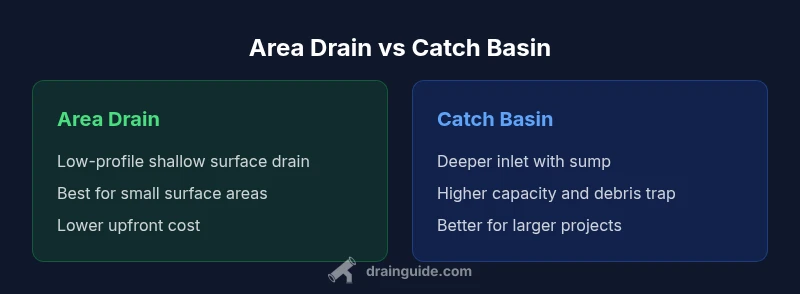
An area drain is a shallow, grated opening set flush with a hard surface, designed to collect surface runoff from small, flat areas such as walkways, driveways, and patios. A catch basin, by contrast, is a deeper inlet with a hopper or sump that traps debris and captures more substantial volumes of water before routing it to a storm sewer or discharge line. In the context of residential drainage, many homeowners encounter the two terms when planning hardscape projects or foundation protection. The distinction can be subtle in everyday language, but the functional differences are meaningful. If you’re comparing area drain vs catch basin, the key questions center on expected water volume, surface slope, debris loads, and how the collected water will be conveyed away from structures. Drain Guide emphasizes that the right choice begins with a clear understanding of site-specific runoff and long-term maintenance needs.
What are area drains and catch basins?
An area drain is a shallow, grated opening set flush with a hard surface, designed to collect surface runoff from small, flat areas such as walkways, driveways, and patios. A catch basin, by contrast, is a deeper inlet with a hopper or sump that traps debris and captures more substantial volumes of water before routing it to a storm sewer or discharge line. In the context of residential drainage, many homeowners encounter the two terms when planning hardscape projects or foundation protection. The distinction can be subtle in everyday language, but the functional differences are meaningful. If you’re comparing area drain vs catch basin, the key questions center on expected water volume, surface slope, debris loads, and how the collected water will be conveyed away from structures. Drain Guide emphasizes that the right choice begins with a clear understanding of site-specific runoff and long-term maintenance needs.
Comparison
| Feature | Area Drain | Catch Basin |
|---|---|---|
| Primary purpose | Direct surface runoff from small, flat areas near entries or patios | Capture larger volumes, debris, and sediment; redirects to sewer or storm line |
| Typical locations | Patios, sidewalks, driveways with low profile | |
| Design considerations | Grate type, flush mounting, minimal obstruction | |
| Water flow capacity | Moderate to low volumes; best for localized pooling | |
| Maintenance requirements | Regular grate cleaning; trap debris quick to remove | |
| Lifespan/materials | PVC, poly, or concrete collars; corrosion-resistant metals for heavy use | |
| Cost range | $20-$150 per drain (materials and installation) | $50-$300 per catch basin plus installation |
| Best for | Small-area runoff control with easy access | Stormwater management for larger areas or higher debris load |
Positives
- Simple to install in flat, paved surfaces
- Easy access for routine cleaning
- Low upfront cost relative to complex drainage systems
- Reduces localized pooling near entering areas
- Can be retrofitted into existing hardscape
Cons
- Limited capacity for large storm events
- Requires proper grading to prevent erosion or misdirection
- Susceptible to clogging if debris is not regularly cleared
- Catch basins offer more robust debris capture but require more space
Catch basins are generally the more robust choice for higher runoff and debris-heavy sites; area drains work well for simple, low-profile surface drainage.
Choose an area drain for simple patches of runoff near entryways. Opt for a catch basin when you expect higher volumes, larger debris loads, or need a centralized sediment trap in a larger drainage plan.
Got Questions?
What is the main functional difference between area drains and catch basins?
Area drains are shallow collectors designed for small, surface-area runoff, while catch basins are deeper and trap debris, handling larger volumes before routing water away. Drain Guide notes that choosing the right type hinges on volume, debris, and placement.
Area drains handle small surface runoff; catch basins trap debris and manage larger volumes. Drain Guide recommends matching the device to runoff and debris load.
Where should I install an area drain vs a catch basin?
Install area drains along patios, sidewalks, or driveways where surface runoff is localized and grading is shallow. Use catch basins at low areas on larger properties, near foundations, or in drainage corridors with higher debris loads.
Put area drains where runoff is light and surfaces are flat; use catch basins for bigger drainage needs and debris control.
What maintenance is typical for these devices?
Regular grate cleaning and debris removal are essential. For catch basins, inspect the sump and remove trapped sediment periodically. Drain Guide emphasizes keeping grates accessible and clear to maintain flow.
Clean grates often and check basins for sediment; keep the sump free of debris for best flow.
Can I upgrade from an area drain to a catch basin later?
In many cases you can retrofit by widening the inlet and adding a new trap or sump. However, this may require rerouting piping and adjusting grading. Plan for future upgrades during initial installation.
Yes, upgrades are sometimes possible but may involve rework; plan ahead with drainage plans.
What signs indicate I may need to rethink drainage layout?
Persistent puddling, gurgling drains, or water near foundations after rain indicate undersized or poorly routed drainage. Drain Guide suggests evaluating surface grading and potential alternative paths.
Look for puddles, gurgling, or water near foundations after rain; consider a layout review.
Are there code or local restrictions for these installations?
Local codes govern overflow paths, grating safety, and discharge locations. Always verify requirements with local authorities and Drain Guide recommendations.
Check local codes for drainage discharge and grate safety; align with Drain Guide guidance.
The Essentials
- Match capacity to your runoff volume and debris load
- Use minimum required depth to avoid tripping hazards
- Plan a clear discharge path away from foundations
- Regular cleaning prevents clogs and ensures performance
- Consult local codes and Drain Guide recommendations for best practices