Baking Soda and Vinegar for Drain Flies: A DIY Guide
Learn how to use baking soda and vinegar to address drain fly presence. This comprehensive, step-by-step guide covers realistic expectations, safety, and a complete preventative approach for kitchens and bathrooms.


By the end of this guide you will be able to reduce drain fly presence using baking soda and vinegar as part of a broader sanitation routine. This safe, DIY method combines cleaning, routine flushing, and targeted agitation. Basic supplies include baking soda, white vinegar, hot water, a plunger or snake, gloves, and patience.
The science behind drain flies and why DIY remedies like baking soda and vinegar work (or don't)
Drain flies, also called moth flies or sewer gnats, are tiny insects that thrive in moist, organic-rich environments such as clogged drains, decaying food residues, and leaky pipes. Their life cycle includes eggs, larvae, pupae, and adults, so addressing a current infestation means interrupting multiple stages. A DIY approach using baking soda and vinegar is not a magic cure; rather it targets the conditions that help drain flies breed. The Drain Guide Team emphasizes that removing standing moisture, eliminating food sources, and physically clearing blockages are the core steps. Baking soda can help loosen crusted residue, while vinegar can help dissolve mineral deposits and mask odors that attract gnats. However, neither substance is reliably toxic to larvae or adults at household concentrations. In practice, these ingredients are best viewed as part of a broader sanitation routine, not a stand-alone solution. Drain flies prefer warm, moist environments, so improving air flow and drying time is often as important as any chemical intervention. By combining scrubbing, flushing, and a few targeted remedies, you create a less hospitable habitat for these pests.
How baking soda and vinegar interact with drain environments
Baking soda (sodium bicarbonate) and vinegar (acetic acid) react when mixed, producing a fizzing action and carbon dioxide. In a drain, this fizz can help loosen light gunk, mineral deposits, and light biofilm. The mechanical agitation from flushing and brushing is what often provides the real benefit. That said, the chemical reaction is not a potent insecticide at home-use concentrations, and it won’t reliably kill larvae living inside the pipe walls. The goal is to disrupt the breeding substrate—organic residue, slime, and moisture—so that adult flies have fewer excuses to linger. This is why the approach is most effective when paired with thorough flushing, physical cleaning of traps and rims, and regular maintenance. Drain Guide Team guidance reinforces that chemical tools alone won’t fix a persistent problem, but they can support a broader sanitation plan.
Realistic expectations and limitations
Expect a reduction in nuisance rather than an instant, complete knockdown of a drain fly population. Baking soda and vinegar may curb odors and loosen buildup, making sanitation easier, but they will not magically eradicate larvae living deeper in pipe walls. Infestations that recur after a few days usually indicate multiple breeding sites beyond a single drain, such as floor drains, puddled moisture, or leaks under sinks. The key is to use these agents as part of an integrated plan that includes physical cleaning, moisture control, and, if necessary, trap placement. Drain Guide’s recommendations emphasize documenting problem areas (filters, trap locations, and moisture sources) and repeating the process across affected drains. Regular maintenance, especially after heavy cooking, garbage disposal use, or seasonal humidity spikes, matters just as much as any one treatment.
Integrating baking soda and vinegar into a broader sanitation plan
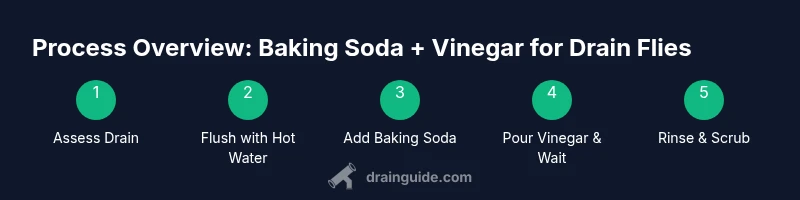
A practical approach blends chemical helps with mechanical cleaning and preventive measures. Start by removing standing water, corral the area with towels, and clear any food particles from the drain rim. Follow with a hot-water flush to push debris downstream, then add baking soda and a short pause to allow it to cling to the interior surfaces. Pour vinegar to activate the fizz and keep the drain blocked for 5–10 minutes to maximize contact. Finish with a thorough flush of hot water. Use a plunger or a drain snake to tackle blockages, followed by a final scrub of the drain edge and any accessible piping. This multi-step process is far more effective than using baking soda and vinegar alone, particularly in homes with persistent drains.
Practical setup for kitchens and bathrooms
In practice, you’ll want a clean, organized workspace. Gather baking soda, white vinegar, hot water, gloves, a plunger, a drain snake or auger, a bucket, a stiff brush, and a flashlight for dark corners. Remove standing water where possible, and keep children and pets away during the procedure. Start with a large water flush to loosen debris, then apply baking soda and rinse with hot water. Follow with vinegar and a careful rinse to prevent residue from re-accumulating. If you notice continued gnats, repeat the process across all relevant drains in the home, including kitchen, bathroom, and laundry area. Keeping drains dry and sealed with strainers or screens when not in use can dramatically reduce recurrence. Drain Guide notes that consistency beats intensity when it comes to DIY drain fly control.
Mechanical cleaning and traps to complement the remedy
Baking soda and vinegar work best when paired with mechanical cleaning. Physically scrub the drain rim, remove hair and gunk from the P-trap, and use a drain snake to clear clogs beyond the trap. After cleaning, you can set up a small vial or jar trap near the drain to capture adults and reduce immediate hatchings. Traps are not a complete solution, but they can lower adult flight activity while you implement longer-term sanitation improvements. Remember to wear gloves, avoid metal pipes being exposed to prolonged acid exposure, and never mix vinegar with bleach or ammonia. This combination can release dangerous gases. Drain Guide’s approach emphasizes reducing breeding sites first; the rest follows with mechanical maintenance and monitoring.
Sanitation maintenance and prevention strategies
Prevention is about eliminating moisture and residues that attract drain flies. Implement ongoing practices: run hot water daily to clear minor buildups, fix leaky taps, install drain screens or strainers, and keep surfaces dry after use. Monthly deep-clean routines with baking soda and hot water can help maintain a clean network of pipes, while occasional vinegar flushes can combat minor mineral deposits and odors. Regularly inspect trap areas for leaks and signs of moisture accumulation, especially under sinks and around kitchen fixtures. Healthy ventilation is also important—air movement reduces humidity and discourages breeding grounds. According to Drain Guide, consistent maintenance is the most effective long-term defense against recurring drain fly problems.
When to seek professional help and final notes
If you continue to see drain flies after several weeks of consistent DIY cleaning and prevention, professional help is warranted. A licensed plumber or pest professional can inspect hidden breeding sites, diagnose leaks, and address structural issues that DIY remedies cannot reach. Drain Guide recommends documenting infestation patterns (which drains are affected, times of day when activity spikes, and any new sources of moisture) to assist any pro. In addition to professional advice, maintain your sanitation routine and consider enhanced measures such as improving drainage airflow, elevating drain covers, and installing better strainers. The key is a proactive, multi-drain approach rather than a single drain fix.
Tools & Materials
- Baking soda(Fine powder; 1 cup (240 g) for general use)
- White vinegar(5–8% acetic acid; 1 cup (240 ml) per flush)
- Hot water(Boiled or near-boiling; 2–3 liters total across steps)
- Gloves(Rubber or reusable; keep hands clean)
- Plunger(Flat-bottom or flange plunger for effective seal)
- Drain snake / auger(Manual cleaning for blockages beyond the trap)
- Bucket(Contain rinse water and debris)
- Stiff-bristled scrub brush(For scrubbing the drain rim and accessible pipes)
- Measuring spoons(Optional for precise mixing)
- Flashlight(Inspect dark corners and pipe joints)
Steps
Estimated time: 45-60 minutes
- 1
Prepare workspace and safety
Clear the area, remove any items that could obstruct access to the drain, and put on gloves. Set up a bucket for catchwater and keep a flashlight handy to inspect the canal. Keep children and pets away during the process.
Tip: Ventilate the area and ensure you have good lighting before starting. - 2
Flush drain with hot water
Begin with a strong flush of hot water to loosen soft debris and start moving gunk toward the main line. If you notice a hairball or obvious buildup, pause and scrub the rim with the brush.
Tip: Do not use boiling water if you have PVC pipes that may not tolerate extreme heat. - 3
Add baking soda and let it dwell
Sprinkle baking soda into the drain and allow it to sit for 5–10 minutes. This helps loosen crusted residue and creates a rough surface for the vinegar to cling to when poured later.
Tip: Keep the area dry to prevent re-depositing debris while waiting. - 4
Pour vinegar and allow fizz
Pour white vinegar into the drain to activate the fizzing action. Let it sit for 5–10 minutes to interact with the baking soda and begin breaking down residues.
Tip: Avoid mixing vinegar with other cleaners like bleach; it can produce harmful gases. - 5
Rinse and scrub
Flush the drain again with hot water while scrubbing the rim and accessible pipe area with a brush. This removes loosened debris and residue.
Tip: If you detect a persistent odor, repeat the flush and scrub cycle once more. - 6
Mechanical cleaning and preventive steps
Use a plunger or drain snake to clear minor clogs beyond the trap. Remove and rinse the P-trap if needed. Finish with a final flush and apply a drain screen to prevent future buildup.
Tip: Regular maintenance reduces recurrence more than a single treatment.
Got Questions?
Does baking soda kill drain flies or their larvae?
Baking soda helps remove buildup but does not reliably kill larvae or adults. It works best as part of a sanitation routine that includes flushing and mechanical cleaning.
Baking soda helps clean buildup but doesn’t reliably kill drain fly larvae; it’s most effective when used with flushing and scrubbing.
Will vinegar kill drain flies?
Vinegar can help with odors and residue, but it is not a proven insecticide for drain flies. Use it to supplement cleaning and moisture control.
Vinegar helps with odor and residue but isn’t a proven insecticide for drain flies. It should be part of a broader cleaning routine.
Can baking soda and vinegar damage pipes?
When used in moderate amounts, baking soda and vinegar are generally safe for standard household drains. Avoid repeated, high-volume applications that could stress pipes or seals.
Used in typical amounts, baking soda and vinegar are usually safe for drains, but don’t overdo it or mix with incompatible cleaners.
How often should I repeat the treatment?
If you have a mild infestation, repeat every 3–7 days for 2–3 weeks while maintaining sanitation. For stubborn cases, extend rinses and consider professional assessment.
Repeat every few days for a couple of weeks, and scale back if you see consistent improvement.
What else can I do to prevent drain flies?
Fix leaks, remove standing water, install drain screens, and clean drains regularly. Keep areas dry after use and reduce organic buildup by routine flushing.
Fix leaks, keep drains dry, and clean them regularly to prevent future infestations.
Is this method safe for septic systems?
Moderate amounts of baking soda and vinegar are generally compatible with many septic systems, but avoid heavy chemical cleaners that disrupt bacterial action. Use sparingly and rely on regular flushing.
In moderation, baking soda and vinegar are usually okay for septic systems, but avoid harsh cleaners and watch for signs of trouble.
Watch Video
The Essentials
- Use baking soda and vinegar as part of a broader sanitation plan, not a sole fix.
- Mechanical cleaning and proper drainage maintenance are essential.
- Repeat treatments and monitor multiple drains for persistent infestations.
- Avoid mixing cleaners; follow safety precautions and heat guidelines.
- Prevent future issues with screens, leaks repair, and regular flushing.