Bathroom Drain Smell Troubleshooting
Quickly diagnose and fix bathroom drain smell with our step-by-step troubleshooting guide. Learn common causes, safe DIY remedies, and when to call a professional.


The most likely cause of a bathroom drain smell is a dry P-trap or trapped sewer gas. Quick fixes: pour water into the trap to restore the seal, flush the drain with hot water, and clean the trap arm to remove buildup. If odors persist after these steps, inspect the vent stack or call a plumber.
What causes bathroom drain smell
According to Drain Guide, bathroom drain smell is most often caused by a dry P-trap that lets sewer gas into the room, or by organic buildup that creates a foul biofilm inside the drain. In addition, venting issues or cracked connections can draw gas back into the bathroom. Understanding these causes helps you apply the right fix quickly and with confidence. This guide also emphasizes safety and when to seek professional help. By breaking down causes and remedies, you’ll know what to inspect first and what requires a professional.
Common culprits behind the odor
The first thing to check are the most common culprits. A dry P-trap is the top offender in many homes, especially in rarely used or seasonal bathrooms. Hair, soap scum, and mineral buildup can form a biofilm that produces a strong odor even when the water seal is present. Venting issues can pull air from the sewer into the bathroom if the vent is blocked or undersized. Cracked or loose trap connections may also leak gas. Finally, sewer-line problems, while less common, can cause persistent, foul smells that require professional assessment.
How plumbing traps and vents work
A P-trap is shaped like a U and holds water to seal out sewer gases. When the trap is full and intact, odors are blocked. A vent stack allows air to escape and prevents siphoning of the trap seal. If the vent is blocked or the trap is cracked, the seal breaks and odors can waft into the room. Understanding this system helps you decide whether to refill, clean, or call a pro for vent issues.
Safe DIY checks you can perform today
Start with the simplest checks to avoid unnecessary work. Look under each sink for the trap and ensure there’s water in it. If the fixture is rarely used, pour in several cups of water to restore the seal. Inspect the trap for cracks or leaks and clean the trap arm with a bottle brush. If you spray cleaner, rinse thoroughly. Run the faucet for 30 seconds and recheck the smell. If the odor persists, move to more involved fixes or consider a professional evaluation.
Diagnostic approach: symptom-to-diagnosis flow
Begin with the symptom: a persistent bathroom drain smell. If a wet trap eliminates the odor, the issue was likely a dry seal. If the smell remains, check for buildup in the trap and drain line. If removal of buildup doesn’t help, the problem may involve the vent stack or a more serious sewer issue. This flow guides you toward the safest and most effective solution first.
Step-by-step fixes for the most common cause
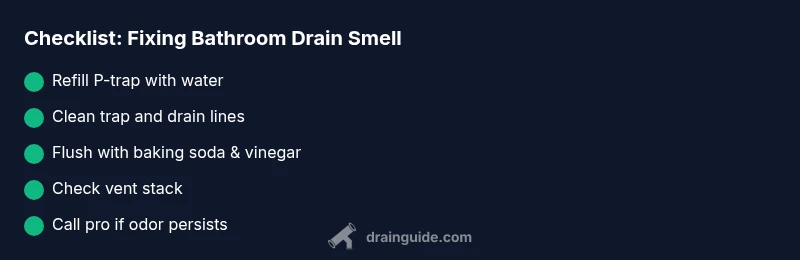
This section outlines the practical fixes for the most common cause: a dry P-trap with biofilm buildup. Start by refilling the trap, then clean the trap and drain line. Use baking soda and vinegar to break down residue, followed by a hot-water flush. If odors persist, inspect the vent and call a professional if venting appears compromised.
When to call a professional
If you notice a gas-like smell accompanied by coughing, dizziness, or recurring backups, stop DIY fixes and call a licensed plumber immediately. Sewer odors can indicate serious problems such as vent blockages, sewer line issues, or damaged pipes. A professional can run an inspection, test vent integrity, and recommend replacement parts as needed.
Preventing future bathroom drain smells
Prevention is simpler than frequent fixes. Regularly run water in unused fixtures to prevent traps from drying. Clean traps and trap arms every few months, especially in households with hard water. Use enzymatic drain cleaners to maintain biofilm at bay and avoid harsh chemical cleaners that can corrode pipes. Consider a vent inspection if odors recur across multiple fixtures.
Quick maintenance routine to keep drains fresh
Create a simple monthly routine: flush all drains with hot water, apply baking soda and vinegar, and inspect for leaks. Keep trap seals intact by pouring water every few weeks in bathrooms that aren’t used daily. Use strainers to reduce hair and debris, and schedule professional vent checks if you notice recurring odors or slow drainage. Drain Guide emphasizes consistent maintenance to prevent odors from returning.
Steps
Estimated time: 60-75 minutes
- 1
Check the P-trap water level
Inspect the under-sink trap and confirm it holds water. If dry, add water gradually until a visible seal forms. This often prevents sewer gases from entering the bathroom.
Tip: Use a flashlight to inspect for cracks or corrosion in the trap. - 2
Refill and test the seal
Run water for 15–20 seconds to refill the trap, then recheck for odors. If the smell returns, the trap may be damaged and require replacement.
Tip: Don’t ignore a dry trap in a rarely used bathroom. - 3
Clean the trap and drain arm
Disassemble the trap if possible and scrub away hair, soap scum, and mineral deposits. Reassemble tightly to prevent leaks.
Tip: Have a bucket ready to catch any residual water. - 4
Flush with baking soda and vinegar
Pour 1/2 cup baking soda, then 1 cup white vinegar down the drain. Let it fizz for 15 minutes, then flush with hot water.
Tip: Avoid mixing with bleach or other cleaners. - 5
Add an enzymatic cleaner
After the fizz, run hot water and consider an enzymatic cleaner designed for drains to minimize biofilm without harsh chemicals.
Tip: Enzymatic cleaners are gentler on pipes than strong chemicals. - 6
Check the vent stack
If multiple fixtures vent slowly or smell persists, the vent stack may be blocked. This often requires professional cleaning or replacement of components.
Tip: Safety first: don’t crawl on the roof without proper gear. - 7
Inspect for leaks or damaged traps
Look for cracks or loose connections in the trap or joints. A damaged trap can let sewer gas escape and may need replacement.
Tip: If you smell gas strongly, evacuate and call a professional. - 8
Consider professional evaluation
If odors persist after DIY fixes, a plumber can assess for sewer line issues or vent problems using specialized tools.
Tip: Professional tools can pinpoint vent or sewer issues quickly.
Diagnosis: Persistent bathroom drain smell even after basic cleaning
Possible Causes
- highDry P-trap seal
- mediumBiofilm or hair buildup in the trap or drain arm
- lowBlocked or missing vent stack
Fixes
- easyRefill traps with water to restore the seal
- easyClean the trap and drain arm to remove buildup
- hardInspect and clear the vent stack or call a plumber if venting is suspected
Got Questions?
What commonly causes a bathroom drain to smell?
Most odors come from a dry P-trap, biofilm buildup, or venting issues. Sewer gas intrusion is possible if plumbing components fail.
Most bathroom drain smells come from a dry trap, buildup, or vent issues.
Can a dry P-trap really cause odors?
Yes. A dry seal allows sewer gases to escape. Refill the trap with water and monitor for smell.
A dry P-trap can let sewer gas in; refill with water.
Is baking soda and vinegar safe for drains?
Baking soda and vinegar are generally safe for household drains when used in moderation, and they can help reduce minor buildup. Do not mix with bleach.
Baking soda and vinegar can help, but don’t mix with bleach.
When should I call a plumber for a drain odor?
If the smell persists after DIY fixes, if you notice backups, or if vent issues are suspected, a plumber should evaluate for sewer or vent problems.
Call a plumber if the odor continues after DIY fixes.
Can vent issues affect multiple fixtures?
Yes. A blocked vent can cause odors and slow drainage in multiple fixtures connected to the same stack.
Vents can affect multiple fixtures when blocked.
Are there safety concerns with drain cleaning?
Yes. Use gloves, avoid mixing cleaners, and keep ignition sources away from vented areas. If unsure, stop and consult a pro.
Be careful with cleaners; if unsure, call a pro.
Watch Video
The Essentials
- Refill dry traps to stop sewer-gas intrusion
- Clean traps and arms to remove buildup
- Vent blockages and sewer-line issues require professional assessment
- Avoid harsh chemical mixes for safety and pipe integrity
- Regular maintenance prevents future odors