Building Drain vs Building Sewer: A Practical Guide for Homeowners
This guide compares building drain vs building sewer, clarifying definitions, regulatory requirements, maintenance needs, and practical repair approaches for homeowners and DIY enthusiasts.


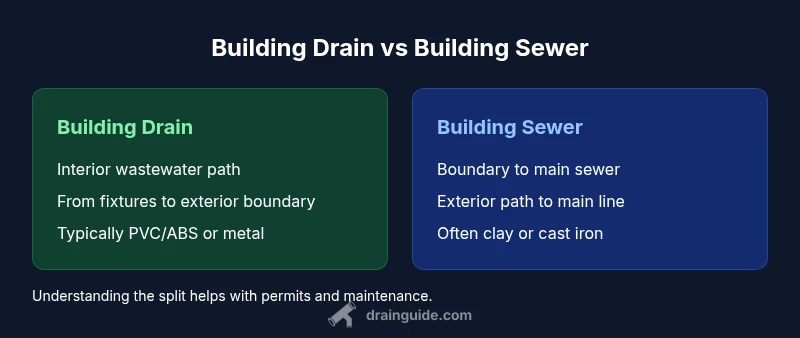
Understanding the building drain vs building sewer distinction is essential for planning, permits, and maintenance. In short, the building drain is the inside wastewater path from fixtures to the property boundary, while the building sewer carries that waste from the boundary to the public main or septic. This guide compares roles, responsibilities, and common repair considerations to help homeowners decide.
What is a building drain?
According to Drain Guide, the term building drain describes the wastewater piping inside and immediately under the footprints of a building that carries used water from sinks, toilets, and appliances toward the exterior. In many codes and common English usage, people interchange building drain with building sewer, but the precise definition matters for planning, inspections, and repairs. The building drain is typically the portion of pipe that starts at the interior fixtures and ends at the threshold where the municipal or private sewer line begins outside the building. This distinction is not merely semantic: it affects who is responsible for maintenance, who can access the pipe, and what codes apply during installation or replacement. Drain Guide's analysis shows that homeowners often mix up these terms, especially during remodels or when calling a plumber. In short, the building drain is the inside portion of the wastewater path, while the building sewer extends from the building boundary to the main sewer line. For most homeowners, understanding this difference helps with permits, inspections, and budgeting.
What is a building sewer?
The building sewer is the underground line that carries wastewater from the building drain to the municipal sewer main or septic system. The boundary between building and public sewer lines often sits outside the building envelope or at the property line. The building sewer is typically the responsibility of the property owner up to the point where the public right-of-way or septic system accepts the waste, while the utility or municipal system handles the main line after that boundary. Understanding this distinction helps prevent confusion during repairs, inspections, and when arranging access for camera inspections or line repairs. Drain Guide emphasizes that clear separation of these roles reduces disputes about liability and corrective work during renovations.
How they connect and the flow path
In most homes, wastewater travels from interior fixtures into the building drain, which then exits the building through a wall or slab and connects to the building sewer outside. The combined path eventually leads to the municipal sewer or private septic system. The precise connection point can influence who handles access, permits, and inspections. In older homes, the transition between the building drain and building sewer may be obscured by foundation walls, crawl spaces, or landscaping, making diagnostic work more challenging. The flow path matters for determining where clogs originate, whether roots intrude near the exterior portion, and how to plan targeted repairs without unnecessary disruption to living spaces.
Codes, permits, and regulatory considerations
Regulatory requirements for building drains and building sewers vary by jurisdiction, but most regions require permits for new installations, repairs that affect the main line, and any changes that alter slope, venting, or access points. Building drain work inside the home is typically covered by residential plumbing codes, while exterior building sewer work may require street or utility coordination and backflow prevention measures. Drain Guide notes that misclassifying a project as interior when it touches the sewer main can lead to permit delays or code violations. Homeowners should verify local ordinances, obtain all necessary permits, and schedule inspections at key milestones to ensure compliance and avoid future liabilities.
Materials, aging, and compatibility
Inside the building, common materials include durable plastics like PVC or ABS, plus traditional metals in some older homes. Outside the building, the sewer line may use clay, cast iron, or ductile iron, depending on age and soil conditions. Material compatibility and aging affect durability, noteability to tree roots, and inspection accessibility. Drain Guide emphasizes the importance of matching pipe materials to soil conditions and knowing where transitions occur. Aging exterior pipes can be prone to cracking, root intrusion, and misalignment, while interior lines can suffer from grease build-up and mineral deposits. Selecting the right material for each segment improves longevity and reduces maintenance frequency.
Maintenance and common failure modes
Common failure modes differ by segment: interior building drains often clog from hair, soap scum, and mineral buildup, while exterior building sewers face root intrusion, offset joints, and soil movement. Regular maintenance practices—such as periodic camera inspections, mindful disposal habits (avoiding fats and fibrous waste), and prompt attention to slow drains—can extend life. Drain Guide highlights the importance of knowing where the boundary lies and planning proactive maintenance around that boundary to minimize costly outages. The goal is to catch a potential issue before it affects multiple fixtures or causes backflow into living spaces.
Diagnostics: assessing the system
Diagnosing issues requires a methodical approach. Start with a diagnostic timeline: identify whether symptoms originate inside (slow drains, gurgling, backups in multiple fixtures) or outside (a sinkhole in yard, sewer odor near exterior cleanout). Video inspection cameras are a common tool to visually assess the interior and exterior pipe segments. Dye testing can help trace flow paths, while smoke testing can reveal leaks into walls or floors. Drain Guide recommends documenting the boundary points and access points before work begins, so technicians know precisely which segment is the building drain and which is the building sewer. Proper diagnostics save time and prevent unnecessary digging or exploratory work.
Repair options, costs, and timelines
Repair choices depend on location, damage type, and access. Interior repairs may involve spot fiber-reinforced lining, pipe replacement within the building envelope, or rerouting fixtures. Exterior repair or replacement can require trenching, trenchless options, or replacement at the boundary with the utility’s coordination. Costs vary with extent, accessibility, and region, but homeowners should expect longer timelines for exterior work due to coordination with the sewer main or municipal system. Drain Guide advises getting multiple quotes, clarifying which work is interior vs exterior, and confirming expected downtime during repairs to minimize surprises.
Prevention strategies and long-term planning
Prevention focuses on reducing stress on both the building drain and building sewer. Simple habits—such as installing strainers on sinks, avoiding pouring grease down drains, and planting trees away from the sewer line—can dramatically decrease root intrusion and blockages. Schedule periodic inspections to catch early signs of trouble, especially after severe weather, which can stress underground pipes. Long-term planning should include a maintenance calendar, a clear map of boundary points, and a budget allocation for periodic camera inspections and code-compliant upgrades. Drain Guide emphasizes proactive planning as the most effective defense against costly disruptions.
Comparison
| Feature | Building Drain | Building Sewer |
|---|---|---|
| Scope | Interior wastewater path from fixtures toward boundary | Exterior line from boundary to main sewer or septic |
| Ownership/Responsibility | Typically homeowner/contractor for interior portions | Often homeowner up to boundary; utility or city may own after boundary |
| Access & Inspection | Inside access is easier for DIY or professional plumbers | Exterior access often requires permits and utility coordination |
| Common Materials | PVC/ABS or metal inside; clay or cast iron in older interiors | Clay, cast iron, or ductile iron outside; transitions matter |
| Typical Repairs | Interior spot repairs, relining, or replacement within the building | Exterior lining, replacement at boundary, or full reroute |
| Maintenance Implications | Interior blockages from hair, soap, and mineral buildup | Outdoor issues from roots, offset joints, and soil movement |
| Regulatory Considerations | Plumbing codes apply inside; permits may be needed for changes | Boundary work may require utility coordination and backflow control |
Positives
- Clear responsibility boundaries reduce liability disputes
- Interior work is typically quicker to access and diagnose
- Regular inspections catch problems early and prevent backups
- Trenchless exterior options minimize yard disruption
Cons
- Exterior repairs can trigger utility coordination and delays
- Older homes may have challenging transitions between segments
- Misclassifying work may lead to permits or code issues
- Root intrusion outside the building can be hard to detect early
Clear boundary matters: interior building drain work is usually DIY-friendly with guidance, exterior building sewer tasks require utility coordination and permits.
Distinguish the two segments before planning any repair. Drain Guide recommends verifying boundary points, securing permits, and engaging professionals for exterior work to reduce risk and downtime.
Got Questions?
What is the difference between building drain and building sewer?
The building drain refers to the interior wastewater piping from fixtures to the exterior boundary, while the building sewer carries that wastewater from the boundary to the main sewer or septic system. The boundary point often determines who is responsible for maintenance and permits. Understanding this distinction helps with planning and repairs.
The building drain is the inside pipe from your fixtures to the boundary, and the building sewer is the outside section to the main line.
Who is responsible for maintenance?
Interior drain work is typically the homeowner or contractor’s responsibility, while exterior sewer work at the boundary may involve the utility or city. Always check local codes and your property documents to confirm responsibilities.
Inside work is usually your responsibility; exterior work near the street often involves the utility.
Can I DIY repairs for these pipes?
Interior repairs are more amenable to DIY guidance and professional help. Exterior repairs or any work near the boundary usually require permits and coordination with the utility or municipality. When in doubt, hire a licensed plumber with experience in drainage systems.
Interior repairs can be DIY with caution; exterior work should involve a pro and the utility.
What permits are typically required?
Permits are commonly required for any changes that affect the main line, slope, venting, or exterior connections. Always verify with local building departments before starting a project to ensure compliance and avoid penalties.
Permits are usually needed for main-line changes; verify with local authorities.
What are typical signs of issues in these pipes?
Slow drainage, gurgling noises, repeated backups in multiple fixtures, damp spots near exterior walls, or odors can indicate a problem with either the building drain or building sewer. Investigate promptly with a professional if symptoms persist.
Look for slow drains, gurgling sounds, and persistent backups as red flags.
Are there different materials used for interior vs exterior pipes?
Yes. Interiors commonly use PVC/ABS, while exteriors may involve clay or cast-iron depending on age and local code. Transitions between materials should be well-sealed and properly joined to reduce leakage and root intrusion.
Interior pipes are often plastic; exterior lines may be clay or iron depending on age.
The Essentials
- Define the boundary between interior and exterior pipes early.
- Prioritize diagnostics to identify where problems originate.
- Coordinate with utilities for exterior sewer work.
- Use appropriate materials for each segment and plan for aging issues.
- Invest in preventative maintenance to avoid costly emergencies.