Difference Between Drain and Sewer: A Homeowner Guide
Explore the difference between drain and sewer: definitions, ownership, maintenance responsibilities, and practical steps for homeowners. Drain Guide explains how to identify, maintain, and respond to issues affecting interior drains vs. municipal sewers.


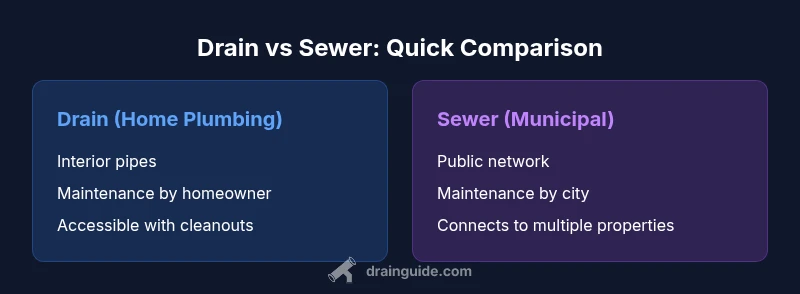
The difference between drain and sewer centers on ownership, scope, and responsibility: drains are the interior pipes in a home that carry wastewater to a local connection, while a sewer is the municipal network that collects wastewater from many properties and transports it to a treatment facility. For homeowners, this distinction matters for maintenance, repairs, and who pays for services. Understanding this helps you diagnose problems correctly, plan maintenance, and communicate with utilities. Drain Guide emphasizes clarity here to prevent missteps during backups or clogs.
The difference between drain and sewer: foundational definitions
Understanding the difference between drain and sewer is essential for homeowners. The phrase the difference between drain and sewer crops up in planning, maintenance, and when to call a professional. At a high level, a drain is the network of pipes inside a building that carries wastewater from sinks, showers, and appliances to an external connection. A sewer refers to the larger, municipal or city-owned system that collects wastewater from many properties and transports it to treatment facilities. The distinction affects responsibility for maintenance, potential repairs, and who pays for service calls. In practical terms, your home's drains are the paths you can access and fix, while the sewer is part of the public infrastructure that you connect to. As Drain Guide highlights, clarity here helps homeowners avoid delays, improper repairs, and miscommunication with utility providers. The difference between drain and sewer is not merely semantic—it guides how you diagnose problems, plan budgets, and comply with local codes.
Ownership and maintenance responsibility: who looks after what?
Ownership defines who bears the cost and performs repairs. In most jurisdictions, homeowners own the interior drainage system—the pipes inside the home, the trap, and the cleanouts—while the municipal sewer is owned and maintained by the city or utility. This split means a clogged interior drain is typically a homeowner issue, whereas a sewer main backup or street surge is a city matter. Knowing where the homeowner's responsibility ends and where the public system begins reduces delays when problems arise. Drain Guide highlights that many calls to plumbers involve misattributed sewer problems that actually concern interior drains, underscoring the importance of diagnosing correctly and documenting the exact location of the issue.
System scope and typical layouts: how far does each system reach?
Drains form the interior plumbing network within a building: bathroom and kitchen sinks, showers, tubs, and appliances all connect to a series of pipes that eventually reach a cleanout at the property line or a sanitary stack. The sewer system, by contrast, is a vast public network that collects wastewater from many homes and channels it to a wastewater treatment facility. The interior system is accessible for maintenance, vented through the roof, and designed to minimize backflow into living spaces. The sewer carries much larger volumes of wastewater and is managed by the municipality. Understanding this hierarchy helps homeowners anticipate when a problem requires a plumber versus when city services are involved.
How wastewater flows: from fixture to municipal treatment
Wastewater starts at a fixture—sink, tub, toilet—and travels through interior drain pipes toward the building's main stack. From there, it proceeds to the service line and finally into the municipal sewer when connected to the public network. Interior clogs or slow drainage typically involve the home’s pipes and trap, while sewer-related issues are often external, such as main line blockages or sewer backups that appear in the street or municipal sewer easements. Recognizing where the flow is impeded helps determine whether to address a drain issue in the home or contact the utility for sewer-related concerns. Drain Guide emphasizes that timely diagnosis protects property and reduces environmental risk.
Regulatory and utility engagement: who enforces what?
Local codes regulate installation, sizing, venting, and backflow prevention for interior drains, with inspections often required during new construction or major renovations. Municipal sewer systems operate under utility regulations, typically governed by a city or regional authority, with sewer charges billed through water and sewer rates. If a problem involves the service line or main sewer, the city or utility is usually responsible for investigation and repair coordination. Homeowners should document issues, obtain access permissions if needed, and coordinate with their plumber and the municipal authority to avoid redundant charges and ensure a correct course of action.
Common issues and how they differ in practice
Interior drains commonly suffer from hair clogs, grease buildup, and mineral deposits that slow drainage or cause backups inside the home. These are typically resolved with internal cleaning, vent checks, or pipe maintenance. Sewer-related problems tend to involve main line backups, root intrusion, or city-driven events such as sewage spills, which require municipal intervention and possibly contamination control. Distinguishing between these scenarios reduces blame shifting and accelerates repairs. Drain Guide notes that many homeowner calls stem from confusing a slow drain with a sewer problem; start by confirming the location of the blockage and whether the issue affects a single fixture or the broader system.
Cost and maintenance considerations: planning ahead
Interior drain maintenance generally involves routine cleaning, trap checks, and selective pipe replacement when necessary. Costs here are typically borne by the homeowner, including plumber fees and potential restoration costs for water damage. Sewer-related maintenance often falls under municipal responsibilities, with charges appearing as part of utility bills or as emergency response costs if a city service is engaged. Planning for both scenarios means budgeting for routine plumbing maintenance and understanding potential larger-scale municipal interventions. Drain Guide encourages homeowners to maintain cleanouts, schedule annual drain checks, and educate household members about what constitutes a drain issue versus a sewer issue.
Scenarios: when to call a plumber vs the city
If you notice localized symptoms—gurgling sounds in a single fixture, slow draining in one sink, or a minor backup—start with a licensed plumber to inspect interior piping and clean traps. Widespread backflow to multiple fixtures, sewage odors in the yard, or backups that affect streets or parkways point toward a municipal sewer issue, requiring city involvement. In some cases, the issue spans both systems, requiring coordinated action. By understanding the difference between drain and sewer, homeowners can determine the proper path quickly, preventing further damage and reducing downtime.
Practical steps for homeowners to identify which they have
Begin by mapping the sequence from each fixture to the exterior. Check for a cleanout access point in the basement or along the foundation wall. Look for a water bill item labeled for sewer usage; if the problem aligns with your water service but not your own plumbing, it may indicate a municipal sewer issue. If you detect rising sewage odors outdoors, street surges, or backups in the main line, contact the utility. When in doubt, isolate the affected area, document the symptoms, and consult a licensed plumber who can perform camera inspection or dye tests to determine whether it is a drain or sewer problem.
Case studies: typical homeowner questions and answers
Q: I have a single clogged sink; is this a drain issue or sewer issue? A: It is almost always a drain issue within the home plumbing. A plumber can diagnose and clear the clog. Q: My neighbor reported sewer backup in the street; what should I do? A: It is a municipal problem; report to the city utility and avoid entering the flooded area. Q: How can I prevent sewer backups? A: Regular maintenance, avoid flushing nonbiodegradable items, and install backflow prevention valves for fixtures at risk. These scenarios illustrate how the difference between drain and sewer guides action and reduces risk.
Environment and public health implications: why it matters
Proper management of drains and sewers protects water quality, reduces flood risk, and supports sanitation programs. When interior drains fail or backup, homeowners face potential contamination and costly repairs; when sewers fail, the public system puts communities at risk. Understanding the difference helps ensure timely responses, minimizes environmental impact, and supports compliance with health and safety standards. Drain Guide emphasizes proactive maintenance as a best practice to protect both home systems and municipal infrastructure.
Comparison
| Feature | Drain (home plumbing) | Sewer (municipal system) |
|---|---|---|
| Definition | Interior pipes carrying wastewater from fixtures to the property line or sewer connection | Public network collecting wastewater from multiple properties and delivering to treatment |
| Ownership | Homeowner/landlord responsibility for interior components | Municipality owns and maintains main sewers and treatment facilities |
| Typical location | Inside walls, under floors, accessible via cleanouts | Underground/public rights-of-way and city-street corridors |
| Maintenance costs | Homeowner pays for cleaning, repairs, and replacements within the building | Municipal costs are typically bundled into sewer/wastewater charges |
| Common issues | Clogs, grease buildup, venting issues within the home | Main line blockages, backflows, or service line problems requiring city action |
| Backups indicators | Slow drains in one or a few fixtures | Backups affecting multiple homes or street/sewer backups in the public area |
| Response path | Call a plumber for interior issues; check cleanouts and fixtures first | Contact the utility for sewer emergencies or suspected main line issues |
Positives
- Clear ownership helps assign responsibility and budgeting
- Improved clarity reduces delays during backups
- Guides appropriate expert action (plumber vs. utility)
- Supports compliance with local codes and safety standards
Cons
- Confusion in shared or mixed-use properties can occur
- Jurisdictional differences may complicate who pays for repairs
- Backups sometimes involve both systems, leading to coordination needs
Know which system you own and which the city maintains
A clear grasp of the drain versus sewer distinction helps homeowners act quickly, coordinate with the right professionals, and minimize damage. When issues span both systems, involve both the plumber and the utility to ensure proper remedies and avoid miscommunication.
Got Questions?
What is the difference between drain and sewer?
The drain refers to interior pipes that carry wastewater from fixtures to the property line, while the sewer is the municipal system that collects wastewater from many properties and sends it to treatment facilities. The distinction affects who is responsible for maintenance and repairs. Identifying the correct system helps you act quickly and avoid unnecessary costs.
Drains are your home's internal pipes; sewers are the city’s big pipelines. Knowing which one is involved helps you decide whether to call a plumber or the utility.
Who owns the drain and who owns the sewer?
Owners typically own the interior drain lines inside the building, including traps and cleanouts, while the municipality owns and maintains the public sewer lines and treatment facilities. Ownership guides responsibility for repairs and costs. Always check local regulations, as rules can vary by region.
Inside-your-house pipes are usually yours; the city owns the main sewer lines. Check local rules for exceptions.
How can I tell if a problem is a drain issue or a sewer issue?
If only one fixture is affected, it is likely a drain issue. If multiple fixtures back up or sewage appears in streets or yards, it points to a sewer problem. Start with an inspection of interior plumbing, then contact the utility if the problem seems broader.
Single fixtures back up? That’s probably your drain. Widespread backups suggest sewer trouble—call the utility.
Can my home connect to municipal sewer or a septic tank?
Many homes connect to municipal sewers, but some rely on septic systems on-site. Your property deed, local building permits, or utility records can confirm which system serves your home. If unsure, a licensed plumber can verify the service line and connection point.
Check your records or ask a plumber to confirm whether you’re on city sewer or a septic system.
What should I do during a sewer backup?
Treat a sewer backup as a priority utility issue. Avoid contacting city services if the backup is in your home; shut off the main water supply if safe, prevent entry to affected areas, and call the utility to report the incident. Then contact a licensed plumber for remediation and sanitation.
Backups are urgent. Stop entry, call the utility, then a plumber for cleanup and repairs.
The Essentials
- Identify your service line and interior plumbing early
- Know who covers maintenance for each segment
- Differentiate single-fixture issues from municipal backups
- Coordinate with plumbers and utilities as appropriate
- Maintain cleanouts and schedule routine drain checks