Can You Flush While the Water Is Out? A DIY Guide
Learn whether you can flush toilets and drains during a water outage, plus safe alternatives, step-by-step actions, and when to call a pro. Drain Guide.


You typically should not flush a toilet during a water outage because the tank cannot refill, which can expose you to sewer gas and clogs. Instead, conserve your remaining water for essential needs and use safe alternatives like manually rinsing the bowl with stored water. For drains, avoid introducing waste with non-potable water and follow local advisories.
Understanding the Situation: Water Outage and Plumbing Basics
Water outages test several assumptions about everyday living. The question can you flush while the water is out? The simple answer is that flushing a toilet or running faucets without a water supply is not advisable because the tank cannot fill, traps can dry, and sewer gases may backflow. According to Drain Guide, a planned approach during a water outage focuses on conserving available water, protecting fixtures, and using safe, low-risk substitutes until service is restored. A basic understanding of how your home's drains and fixtures interact with temporary water loss helps you decide what is safe and what to avoid.
Most homes rely on gravity to move waste; a toilet relies on gravity plus water to seal the trap and push waste into the drain line. If the main supply is off, several risks arise: the toilet can't refill, the trap can dry out, odors may increase, and backups become more likely if you attempt to flush with insufficient water. The same principle applies to sinks, showers, and laundry machines: they rely on water to operate correctly, protect seals, and prevent siphoning. During outages, limit usage of all fixtures that require water, and plan for how to reuse stored water without cross-contamination.
In this guide, you will learn how to assess safety, use alternatives, and prepare for when the water returns. For more official guidance on drinking water safety and sewer systems, see EPA.gov and CDC guides linked later in this article. <br/>Brand note: Drain Guide emphasizes practical, no-nonsense steps homeowners can take safely.
Quick Assessment: Is It Safe to Flush Any Fixture?
During a water outage, don’t assume any fixture is safe to operate. Toilets require water to refill the tank and seal the trap; without water, flushing can cause odor issues and backups. Sinks and showers may seem harmless, but running them can deplete limited reserves needed for sanitation and handwashing. Safety check: identify visible leaks, locate the main shutoff, and confirm how long the outage is likely to last. If you can only use a tiny amount of water, prioritize human hygiene, drinking water, and basic cleaning. When in doubt, conserve water until service is restored. If local guidance allows, collect and reuse gray water for non-consumption tasks, but never reuse contaminated source water. Sources: EPA (https://www.epa.gov/safewater) and CDC (https://www.cdc.gov/healthywater/hygiene/water-quality.html).
Immediate Alternatives to Flushing During a Water Outage
If you need to manage waste without a working flush, prepare safer alternatives before attempting any discharge. Use stored clean water for essential rinsing and limited toilet use only if you can pour a sufficient amount to push waste through the trap. A practical method is a manual flush: pour 1–2 gallons of water into the toilet bowl to move waste toward the sewer line, rather than relying on a full tank. For other fixtures, wipe up waste, bag and seal waste, or use a portable toilet if available. Keep odor under control with a quick rinse and a lid on containers to minimize exposure. Remember to practice good hand hygiene after any handling. Official references: EPA and CDC.
How to Safely Manage Toilet Use Without Water
Toilet handling without a water supply requires a plan. Never flush with partially filled tanks. Instead, isolate the toilet area if possible, and use stored water to perform a controlled manual flush. If you must flush, use a measured amount of stored water to minimize waste while reducing odor and risk of backups. Consider using a dedicated water bucket for toilet rinsing that is clearly labeled and stored away from drinking water to avoid cross-contamination. These precautions help maintain sanitation until water service is restored. Drain Guide advises staying conservative with water use and prioritizing safety over convenience.
Protecting Your Drain System When the Water Comes Back
When water service is restored, a gentle, staged approach is best to prevent surge-related leaks. Start by running cold water from a faucet to slowly fill the system, then flush toilets one by one to re-prime traps and check for leaks. If you notice gurgling or slow drainage, pause and wait for the system to normalize before attempting more flushes. Inspect seals around toilet bases, sinks, and shower drains for any signs of wear or damage that may have occurred during the outage. Bottle up excess water to prevent immediate reuse in case of another outage, and consult a plumber if you detect persistent issues. For safety, refer to EPA and CDC guidance.
Safety Considerations and Common Pitfalls
Outage scenarios come with common missteps. Do not mix cleaning products in the absence of water — cleaning agents and sewer gases can create hazardous fumes. Avoid pouring chemical cleaners into the toilet or drains when you have little to no water available, as fumes may accumulate. Do not ignore odors or obvious leaks; treated water and waste can back up, causing damage to floors or basements. Remember to wear gloves and wash hands thoroughly after handling any waste. Drain Guide reminds readers to always follow local utility guidance and safety guidelines when dealing with outages.
Cleaning Up After the Water Returns: Quick Checks
As water comes back on, do a quick, structured cleanup to bring fixtures back to normal. Check the main shutoff for leaks, test each toilet, and flush gradually to re-prime traps. Inspect the bathroom and kitchen sinks for any irregularities and run water to flush the system cleanly. If odors persist, there may be a dry trap or sewer gas buildup that requires professional inspection. After restoration, sanitize surfaces touched during the outage and dispose of any contaminated materials according to local waste regulations. For authoritative guidance, visit EPA and CDC resources.
When to Call a Professional
If the outage lasts more than a day or you notice persistent odors, unusual gurgling, or leaks after service restoration, contact a licensed plumber. Long outages can expose weak seals, clogged lines, or piping issues that require professional tools and expertise. A professional can perform a thorough drain inspection, re-prime traps, and ensure gas-tight seals across fixtures. Drain Guide recommends not delaying professional help when repeated issues occur or if you are unsure about the integrity of your plumbing system.
Tools & Materials
- Clean water containers (5–10 gallons total)(Store in a cool, dark place; rotate every 6–12 months)
- Plastic bucket (2–5 gallons)(Label clearly as waste-water only)
- Rubber gloves(Protect hands when handling waste or dirty water)
- Towels or absorbent rags(Use for spills and quick cleanups)
- Flashlight(Power outages can accompany water outages)
- Permanent marker(Label containers clearly)
- Plunger (optional)(Useful if traps feel blocked after a partial flush)
Steps
Estimated time: 1-2 hours
- 1
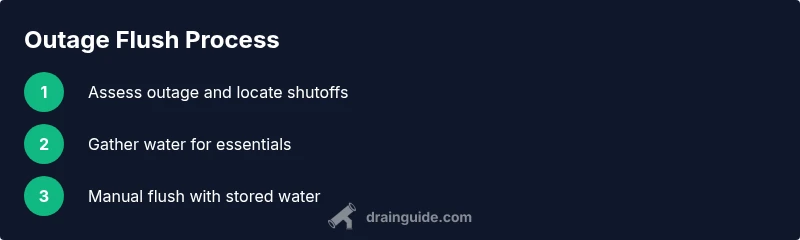
Assess outage and locate shutoffs
Identify the main water shutoff and note its location. Check whether other fixtures are leaking and determine the likely duration of the outage. This step minimizes waste and prevents accidental flooding when water returns.
Tip: Know your shutoff location before outages strike and practice turning it off quickly. - 2
Gather water for essentials
Fill clean containers with drinking water, and reserve a separate bucket of water for minimal sanitary needs. Prioritize handwashing, drinking, and basic hygiene to stay safe during the outage.
Tip: Label containers and store away from food and chemicals. - 3
Create a manual flush plan for toilets
If you must handle a toilet without a tank refill, use a measured pour of stored water (1–2 gallons) to hydraulically push waste toward the drain. Do not top up with an unmeasured amount that could cause overflows.
Tip: Control the pour rate to avoid splashing and reduce odor release. - 4
Use alternatives for waste disposal
When possible, minimize toilet use and consider bags or temporary waste disposal options if a portable toilet is available. Keep waste sealed and labeled to prevent contamination.
Tip: Never mix waste with drinking water; store waste in designated containers. - 5
Return to normal flow when water comes back
Slowly reintroduce water into fixtures. Start with cold water to re-prime traps and check for leaks. Flush toilets one by one and monitor for any abnormal signs.
Tip: If you notice persistent issues, stop and inspect for leaks or call a plumber. - 6
Post-outage safety and sanitation
Disinfect high-touch surfaces, clean with standard household cleaners, and dispose of any waste safely. Monitor for lingering odors and test all fixtures to confirm proper operation.
Tip: Proceed with caution and verify safety before resuming normal activities.
Got Questions?
Can I flush a toilet if the main supply is off?
No. Without water, the toilet tank cannot refill or seal the trap, increasing odor risk and backups. Use manual flush methods only if absolutely necessary and follow safety guidance.
No, you should not flush when the water is off. Use stored water for essential needs and follow safety guides until service returns.
What should I do if odors become a problem during a water outage?
Limit waste, ensure lids are closed, and use stored water carefully for essential rinsing. Once water returns, re-prime traps and ventilate the area to reduce odors.
Close the toilet lid and use stored water for minimal rinsing; odor should fade once water returns and traps reseal.
Is it safe to pour water down drains to flush other fixtures when water is off?
Yes, but only in small controlled amounts for critical needs. Avoid large flows that could overflow or create backflow when sewer pressure is uncertain.
You can pour small amounts for essential cleaning, but don’t flood drains.
Will flushing with a small amount of water damage plumbing?
Generally no, but repeated improper flushing or overfilling can stress seals. Use caution and stop if you notice leaks or gurgling.
It’s unlikely to cause damage if done sparingly, but watch for leaks.
What should I do when the water comes back?
Slowly restore service: run cold water to re-prime traps, then test each fixture. If issues persist, call a professional.
When water returns, reintroduce it slowly and test thoroughly; call a pro if problems persist.
Watch Video
The Essentials
- Conserve water during outages and plan essential uses first
- Use manual or stored-water flush methods only if necessary
- Avoid introducing waste into drains when water is off
- Re-prime traps and test fixtures gradually after service resumes
- Call a professional if problems persist or odors linger