Can You Flush Without Power? A DIY Drain Guide Tutorial
Learn safe, practical steps to flush toilets and clear drains when power is out. This Drain Guide tutorial covers manual flushing, backups, safety, and maintenance to keep your home running smoothly during outages.


Yes. You can flush without power by using manual methods that don’t rely on the electrical system. The most reliable approach is to add water quickly to the toilet bowl or divert water into the drain for a gravity flush. For drains, have a bucket of water ready and use safe, deliberate pours to avoid splashback.
Why power outage scenarios affect flushing and drainage
When power is out, the standard flushing mechanism in many homes relies on gravity and water movement rather than electricity. Can you flush without power? Yes, with simple, proven techniques that leverage the physics of water flow. According to Drain Guide, a basic gravity flush can be simulated by delivering a quick burst of water into the bowl or by diverting water toward the drain with a deliberate pour. This approach is especially important for households with septic systems, where outages can disrupt both electrical and plumbing routines. The broader goal is to manage water volume, pressure, and timing so waste moves through the trap without overflowing. By understanding these principles, you’ll be better prepared to handle power-free flushes safely and cleanly. Drain Guide’s guidance emphasizes preparation, minimizing splash, and avoiding overfilling that could flood the area. As you plan for outages, think ahead about where you’ll source water and how you’ll control the flow to prevent backflow and contamination. Practicing these steps now can save headaches later.
How gravity and water pressure drive toilets and drains
Toilet flushing is fundamentally a gravity and water-kinematics problem. When power is available, the fill valve refills the tank and gravity carries the waste water into the drain. In a power outage, you must rely on manual water movement and the bowl’s geometry to create a sufficient flush. Drain Guide analysis shows that the amount of water delivered and the speed of its delivery determine whether waste clears the rim and trap. A strong, short pour from a bucket near the rim is often more effective than a slow trickle. For drains, the same principle applies: pressurized water can push debris through a trap, and a manually applied plunger can recreate suction to loosen a clog. If the system has a backflow risk, avoid sudden surges that could push water back toward fixtures. Knowing these dynamics helps you decide when to attempt a manual flush and when to call for professional help during an outage. Pay attention to the release timing to prevent splashes and contamination of surrounding surfaces. The more you understand gravity and water dynamics, the more confident you’ll be in power-free scenarios.
Manual flushing techniques you can rely on
Manual flushing is a practical skill for power outages, but execution matters. Start by assembling water from a safe source and keeping it at hand so you don’t have to hunt for supplies in a dark room. The core idea is to deliver enough water quickly to mimic a flush, not to flood the bathroom. If a toilet features a standard gravity flush, a quick pour from a bucket (about a couple of liters) aimed directly into the bowl can move waste toward the drain. For larger toilets or toilets with dual-flush mechanisms, the same principle applies, but you may need slightly more water or a sharper pour to achieve the same effect. When dealing with a drainage backup, the emphasis shifts to controlled water delivery and safe manual suction with a plunger. Avoid over-pouring to minimize splash and keep the floor dry. This section also covers how to handle different fixture types and how to adapt the technique if you’re dealing with a septic system, where water usage should be mindful during outages. The aim is clear: a clean, effective flush without electricity, while maintaining safety and sanitation. Drain Guide’s approach here blends practical steps with safety considerations, so you can stay confident even during a blackout. Keep in mind: can you flush without power is feasible, but timing and method matter just as much as volume.
Quick field tests and safety tips
Before you begin, run through a quick safety check to minimize risk. Make sure outlets, cords, and the path to the bathroom are clear of water or slip hazards. If you have a water supply valve under the sink or near the toilet, know how to shut it off in an emergency to prevent backflow. For a manual flush, test your pour with a small amount of water first to gauge the effect before committing to a full flow. If you’re trying to clear a clog, a plunger can be used with a standard up-and-down motion, but avoid aggressive pumping that could lead to overflow. During outages, stay mindful of electrical safety, especially if sump pumps or flood detectors are part of the system. If you share a toilet with others, establish a simple protocol to minimize misuse and keep the area sanitary. By validating your setup and practicing a few safe techniques, you’ll be ready to handle a power outage without panic. Drain Guide emphasizes calm, methodical action and keeping the workspace clean as key parts of any power-out flush plan.
Maintenance to prevent future power-out flush issues
Proactive maintenance reduces the risk of power-out flush problems. Regularly inspect the toilet’s supply line, valve, and flapper for wear, and replace worn parts before they fail. Simple, non-chemical maintenance routines can keep drains clear and reduce the need for electricity in flush mechanics. When planning for outages, consider adding a dedicated emergency water source, such as a filled container or a small reservoir, to ensure you have enough water for manual flushing. For septic systems, practicing water-conserving habits is essential, especially during outages when electrical systems may be offline for longer periods. Drain Guide’s final guidance is to create a simple outage plan that includes where you’ll source water, how you’ll perform a manual flush, and when you’ll seek professional help if problems persist. Implementing these steps now will boost resilience and reduce the stress of power outages, helping you maintain normal household function with confidence.
Tools & Materials
- Water bucket (2-3 gallons)(Filled with clean water, ready to pour)
- Sturdy pitcher or scoop(For controlled water delivery to the bowl)
- Rubber gloves(Protect hands and improve grip on wet surfaces)
- Plunger (cup or flange)(Essential for unclogging or assisting flush)
- Flashlight(Prep for dim conditions; ensure visibility)
- Old towels or rags(Contain spills and keep the area dry)
- Mop or absorbent bath mat(Clean-up after testing)
Steps
Estimated time: 30-45 minutes
- 1
Gather supplies and prep
Collect a bucket of water, a pitcher, a plunger, and gloves. Clear the bathroom floor and lay towels to protect from spills. Ensure the room is well-lit or turn on a flashlight if needed. This setup minimizes delays once the power is out or when you’re dealing with a surprise outage.
Tip: Have everything within arm’s reach to avoid moving around a dark room. - 2
Safety check and valve awareness
Before you begin, inspect for any exposed electrical devices near water. If you suspect a leak, turn off the main shutoff to the toilet to prevent backflow. Confirm that the water supply line is not actively feeding the bowl while you prepare for a manual flush.
Tip: If you feel unsure, pause and reassess to prevent accidental floods. - 3
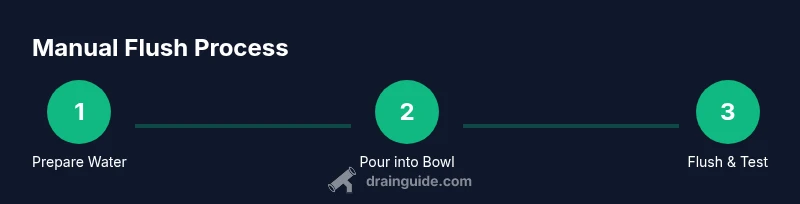
Perform a manual gravity flush
Pour water directly into the bowl from a height to generate a quick, forceful flush. Aim for a strong pour that reaches the trap area to push waste toward the drain. If the toilet doesn’t clear, add another full bucket of water and repeat.
Tip: Use a steady, decisive pour rather than slow drips for best results. - 4
Address possible clogs with a plunger
If the bowl resists flushing or water rises, use the plunger in a firm, controlled motion. Alternate between 8–12 vigorous pumps and rests. This creates suction that can break up small blockages and restore flow.
Tip: Keep the plunger fully submerged and maintain a tight seal. - 5
Tackle drain backups safely
For minor backups in sinks or showers, use the bucket method to push water toward the drain while watching for signs of overflow. If needed, repeat the plunger method in the relevant fixture. Do not mix cleaners; this can create dangerous fumes or chemical reactions.
Tip: Work in a sequence: toilet first, then other drains to minimize cross-contamination. - 6
Test and reset
After flushing or clearing, test the system by pouring a small amount of water into the bowl again. If the toilet flushes cleanly, you’re done. Reopen the supply line if you had shut it off and observe for leaks or unusual noises for the next hour.
Tip: Document what worked so you can repeat it during future outages.
Got Questions?
What should I do first if the power goes out and my toilet won't flush?
In a power outage, start by pouring water into the bowl to simulate a flush and check if the mechanism resets. If the toilet still won't flush, pause and inspect the supply line for proper delivery.
Begin by pouring water into the bowl to simulate a flush, then check the supply line and lever.
Is it safe to use chemical drain cleaners during a power outage?
Avoid relying on chemical drain cleaners during outages. They can be hazardous and may not solve a power-out flushing problem. Use mechanical methods like plunging or manual water flushes instead.
Don’t rely on chemical cleaners during outages; use plungers or manual flushing instead.
How much water should I use to flush manually?
Use multiple pours from a bucket to deliver enough water quickly, creating enough pressure to move waste. Avoid pouring in a slow trickle and don’t overfill the bowl.
Pour water quickly in several bursts to create pressure for a manual flush.
Can I fix a clogged drain without power?
Yes. Start with a plunger to create suction and break the blockage. If this fails, consider using a drain auger or calling a professional to avoid damaging pipes.
A plunger can often clear a clog when power is out; try an auger if needed.
What safety precautions should I take during a power outage?
Turn off the main water supply if there’s a risk of backflow, wear gloves, and keep the floor dry to prevent slips. Do not mix cleaners and avoid electrical equipment near water.
Wear gloves, keep the area dry, and avoid electrical equipment near water.
Watch Video
The Essentials
- Know manual flush basics and when to stop
- Have water ready before power goes out
- Use safe techniques to avoid mess
- Consider professional help for recurring outages