Clogged Shower Drain Troubleshooting Guide
Urgent, practical guide to diagnose and clear a clogged shower drain. Learn safe DIY steps, when to use tools like a plunger or snake, and when to call a plumber for persistent clogs.


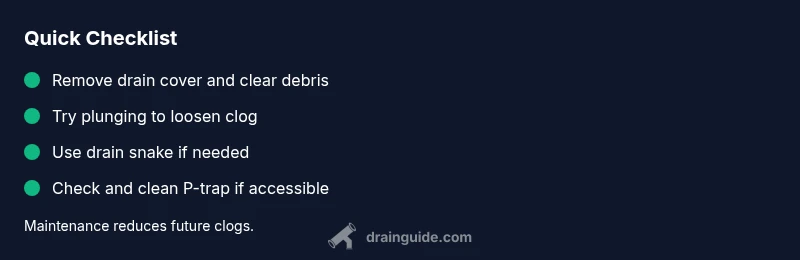
Start by removing the shower drain cover and pulling out hair and debris. Rinse the opening with hot water, then try a plunger to loosen the clog. If that fails, use a drain snake or auger gently to the trap. Flush again, and check the P-trap if accessible. Avoid harsh chemical cleaners and call a plumber if it remains stubborn.
What causes a clogged shower drain?
A clogged shower drain usually starts with everyday bathroom debris. Hair, soap scum, and mineral buildup can combine to form a dense, slow-moving clog. According to Drain Guide, hair is the most common culprit in residential showers, followed by soap scum that binds minerals and produces a gummy plug. In some homes, mineral deposits from hard water create crusty layers that narrow the pipe path over time. Even small amounts of dirt, soap residues, and body oils can contribute if the drain screen is missing or damaged. Understanding these factors helps you choose safer, more effective fixes and prevents unnecessary chemical use. Remember: DIY approaches work best when you start with the simplest cause and progress to more involved fixes if needed.
Hair, soap scum, and mineral buildup: the typical culprits
Hair strands tangled with soap scum are the choreography of most shower clogs. Soap scum acts like a glue, catching mineral deposits from hard water and forming a crust that slowly narrows your drain. Mineral buildup is more common in areas with hard water and can progressively constrict the pipe over months or years. Understanding these culprits helps you tailor your approach, from simple hair removal to more thorough flushing and trap cleaning. Drain maintenance, such as regular screen cleaning and periodic hot-water flushes, can dramatically reduce recurring clogs.
What to check first: quick DIY diagnostics
Before pulling out tools, verify basic things that can masquerade as a clog. Check the drain cover or screen for hair and debris and clear it. Look for standing water after a shower, which suggests the water is not draining as it should. Gurgling sounds indicate pressure changes or a partial blockage downstream. If you have multiple drains in the bathroom, test them to see if the problem is localized to the shower or part of a broader drainage issue. Quick tests save time and reduce unnecessary disassembly.
Tools and safety: gear you need before you start
Set up a safe workspace with gloves, eye protection, a bucket, and towels. Gather a plunger, a drain snake or auger, and a digital thermometer if you plan to use hot-water flushing. If you reach the P-trap, have a wrench handy and a container to catch any residual water. Never mix chemicals unless the label explicitly allows it, and ventilate the bathroom when using cleaners. Protect your skin and lungs by using proper safety gear and working slowly to avoid splashes.
How to test your shower drain: simple flow tests
Begin with a straightforward flow test: fill the shower base with a small amount of water and observe how fast it drains after removing the stopper. If water sits and backs up, the clog is likely near the drain entry. For a deeper check, remove the drain screen and run a thin rod or flexible wire to probe the opening. Do not force a rod into a pipe; stop if you feel resistance. These tests guide the next steps without disassembly.
Common mistakes to avoid during DIY unclogging
Avoid mixing cleaners or using chemical drain openers as a first move; they can damage pipes and cause harmful gases. Don’t use excessive force with the plunger, which can push the clog deeper or crack the drain. Never ignore a persistent odor or unusual water backups — these signals may indicate a more serious problem. If you’re unsure at any point, pause and reassess or call a professional.
Alternative methods if plunger fails: plunger, drain snake, natural cleaners
If the plunger doesn’t clear the clog, try a drain snake or auger to break up the obstruction. Feed the snake slowly until you feel resistance, then rotate and pull back to retrieve debris. Boiling water can help with some mineral buildup, but avoid boiling water on PVC pipes if you’re unsure of compatibility. For a gentler approach, a baking soda and vinegar flush can help shift minor buildups, followed by a hot-water rinse.
Preventing future clogs with a simple maintenance routine
Establish a quick routine: weekly screen cleaning, monthly hot-water flushes, and periodic P-trap checks if accessible. Consider a stainless steel drain screen to minimize hair entry and help capture debris. If your water is hard, you may benefit from a home filtration option to reduce mineral scale formation. Small, consistent habits prevent big clogs and keep drains flowing smoothly.
When to call a professional and what to expect
If the clog persists after basic DIY steps or you notice sewage odors, gurgling, or water backing up into other fixtures, it’s time to call a licensed plumber. A pro can evaluate for deeper blockages, venting issues, or sewer line problems. Expect a diagnostic inspection, possible camera inspection, and scope-based clearing. Early professional help can prevent pipe damage and costly repairs.
Steps
Estimated time: 45-60 minutes
- 1
Remove the drain cover and clear debris
Put on gloves and pull up the drain cover to access the opening. Clear visible hair and debris with your fingers or a pair of tweezers. Wipe the screen clean and set aside the debris in the trash.
Tip: Have a bucket ready for hair and gunk to avoid making a bigger mess. - 2
Flush with hot water to loosen buildup
Pour hot, not boiling, water down the drain to loosen grease and mineral buildup. Repeat several times if the flow improves. This step helps prepare the drain for plunger work or auger use.
Tip: Hot water can help dissolve soap scum; avoid boiling water if you have PVC pipes without confirmation of compatibility. - 3
Try the plunger to dislodge the clog
Seal the drain with the plunger and give steady, strong pushes. Lift to release and repeat 6–12 times. If the water doesn’t clear, move to the next method rather than forcing deeper.
Tip: Ensure there’s enough water to cover the plunger for an effective seal. - 4
Use a drain snake if plunger fails
Insert the snake into the drain and twist while feeding it forward. When you reach resistance, pull back slowly to extract the clog or push through to break it up.
Tip: Go slowly and avoid forcing past the trap if you’re not comfortable with DIY plumbing. - 5
Check the P-trap and clean
If accessible, loosen the P-trap under the shower and remove debris caught inside. Reassemble carefully and run water to confirm drainage.
Tip: Place a towel underneath to catch residual water and prevent a mess. - 6
Flush and re-test drainage
Run the shower to re-test drainage. If water still backs up, repeat the snake step or consider professional help.
Tip: Document what you tried so a plumber can pick up where you left off.
Diagnosis: Shower drain drains slowly or backs up after showering
Possible Causes
- highHair and soap buildup at the drain or in the trap
- mediumSoap scum and mineral buildup reducing pipe diameter
- lowPartial clog further down the line in the drain stack
Fixes
- easyRemove the drain cover and manually clear visible hair
- easyUse a plunger to loosen the clog
- mediumRun a drain snake into the drain to break the clog
- mediumClean the P-trap if accessible and clear debris
- easyFlush with boiling water with baking soda/vinegar if recommended
Got Questions?
Why is my shower drain slow even after cleaning the screen?
If cleaning the screen doesn’t help, the clog may be deeper in the pipe or at the trap. Check the trap for debris and try a drain snake. If the issue persists, there could be venting problems or a more serious blockage further down the line.
A slow drain after cleaning could mean the clog is deeper in the pipes or at the trap. Try a snake, and if it still won’t drain, consider professional help.
Can I use chemical drain cleaners on a shower drain?
Chemical cleaners can damage pipes, especially plastic ones, and may leave harmful fumes. They’re not ideal for typical residential clogs. Use mechanical methods first and only follow label directions if you choose a cleaner.
Chemical cleaners can harm pipes and aren’t the best first choice. Use plungers or snakes before considering cleaners.
What tools should I have for DIY unclogging?
A basic toolkit includes gloves, a plunger, a drain snake, a bucket, towels, and adjustable pliers for the P-trap. Keep a measuring cup for hot water and vinegar or baking soda if you want a gentle flush.
Grab gloves, a plunger, a drain snake, a bucket, and towels. You’ll also want pliers if you need to check the trap.
When is it time to call a plumber?
Call a plumber if the clog persists after multiple attempts, if you smell sewage, or if water backs up into other fixtures. A professional can diagnose venting issues or sewer line problems that DIY methods can’t fix.
If the clog remains after trying, or you smell sewer gas, contact a plumber.
What maintenance helps prevent clogs long-term?
Regularly remove hair from screens, flush with hot water monthly, and inspect the P-trap if accessible. Consider a basic filtration screen to catch debris before it enters the pipe.
Do routine screen cleanups and occasional hotwater flushes to prevent future clogs.
Watch Video
The Essentials
- Start with basic hair removal and plunger use.
- Hair is the most common cause of clogs.
- A drain snake handles deeper blockages when plunging fails.
- Prevent future clogs with routine maintenance.