Condensation on AC Drain Line Troubleshooting for Homeowners
Learn to diagnose and fix condensation on the AC drain line, prevent overflow, and protect your home with a practical, step-by-step approach.


Likeliest cause for condensation on the AC drain line is a blocked condensate line or pan overflow due to algae, mineral buildup, or dirt. Start by turning off the system, checking the condensate trap and drain line for clogs, and clearing with a wet/dry vacuum or flexible brush. If water continues to back up, call a professional.
Understanding condensation on AC drain line
Condensation on an air conditioner isn't always a sign of a problem with the cooling cycle; more often it's a drainage issue. The drain line carries water that forms as warm indoor air meets cold evaporator coils. When the line or pan collects debris, algae, or mineral scale, water can't flow freely and begins to back up, creating visible moisture around the unit and sometimes puddles on the floor. According to Drain Guide, condensation on the AC drain line is a common homeowner issue in humid settings. The root of the issue is usually a combination of humidity, temperature differentials, and a path of least resistance for the water. In most homes, the line runs to a condensate drain in the wall or outside; if this path becomes blocked, condensate will overflow the tray. Understanding the system helps you respond quickly and avoid water damage. Long-term humidity control and regular maintenance are essential to prevent recurring condensation problems, not just a one-time fix.
Common causes and telltale signs
Several factors can drive condensation on the AC drain line. A clogged drain line or trap is the most frequent culprit; algae growth and mineral buildup (scale) reduce the line’s diameter and slow drainage. A full or damaged condensate pan, a malfunctioning float switch, or a failing condensate pump can also cause backflow. In many cases, you’ll notice water pooling near the indoor air handler, musty smells, or damp ceiling/wall spots in rooms below the unit. A simple visual check—looking for standing water, green slime at the line, or a gurgling sound when the unit runs—can reveal the issue. Regular maintenance, including filter changes and pan inspections, is your best defense against repeated condensation problems.
Immediate safety actions to take if you notice water
If you see water pooling, shut off the AC unit to prevent further overflow and possible electrical hazards. Do not touch wet electrical components, and keep children and pets away from the area. If you have access to the condensate pan, carefully inspect for cracks or rust and note any unusual odors. Use a flashlight to check the line for obvious blockages, then proceed with safe clearing methods described later. Remember, water and electricity are a dangerous combination; when in doubt, turn off power at the breaker and wait for professional help.
Diagnostic clues: turning symptoms into a diagnosis
A systematic approach helps you distinguish a clogged line from a failed pump or pan. If water appears only when the humidity is high and the AC runs heavily, a dirty filter or high humidity could be contributing factors. If the line is clear but you still see dripping, the problem may be a stuck float switch or a faulty condensate pump. Visual clues also matter: algae or slime in the line indicates biological buildup, while a loose or disconnected drain line suggests a mechanical issue. Keep notes on when the water appears most, which rooms are affected, and any odors or strange noises to help a technician diagnose the root cause quickly.
Drain line clearing techniques and tools
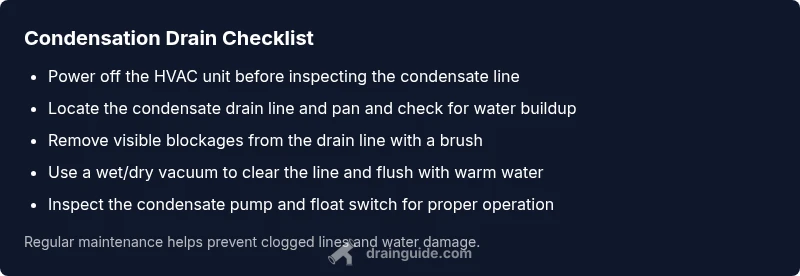
Clearing a condensate line involves careful steps to avoid water damage and electrical hazards. First, power off the HVAC unit and locate the drain line and trap. If there is a corrosion-free trap, remove any visible debris by hand. Use a flexible brush or pipe cleaner to dislodge buildup inside the line, then employ a wet/dry vacuum to pull out residual clogs. Flush the line with warm water; mild cleaning solution (approved for condensate lines) can help break down buildup, followed by another rinse. Reinstall the trap and ensure all connections are tight. If the line remains clogged after these steps, proceeding to professional help is advised rather than forcing water further along the line.
Prevention: maintenance to avoid future issues
Prevention is more cost-effective than repeated repairs. Schedule regular condensate line inspections, especially during humid seasons. Change air filters every 30-90 days, as dirty filters reduce airflow and increase moisture. Ensure the condensate pan is clean and undamaged, and test the float switch and pump if applicable. Consider installing a condensate overflow switch to shut off the unit if backflow is detected. Keep the area around the outdoor drain free of debris and mulch, which can drift into the line. A proactive maintenance routine minimizes the chance of future condensation problems and water damage.
When to call a professional: know your limits
If you cannot locate the clog, if water continues to back up after clearing attempts, or if you notice persistent odors or mold growth, it’s time to contact a licensed HVAC technician. A professional can perform a pressure test, verify pump operation, and ensure that the condensate line and drainage system comply with local codes. Don’t risk compromising your home’s electrical system or structural integrity by pushing through a stubborn blockage without proper equipment and expertise.
Real-world scenarios and homeowner tips
Homeowners often encounter condensation on the drain line after last year’s heavy rains or in homes with high indoor humidity. In some cases, a misaligned line or a loose fitting causes occasional backups during peak cooling. Small steps like untangling nearby plant debris, guiding the line away from walls, and routinely flushing the line with water can reduce the occurrence. Keep a simple maintenance log—note dates of cleanings, filter changes, and any incidents of backflow. Recording these details helps you spot patterns and prevents bigger problems down the line.
Steps
Estimated time: 30-60 minutes
- 1
Power off and locate drain components
Shut off the HVAC unit at the breaker to avoid shock. Locate the condensate drain line and its trap. Confirm where water is pooling and identify accessible screws or clamps.
Tip: Use a flashlight and wear gloves for safety. - 2
Check the condensate pan and trap
Inspect the pan for cracks and the trap for debris or a partial blockage. If you see standing water or slime, proceed to cleaning steps.
Tip: Take a photo before disassembly to reassemble correctly. - 3
Clear the line
Use a flexible brush to loosen buildup inside the line. Follow with a wet/dry vacuum to extract loose material from the end of the line.
Tip: Do not force the line beyond its bend; avoid kinks. - 4
Flush and recheck
Flush the line with warm water or approved line cleaner. Reattach the trap and ensure all connections are secure. Restore power and run the unit briefly to test.
Tip: Watch for any backflow during the test. - 5
Inspect pump and float switch
If you have a condensate pump, test the float switch and listen for the pump cycling. Replace faulty components if needed.
Tip: Use manufacturer instructions for pump testing. - 6
Final test and cleanup
Run the AC for 15–20 minutes while monitoring the line and pan. Clean up any residual water and seal access panels properly.
Tip: Document the process for future maintenance.
Diagnosis: Visible water around the indoor air handler or dripping from the condensate drain line
Possible Causes
- highClogged condensate drain line
- mediumFull or blocked condensate pan
- lowDamaged condensate pump or float switch
Fixes
- easyTurn off power and access the drain line and pan
- easyClear line with a flexible brush or wet/dry vacuum, then flush with warm water
- mediumInspect condensate pump/float switch; replace if faulty
Got Questions?
What causes condensation on the AC drain line?
Condensation on the AC drain line is usually caused by a clogged line, algae growth, or mineral buildup. High humidity and a dirty filter can worsen the issue. A blocked line prevents proper drainage and leads to overflow.
It's usually a blocked line or buildup; high humidity makes it worse. A clean air filter helps too.
How do I clear a blocked condensate drain line safely?
Shut off power, locate the drain line and trap, and remove visible debris. Use a flexible brush or pipe cleaner, then a wet/dry vacuum to pull out clogs. Flush with warm water afterward.
Power off, clear the line with a brush or vacuum, then flush with warm water.
Is condensation dangerous to my home?
Yes, persistent condensation can cause water damage, mold growth, and ceiling or wall staining if left unaddressed.
Yes—backups can lead to mold and water damage if ignored.
Should I replace my condensate pump?
Only if tests show the pump or float switch is failing. If the pump works intermittently, maintenance or cleaning may suffice.
Only replace it if it’s failing; otherwise cleaning helps.
Can I use bleach or vinegar in the condensate line?
Harsh chemicals are not always recommended. Use manufacturer-approved cleaners and flush with water; consult a pro if unsure.
Don’t flood it with bleach; use approved cleaners and flush.
When should I call a professional?
If you cannot locate the clog, water keeps backing up, or you notice mold/odor, a licensed HVAC technician should assess and resolve the issue.
If it keeps backing up, call a pro.
Watch Video
The Essentials
- Inspect the condensate line regularly for blockages.
- Clear clogs safely with brushes and a vacuum, then flush.
- Test the condensate pump or float switch if you have one.
- Prevent future issues with proactive maintenance.
- Call a professional if backflow persists.