AC Drain Lines Clogged: Quick Fixes & Prevention
Learn how to diagnose and fix an AC drain line clog fast with practical steps, safety tips, and prevention strategies from Drain Guide to protect your home.


The most likely cause of an AC drain line clog is algae or mineral buildup in the condensate line. For a quick fix, power down the unit and use a wet-dry vacuum at the drain access to pull out the clog. If that doesn’t clear it, flush with a safe cleaner and verify proper drainage.
Understanding AC Drain Lines and Why They Clog
AC units produce condensate water that travels through a dedicated drain line to a safe discharge point. In humid climates, algae, mold, dust, and mineral buildup can accumulate over time, leading to a clog. A blocked condensate line can cause overflow, water damage, and even ice formation on the evaporator coil. Drain Guide emphasizes practical, safe steps you can take to diagnose and address the issue while avoiding electrical hazards and future headaches. Look for signs like a slow drip, damp areas near the air handler, or a musty odor—these often point to a clog in the ac drain lines clogged condition. Regular maintenance reduces the chance of recurring clogs.
Common Symptoms of a Clogged Condensate Line
- Water pooling around the air handler or within the closet
- Gurgling sounds or a sluggish drain from the pan
- Higher indoor humidity and musty smells
- Visible mineral crust or white buildup near the drain opening
- Condensate discharge stops or slows significantly
Safety First: What Not to Do
- Do not poke the line with metal objects; you can puncture or bend it.
- Avoid chemical drain cleaners in AC lines; they can corrode plastics and damage the coil.
- Always cut power at the thermostat and breaker before inspecting or cleaning.
- Do not attempt major repairs unless you are confident in basic electrical safety.
Quick Home Checks You Can Do Before Calling a Pro
- Visually inspect the drain pan for overflow and signs of mold
- Use a wet-dry vacuum at the accessible end of the condensate line to pull out the clog
- If accessible, flush the line with a safe cleaning solution (enzyme-based cleaners are preferred) and run water through to test flow
- Check the line’s slope and ensure there are no kinks or disconnections
- Inspect the drain line cleanout cap for obstructions or cracks
How a Clog Impacts Your AC System
A clogged condensate line can trigger safety switches that shut down the system to prevent water damage, leading to reduced cooling. Mold growth from standing water can degrade indoor air quality and cause musty odors. In some cases, continuous clogging forces the system into slower operation, reducing efficiency and increasing energy costs. Preventive maintenance keeps your AC running smoothly and minimizes the risk of expensive repairs.
When to Call a Technician: Signs of a Bigger Issue
If water is backing up into your living space, the clog seems persistent after basic cleaning attempts, or you notice frequent tripping breakers, it’s time to call a professional. A licensed HVAC tech can clear deep blockages, repair damaged lines, and inspect for improper installation. Regular service helps catch issues early and protect your home from water damage.
Steps
Estimated time: 30-45 minutes
- 1
Power down and locate drain access
Turn off power to the AC at the thermostat and the breaker. Locate the condensate drain access near the air handler or furnace. This ensures you won’t be shocked or short-circuited during inspection.
Tip: Lockout the breaker if you have a shared panel to prevent accidental re-energizing. - 2
Inspect the drain pan and line
Check for standing water in the drain pan and visible blockages at the line entry. Look for cracks, disconnections, or kinks that could impede flow.
Tip: Take a photo before moving parts to help with reassembly. - 3
Clear the line with a vacuum
Attach a wet-dry vacuum to the condensate line end and seal around the connection if possible. Run the vacuum for several seconds to pull the clog free.
Tip: If the clog is stubborn, try again from multiple access points. - 4
Flush the line with cleaner
Introduce a safe enzyme-based cleaner or a small amount of distilled water with a gentle cleaner through the line. Allow the solution to sit briefly, then flush with water to test drainage.
Tip: Avoid strong chemical cleaners that can damage the line or coil. - 5
Test drainage and restore power
Remove the vacuum and restore power. Run the AC for a few minutes to observe proper drainage and ensure no overflow occurs.
Tip: If you see continued backup, stop and call a pro to prevent water damage.
Diagnosis: AC drain line is clogged with water backing up near the air handler
Possible Causes
- highAlgae or mineral buildup in the condensate line
- mediumImproper slope or damaged drain line
- lowDisconnected or blocked line cleanout
Fixes
- easyClear the line using a wet-dry vacuum at the access point
- easyFlush the line with enzyme-based cleaner or a diluted vinegar solution
- mediumRepair slope or replace damaged drain line; install a new cleanout
- hardReplace failed condensate overflow pan or float switch if needed
Got Questions?
What causes AC drain lines to clog?
Algae growth, mineral buildup, and debris in the condensate drain line are the most common causes.
Algae and mineral buildup are the main culprits behind condensate drain line clogs.
Can I use chemical drain cleaners on AC lines?
No. Chemical drain cleaners can corrode the plastic drain line and damage the AC components. Use enzyme-based cleaners instead.
Avoid chemical drain cleaners for condensate lines; they can harm the system.
Is it safe to use a wet/dry vacuum on the drain line?
Yes, a wet/dry vacuum can clear clogs at accessible points, but avoid forcing water into the coil or electrical connections.
A vacuum can help clear clogs if used carefully.
How often should I maintain my AC drain lines?
Inspect and clean condensate lines at least seasonally, more often in humid climates to prevent buildup.
Perform seasonal checks, especially in humid areas.
What are signs of overflow or backup?
Water pooling near the unit, damp ceilings, or musty odors indicate a clog or overflow.
Look for pooling water or a musty smell as warning signs.
When should I call a professional?
If basic cleaning doesn’t clear the clog, or you notice ongoing water intrusion or mold, call a licensed HVAC technician.
Call a pro if the clog persists or water damage occurs.
Watch Video
The Essentials
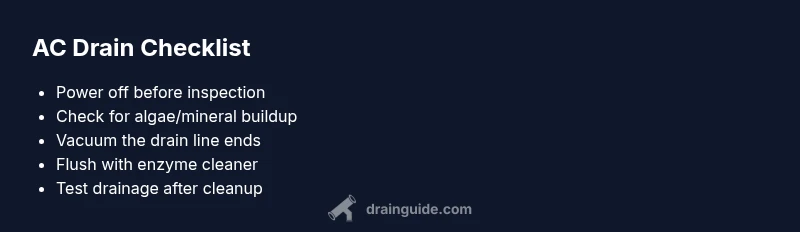
- Turn off power before inspections
- Algae/mineral buildup is a common cause
- Vacuum the line to clear clogs
- Use enzyme cleaners to maintain lines
- Call a pro if the clog recurs or water intrusion is observed