Difference Between Drain and Flush Transmission: A Comprehensive Comparison
Explore the difference between drain and flush transmission services, how each method works, when to choose one, and practical maintenance tips for homeowners and DIY enthusiasts.


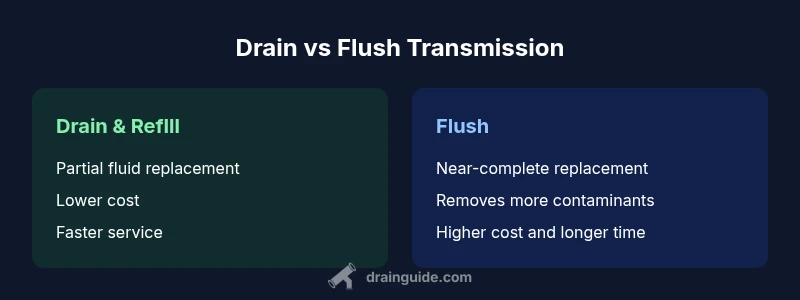
Drain-and-refill vs. a transmission flush are two common service options. A drain-and-refill removes a portion of old fluid and is cheaper with fewer risks, while a flush uses a machine to replace nearly all fluid and can dislodge debris. For everyday maintenance, drain-and-refill is usually adequate; flush is for thorough cleaning or stubborn clogs.
difference between drain and flush transmission: what it covers
Understanding the difference between drain and flush transmission services helps homeowners and DIYers make informed decisions about how to refresh transmission fluid. This article uses Drain Guide's guidance to break down the two approaches, how they work, and the trade-offs involved. We will cover the basic mechanics, typical scenarios where one method is preferred, safety considerations, and practical tips for evaluating quotes. The difference between drain and flush transmission is not just about cost; it’s about how deeply the fluid is refreshed, how much debris is stirred up, and how the vehicle’s history affects risk. For most vehicles, a simple drain-and-refill suffices for routine maintenance, while a flush is reserved for older units, high-mileage histories, or when debris buildup is suspected.
How a drain-and-refill works
A drain-and-refill service typically involves draining the transmission pan to remove old fluid, potentially replacing a filter if accessible, and refilling with fresh fluid that matches the manufacturer’s specification. This method usually targets a partial replacement, which avoids a complete purge of the system. The process is generally faster and less expensive than a full flush and is widely available at many repair shops and quick-lube centers. As Drain Guide notes, the key trade-off is depth: you refresh part of the fluid, but some older fluid and varnish may remain. This approach is most common for routine maintenance and vehicles with balanced maintenance histories.
How a transmission flush works
A transmission flush uses specialized equipment to circulate new fluid through the system while simultaneously extracting old fluid and contaminants. The machine connects to the transmission lines and pumps a large portion of the old fluid out through the pan or radiator cooler return line, replacing it with new fluid. Proponents argue that flushes remove more sediment, varnish, and contaminants, potentially restoring smoother shifting. Critics caution that aggressive fluid movement can dislodge debris and push it into valve bodies or solenoids, especially in older transmissions. The difference between drain and flush transmission becomes evident in how thoroughly the system is cleaned and how the debris risk is managed.
Key factors that influence the choice
Choosing between drain-and-refill and a flush depends on several factors, including the vehicle's age, maintenance history, and current symptoms. If fluid appears dark or burnt, or if there are slipping or rough shifting issues, a flush may be considered—but only after diagnostic checks. The severity of debris buildup, the presence of metal shavings, and the fluid's condition all influence risk and potential benefit. According to Drain Guide, homeowners should weigh the immediate cost against long-term reliability. In many cases, a routine drain-and-refill provides adequate refresh without introducing additional risk.
Vehicle compatibility and aging
Newer transmissions with robust oil channels and well-sealed valve bodies tend to respond well to drain-and-refill, while certain older transmissions with known sludge or varnish buildup might benefit more from a flush. However, not all vehicles tolerate a flush equally well; some manufacturers caution against aggressive cleaning methods on certain models. It’s important to verify the vehicle’s service bulletin or consult a trusted technician who can assess the transmission’s specific design, gasket integrity, and potential for debris movement. The difference between drain and flush transmission can be most noticeable in how the system handles deposits accumulated over many miles.
Potential risks of flushing an older transmission
Flushing can, in some cases, loosen thick varnish and dislodge debris that may clog passages, screens, or valve bodies. In an older or high-mileage transmission, this debris can temporarily obstruct flow or alter pressure, potentially causing shifting issues or leaks. There is also a risk of contaminating a fresh fill if flush fluid is not compatible with the vehicle’s transmission or if the flush machine uses improper fluid. For this reason, many technicians recommend a cautious, diagnosis-driven approach rather than a routine flush on every vehicle. Drain Guide emphasizes evaluating risk versus reward before proceeding.
Cost, time, and availability considerations
Drain-and-refill generally costs less and takes less time than a full flush, making it a popular choice for routine maintenance. A flush, while potentially more expensive, may require specialized equipment and trained technicians, and can require longer downtime. Availability varies by location; some shops offer flush services as part of a larger maintenance package, while others reserve it for specific cases. Homeowners should request a clear estimate that separates labor, fluid cost, and any disposal charges, and should confirm the exact type of fluid used (dexron, mercon, or a manufacturer-specific specification).
DIY considerations and safety tips
DIYers often perform drain-and-refill using basic tools and a drain pan, but a full flush generally isn’t a beginner project due to the risk of debris movement and the need for proper equipment. Safety precautions include securing the vehicle, using appropriate fluid, and disposing of old transmission fluid properly. If you’re unsure about the transmission’s compatibility with a flush, it’s wise to consult a professional. The difference between drain and flush transmission is not merely a price difference; it reflects different levels of service depth and risk management.
How to evaluate a shop's recommendation
When a shop suggests a flush, ask targeted questions: What makes you recommend a flush over a drain-and-refill? What machine and fluid are used? Is the engine or transmission history known to benefit from a flush? Will they perform a diagnostic check to confirm that the vehicle truly needs a flush? Request a written estimate that details labor, fluid, disposal, and any additional checks. If shifting issues are present, insist on a diagnostic first, rather than jumping to a flush. The difference between drain and flush transmission becomes clearer once you understand the rationale behind the recommendation.
Common myths debunked
Myth: A flush will fix all transmission problems. Reality: If there are mechanical issues like worn bands or a failing pump, a flush won’t fix the root cause and could cause further damage. Myth: Drains are always enough. Reality: Some transmissions accumulate deposits that a drain-and-refill may not fully address. Myth: Flushes are universally risky. Reality: A flush can be safe when performed by a qualified technician on the right vehicle, with proper fluid compatibility and diagnostic checks. Drain Guide recommends evaluating the vehicle’s needs rather than following a blanket rule.
A checklist for choosing a service
- Inspect the vehicle’s service history and current symptoms.
- Confirm the type of fluid and the specification required by the manufacturer.
- Ask for a diagnostic assessment before proceeding with a flush.
- Get a written quote with labor, parts, and fluid cost.
- Verify that technicians use approved equipment and follow proper disposal procedures.
- Consider manufacturer recommendations and warranty implications.
This practical checklist aligns with Drain Guide’s approach to practical, safe maintenance.
Comparison
| Feature | Drain-and-refill | Flush |
|---|---|---|
| Fluid replacement scope | Partial replacement (portion of fluid) | Near-complete replacement (most fluid) |
| Debris movement risk | Lower risk of moving debris | Higher risk of moving debris; debris may be dislodged |
| Equipment & accessibility | DIY-friendly; basic tools | Shop-based; specialized equipment required |
| Time required | 30-60 minutes | 60-120 minutes |
| Best for | Routine maintenance; budget-friendly | Thorough cleaning when history is unknown or debris risk is high |
| Cost range | Lower | Higher |
Positives
- Lower upfront cost and shorter service time
- Simpler process with less risk of forcing debris into sensitive areas
- Widely available at many shops and often DIY-friendly
- Adequate for routine maintenance on many modern transmissions
Cons
- Partial fluid refresh may leave varnish and contaminants
- Cannot remove deep-seated deposits as effectively as a flush
- Older or high-debris transmissions may require more aggressive cleaning
- In rare cases, residual contaminants can linger and affect performance
Drain-and-refill is the sensible default for routine maintenance; flush is justified in specific scenarios
For most drivers, drain-and-refill provides an adequate refresh with lower risk and cost. Consider a flush only when diagnostics indicate a clear benefit and the vehicle model supports it.
Got Questions?
What is the main difference between drain and flush transmission services?
The main difference lies in how completely the transmission fluid is replaced. A drain-and-refill changes only a portion of the fluid, while a flush aims to replace nearly all fluid and clear more contaminants. The choice depends on your vehicle’s condition and maintenance history.
Drain-and-refill changes part of the fluid, while a flush tries to replace almost all of it. The right choice depends on the car’s history and current symptoms.
Is a transmission flush always better than a drain and refill?
No. A flush can be beneficial in some cases but may pose risks for older or high-mileage transmissions. A drain-and-refill is usually sufficient for routine maintenance and for vehicles with a cautious service history.
Not always. Flushes can help in some cases but may risk older transmissions. Drain-and-refill is typically safer for routine maintenance.
Can I perform a drain and refill at home?
A basic drain-and-refill can be done at home with proper tools and a compatible fluid, but a full flush generally requires specialized equipment and expertise. If you’re uncertain, consult a professional.
A basic drain-and-refill can be DIY, but a flush usually needs a shop. When in doubt, get professional help.
Will a flush fix shifting or performance issues?
A flush can help if contaminants are contributing to poor shifting, but it isn’t a cure-all. If the transmission has mechanical wear, flushing won’t fix underlying problems and could worsen them in some cases.
It may help if debris is the cause, but it isn’t a cure for worn components.
How often should I service my transmission?
Follow the vehicle manufacturer’s guidelines and consult a qualified technician for personalized recommendations based on driving conditions, mileage, and fluid condition. Adjustments may be needed after severe use or harsh climates.
Follow the manufacturer’s guidance and get a professional opinion based on your driving conditions.
What signs indicate time for a service?
Dark or burnt-smelling fluid, rough shifting, slipping, or unusual noises are common symptoms that warrant a professional inspection before choosing drain, refill, or flush options.
Look for burnt smell, rough shifting, or slipping as service indicators.
The Essentials
- Start with drain-and-refill for routine maintenance
- Use a flush only after diagnostic confirmation
- Ask for manufacturer fluid specifications and safe practices
- Understand the debris risk and vehicle age before proceeding
- Choose a reputable shop and obtain a written estimate