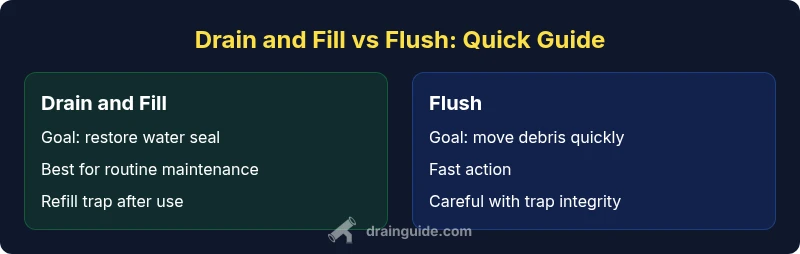
Drain and Fill vs Flush: A Practical Comparison for Home Drains
Compare drain and fill vs flush for home drains. Learn when to use each method, their benefits and risks, and practical steps to keep traps sealed and drains flowing.


Drain and fill vs flush is not a universal rule; choose drain and fill when you want to refill the trap, maintain a consistent water seal, and minimize sediment buildup; flush can be quicker but may dislodge buildup and mask slow drains. For most residential use, a balanced approach depending on the fixture and clog risk is best.
Conceptual Foundations: Drain and Fill vs Flush
According to Drain Guide, drain and fill focuses on restoring the water seal in traps, while flush emphasizes moving debris toward the sewer line. Both techniques share the goal of maintaining smooth drainage, but they serve different primary purposes. A key principle is recognizing that the water seal is your first defense against sewer gases, and keeping it intact helps protect indoor air quality. Drain and fill is about ensuring this seal remains robust after drain usage, whereas flush aims to move solids rapidly through the lines. Understanding these goals helps homeowners apply the right method to the right situation without overdoing either approach. Consistency matters; abrupt changes in how you treat a fixture can create new problems rather than solve existing ones. For most households, using a deliberate, fixture-specific strategy balances safety and performance while reducing maintenance surprises.
When to choose drain and fill
Drain and fill is most appropriate when the priority is protecting the trap water seal and minimizing odor risk. This approach is valuable after a trap has dried out due to infrequent use, after cleaning a trap, or when a fixture has shown signs of slow drainage that may be related to trapped debris near the seal. The method involves refilling or ensuring a proper water level in the trap after a drain cycle, which helps maintain the barrier against sewer gases and prevents dry-out. In practice, this means taking a moment to verify water is present in the trap before resuming normal use and, if needed, adding a small amount of water to restore the seal. Drain Guide emphasizes treating each fixture based on its typical use pattern, not applying a one-size-fits-all ritual.
When to choose flush
Flush is most effective when the aim is rapid debris movement or clear passage for a short term. It can help push out loose buildup that doesn’t dwell near the trap and is more appropriate for fixtures with frequent minor clogs or high-flow rates where a quick surge can restore flow. However, excessive flushing or using aggressive flush tactics without regard to trap integrity can potentially disturb the seal or push more dirt further into the system. The best practice is to deploy flush selectively, guided by observed drainage behavior and the fixture type. Drain Guide cautions that flush should not replace routine maintenance when traps are dry or when persistent slow drainage signals a deeper problem.
Fixture and material considerations
Different fixtures (sinks, showers, toilets) and pipe materials (PVC, copper, or metal traps) respond differently to drain and fill or flush. PVC and metal traps generally tolerate standard maintenance well, but aging or damaged traps demand gentler handling and, if needed, professional assessment. When planning either method, ensure that the trap is intact, the seals are not cracked, and no chemical cleaners will interfere with the water barrier. For kitchens and bathrooms with flexible fittings, maintain caution to avoid accidentally creating siphons or backflows. The Drain Guide approach emphasizes tailoring actions to the fixture’s design and the overall plumbing layout.
Practical considerations: odor control and safety
A properly maintained water seal not only prevents sewer odors but also reduces the chance of gas ingress in the living space. The drain and fill method supports odor control by maintaining a stable barrier, while flush helps keep lines clear and reduces the risk of stubborn blockages that could lead to backups. It’s important to avoid mixing aggressive cleaners with flush procedures, and never rely on quick fixes to cover up underlying issues such as damaged traps, vent problems, or collapsed lines. Regular inspections and a conservative maintenance schedule are the most reliable safeguards. Drain Guide emphasizes documenting what works for each fixture and sticking with a predictable routine.
Real-world scenarios and checklists
Before you start, run through a concise checklist: identify the fixture, check the trap for dryness, assess the visible piping for leaks, and note any unusual odors or slow drainage. For a dry trap, use drain and fill to reestablish the water barrier. If you notice a buildup near the trap or after a long period of use, consider a targeted flush to improve flow. Keep a simple log of which method you used where and why, so you can refine your maintenance plan over time. This structured approach aligns with Drain Guide’s recommendations for consistent, fixture-specific management.
Maintenance routines: building long-term drain health
A durable drain health plan combines pump-free maintenance with routine checks. Regularly verify that every trap has water, listen for gurgling, and inspect the trap seals for wear. Consider a seasonal review to address issues caused by temperature changes, use patterns, or pipe aging. When you adopt a hybrid approach—drain and fill for seals and selective flush for buildup—you reduce the risk of odor, gas intrusion, and stubborn clogs. The aim is a predictable cycle that minimizes surprises and supports steady flow across the home.
Step-by-step guide to implementing drain and fill vs flush
- Start by identifying the fixture and evaluating the trap condition. 2) Check the trap for water presence; if it’s dry, plan a drain and fill step to restore the seal. 3) If drainage is slow due to surface debris, consider a cautious flush aimed at moving the obstruction without disrupting the seal. 4) After any drain and fill action, verify that the trap contains water and monitor performance over the next use. 5) Document the results for future reference and adjust your routine based on observed outcomes.
comparisonTableHeader seemedNotUsedOnlyForJsonBlockStatementInFinalBlock?false
mainTopicQuery2wordPhraseRenamedToBeUsedForWikidataLookupForTheEntityOfThisArticleOnly?false
Comparison
| Feature | Drain and Fill | Flush (Water Flush) |
|---|---|---|
| Primary goal | Refill water trap to maintain gas seal | Move debris and clear flow quickly |
| Best for | Routine maintenance and gas prevention | Quick clearing and debris movement |
| Time to implement | Longer, regular maintenance cycle | Faster, immediate action |
| Trap refilling required | Usually requires refilling after use | Does not require trap refill |
| Gas odor risk | Supports gas seal when done correctly | Potential gas exposure if traps are compromised |
| Material considerations | Compatible with standard traps | Requires caution with certain pipe materials |
| Cost and maintenance | Low cost, low maintenance | Low to moderate cost; depends on frequency |
Positives
- Simple to perform during routine maintenance
- Preserves water seal and traps health
- Cost-effective for regular homeowners
- Low risk when done with proper precautions
Cons
- Multiple steps and time investment
- Requires consistent water refill for traps
- Not a replacement for professional plumbing for stubborn clogs
- Possible confusion leading to inconsistent use across fixtures
Balanced approach is best for most homes
A hybrid approach that uses drain and fill for routine maintenance and targeted flushes for buildup minimizes gas risk while keeping drains flowing. The Drain Guide team recommends applying methods fixture-by-fixture to optimize safety and performance.
Got Questions?
What exactly is drain and fill?
Drain and fill is a maintenance approach aimed at restoring the water seal in traps by refilling them after drain use. It helps prevent sewer gas from entering the living space and supports steady drainage. This method is most effective when a trap has dried out or after cleaning.
Drain and fill is about refilling the trap so gases don’t come up through the drain.
When should I choose flush instead of drain and fill?
Flush is best for rapid movement of loose debris or to clear a short, easy blockage. Use it sparingly and avoid aggressive flushing that could disturb the trap seal or push debris deeper into the system.
Use flush for quick clearing, but be careful not to damage the trap seal.
Can I mix both methods across different fixtures?
Yes. Apply drain and fill to fixtures that dry out or require a sustained water barrier, and reserve flush for fixtures with recurring lightweight blockages. Keep each fixture on a simple, predictable routine.
You can mix methods by fixture as long as you stay consistent with your plan.
Are there risks or downsides to drain and fill?
Risks are minimal if you proceed cautiously. Avoid overfilling or creating siphons, and inspect traps for damage before starting. If a trap or seal is compromised, seek professional guidance.
There are a few risks, mainly around good trap integrity and overdoing it.
Does code or local regulations affect these methods?
Most residential guidelines permit these routine maintenance practices, but always verify local plumbing codes and the device manufacturers’ recommendations before acting.
Check your local codes and the user manual for your fixtures.
How can I know if my drain needs refilling or flushing?
Look for slow drainage, gurgling, or a dry trap. A dry trap indicates refilling is needed; a sudden change in flow suggests a flush may help. Track the behavior across multiple uses.
If it drains slowly or smells, check the trap and consider a refill or flush.
The Essentials
- Assess fixture-specific needs before acting
- Maintain water seals to prevent sewer gas intrusion
- Use flush selectively for stubborn or rapid-clearance needs
- Pair methods with routine maintenance for long-term efficiency
- Check local codes and manufacturer guidelines before applying techniques