Do You Need a Loop in Dishwasher Drain Hose? A Practical Guide
Learn whether you need a loop for your dishwasher drain hose, how to install a safe high loop or air gap, and common mistakes to avoid for code-compliant drainage.


Common practice is to install a high loop or air gap for dishwasher drain hose to prevent backflow. While some jurisdictions and manufacturers require an air gap, a simple high loop secured to under-sink cabinet is often sufficient. Always check your dishwasher manual and local code to determine exact requirements.
What is a dishwasher drain hose loop and why it matters
A dishwasher drain hose loop is a rise in the hose path between your appliance and the plumbing. By elevating the hose, you create a trap that helps keep wastewater out of the dishwasher if the sink drains slowly or a backup occurs. The key question many homeowners ask is: do you need a loop in dishwasher drain hose? In most homes, a high loop is recommended because it reduces the chance of backflow and backup odors traveling back into the dishwasher. This approach aligns with common DIY practice and with guidance from Drain Guide, which emphasizes safety, reliability, and adherence to local codes. A properly formed loop also prevents siphoning, which can occur if the hose is run flat or too low. If you’re unsure, refer to the manufacturer’s instructions for your specific model and check your local building codes. A loop isn’t a one-size-fits-all requirement, but skipping it can lead to leaks, odors, and possible backup problems.
In practice, the loop should be as high as possible under the sink without kinking the hose. If space is extremely tight, an approved air gap device may be required by code. The presence of a loop or air gap is not just about aesthetics; it’s about preventing cross-contamination and preserving the dishwasher’s long-term performance. Drain Guide’s approach is to encourage homeowners to verify requirements with the manual and local authority before finalizing routing. This ensures you’re following best practices while maintaining appliance efficiency and safety.
note”:null},
Tools & Materials
- Screwdriver (Phillips or flathead as needed)(For securing clamps or brackets under the sink.)
- Cable ties (zip ties)(To secure hose runs and loops neatly.)
- Dishwasher drain hose clamps(Secure connections to tailpiece or air gap elbow.)
- Measuring tape(Optional for estimating loop height and available space.)
- Scissors or utility knife(Trim excess hose if permitted by manufacturer.)
- Bucket or towel(Catch any water when disconnecting or testing.)
- Flashlight(Illumination under the sink to inspect routing.)
- Silicone sealant (optional)(Use only if required by the installation or to seal small gaps.)
Steps
Estimated time: 30-60 minutes
- 1
Review the dishwasher manual and local codes
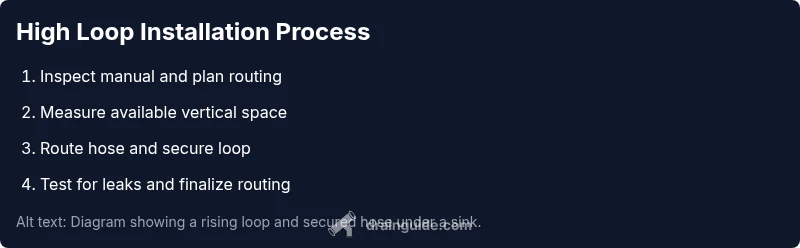
Begin by locating the appliance manual and checking any notes about drain hose routing. Also verify local codes or HOA rules, since some places require a formal air gap while others permit a high loop. Understanding these requirements up front prevents rework later.
Tip: Always confirm code requirements before routing—it saves time and avoids noncompliance. - 2
Plan the routing path under the sink
Inspect the space below the sink to identify where the loop will sit, ensuring the path won’t kink the hose or rub against sharp edges. Look for mounting points on the cabinet wall or interior to secure the loop. Plan for a dry, accessible area so you can inspect and clean the hose if needed.
Tip: Choose a routing that keeps the hose away from hot water lines or sharp tools. - 3
Measure and mark the loop height
Determine a comfortable high point for the loop above the sink drain or disposal connection. Use a measuring tape to estimate a height that allows gravity drainage without causing strain or crimping the hose. Mark the spot on the cabinet wall or bracket.
Tip: If you’re unsure about height, err on the higher side but avoid creating a loop that’s difficult to access. - 4
Create and secure the high loop
Form the hose into a loop that rises above the bottom of the cabinet, then secure it with cable ties or a dedicated hose clamp. Ensure the loop remains smooth with no twists that could obstruct flow. The goal is a stable, unobstructed loop.
Tip: Avoid tight bends and kinks; a smooth loop maintains proper drainage. - 5
Attach the hose to the drain connection
Reconnect the hose to the tailpiece or air-gap elbow as per the manufacturer’s instructions. Tighten clamps securely but avoid overtightening, which can crack fittings. If using an air gap, ensure the connector is accessible and properly mounted.
Tip: Check that all connections are snug and use new clamps if old ones are corroded. - 6
Check for clearance and potential leaks
With the loop installed, turn on the dishwasher and run a test cycle. Look for drips at every connection and ensure the hose does not touch hot surfaces or moving parts. If leaks appear, re-secure clamps or replace damaged sections of hose.
Tip: A quick leak test saves you from water damage later. - 7
Finalize under-sink organization
Tidy up the hose path with cable ties, ensuring nothing interferes with the disposal or other plumbing components. Leave enough slack for serviceability in case you need to remove the hose in the future.
Tip: Keep the space clean to facilitate future maintenance. - 8
Document and plan for maintenance
Record the routing approach and the loop height for future reference. Schedule a routine inspection to verify the loop remains intact and that no new damage has occurred over time.
Tip: Annual checks help prevent backflow issues before they arise.
Got Questions?
Do you always need an air gap for a dishwasher drain?
Not always. Some jurisdictions accept a simple high loop, while others require an air gap. Always verify with local codes and the dishwasher’s instructions.
Air gaps are mandated in some areas, but a high loop is sufficient in many setups. Check your local requirements.
Can I use a high loop instead of an air gap?
A high loop is commonly used and acceptable where allowed by code. An air gap may be required by local regulations or your homeowner association.
A high loop is common where permitted; confirm with code before deciding.
How high should the loop be?
Aim for a loop that sits as high as easily achievable under the sink, without creating kinks or stress on the hose. Follow the appliance manual and local codes.
Make the loop as high as reasonable, and ensure it’s secure and not kinked.
What if there isn’t enough space under the sink?
If space is tight, consider an approved air-gap device mounted at the sink or countertop. Avoid forcing a loop that bends the hose or blocks other plumbing.
If space is tight, an air-gap option might be better and code-compliant.
How do I test for leaks after installation?
Run a dishwasher cycle with the access under the sink open. Check every connection for moisture and re-tighten clamps if you see drips.
Do a test cycle and watch for leaks at all hose connections.
Is it safe to modify the drain hose while it’s connected?
Only modify or trim the hose per manufacturer instructions. Improper cuts can weaken the hose and cause leaks.
Don't cut or alter hoses beyond what the manual allows.
Watch Video
The Essentials
- Secure a high loop or air gap unless local code allows otherwise
- Check manufacturer guidelines before routing under-sink hoses
- Test for leaks after installation to prevent water damage
- Keep the route accessible for future maintenance
- Document the setup for easy reference in the future