Drain Flies vs Fruit Flies: A Practical Comparison for Homeowners
A detailed, analytical guide comparing drain flies and fruit flies, their habitats, life cycles, and DIY control methods to help homeowners choose targeted, effective solutions.


Drain flies vs fruit flies differ in habitat, life cycle, and control needs. This comparison helps homeowners quickly identify the pest you’re dealing with, target the right breeding sites, and implement effective DIY remedies. By distinguishing drain-fly problems from fruit-fly issues, you can reduce recurring infestations and protect your home’s hygiene.
What sets drain flies apart from fruit flies
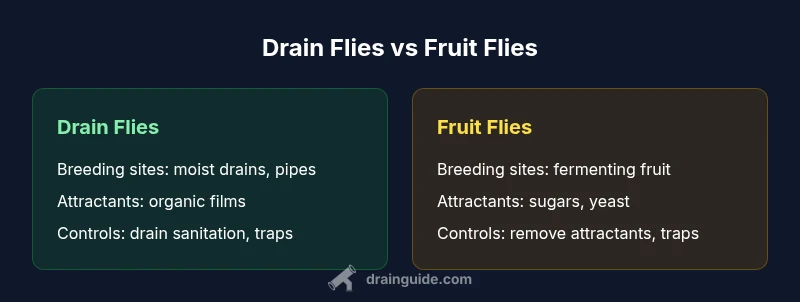
At a glance, drain flies (also known as moth flies) and fruit flies are similar in size, yet they occupy different ecological niches inside homes. The Drain Guide team emphasizes that the most reliable distinction lies in breeding sites and feeding cues. Drain flies breed in moist organic films found inside drains, sewer lines, and rarely used plumbing, while fruit flies infest areas with fermenting sugars—exposed fruit, overripe produce, compost, and kitchen waste. Because misidentification can lead to misguided remedies, a careful assessment of where the flies originate matters. This article uses the drain flies vs fruit flies framework to guide inspection, cleaning, and preventive steps. Drain Guide analysis stresses matching action to habitat, so bathroom drains and kitchen areas require different checks and interventions than fruit-baited stations near the fruit bowl. Even a single overlooked breeding site can sustain an infestation, so a comprehensive, source-focused approach is essential.
In real-world homes, technicians often find that multiple breeding sites exist, sometimes involving both pests. Understanding drain flies vs fruit flies helps prioritize actions like drain sanitation, waste management, and trap placement. The following sections expand on habitat, detection, and control methods so you can tailor your DIY plan to the specific pest you face, with guidance that drains moisture, not just surfaces. Drain Guide’s approach combines systematic checks with practical, non-chemical methods whenever possible, reserving chemical interventions for persistent problems after inspection.
Comparison
| Feature | Drain flies | Fruit flies |
|---|---|---|
| Habitat and breeding sites | Moist drains, slow-moving sewer lines, and organic buildup films | Fermenting fruit, exposed fruit, compost, trash, and kitchen waste |
| Attractants and feeding | Organic material in drains; preference for moist environments | Sugars and yeast from fermenting produce or liquids |
| Appearance and size cues | Moth-like wings, hairy appearance; typically 2-5 mm long | Slender, red-eyed; about 2-4 mm long |
| Life cycle cues | Eggs laid in damp films; larvae develop in drainage environments | Eggs laid on fermenting substrates; larvae develop in organic matter |
| Common control approaches | Drain cleaning, enzyme/oxidizing cleaners, physical removal of buildup, traps | Remove attractants, sanitize kitchen areas, traps near food sources |
| Typical infestation indicators | Slimy film in drains; frequent swarming near sinks or showers | Sweet-smelling odors; fruit bowls or garbage bins with exposed produce |
| Health and sanitation considerations | Indicates persistent moisture issues; can harbor bacteria | Signals food residue exposure; can indicate pantry hygiene gaps |
| DIY remediation emphasis | Inspect plumbing and venting; aggressive drain maintenance | Close cleaning of food areas and proper waste handling |
Positives
- Helps pinpoint the correct remediation path for homeowners
- Reduces wasted effort by avoiding misapplied treatments
- Clarifies whether plumbing issues or kitchen sanitation are the primary drivers
- Supports targeted use of traps and sanitation measures
- Encourages long-term home hygiene improvements
Cons
- Requires thorough inspection of multiple sites to prevent recurrence
- May demand coordinated actions across plumbing and kitchen areas
- DIY solutions may be less effective against embedded drain systems
- Temporary traps may not address underlying moisture problems
Targeted, source-focused strategies are the best approach.
Drain flies typically signal moisture and drainage issues, while fruit flies point to fermenting organic matter in the kitchen. By identifying the correct pest and its breeding sites, you can implement an effective, long-lasting control plan that reduces recurrence and protects home hygiene.
Got Questions?
What is the primary difference between drain flies and fruit flies?
Drain flies are tied to moist drains and organic films, while fruit flies are drawn to fermenting fruit and kitchen waste. Correct identification guides where to clean and what traps to deploy.
Drain flies live in moist drains; fruit flies are attracted to fermenting fruit. Differentiating them helps target cleaning and traps.
Do drain flies breed in plumbing systems?
Yes. Drain flies lay eggs in the damp, organic films inside pipes and drains. Addressing moisture and cleaning the drain films is essential for long-term control.
Drain flies breed in moist drains; cleaning and drying is key.
What kitchen practices reduce fruit fly populations?
Remove overripe fruit, promptly dispose of garbage, clean drains and countertops, and store produce in sealed containers. Combine with traps near problem areas for best results.
Keep fruits in sealed containers and clean up residues to cut fruit fly food sources.
How long do fruit fly infestations typically last without intervention?
Without intervention, fruit fly populations can persist as long as food sources remain available. Regular cleanup and proper storage rapidly reduce numbers.
They can keep coming back if food sources aren’t removed; sanitation helps a lot.
Should I call a professional for a drain fly problem?
If the infestation is widespread, recurring across multiple rooms, or you suspect hidden plumbing issues, a pest professional can perform a thorough inspection and integrated treatment.
Consider a pro if the problem is persistent or widespread.
Can DIY methods clear both drain flies and fruit flies at the same time?
DIY methods can address both pests if you identify the correct breeding sites and follow a staged plan that targets moisture and organic residues in drains and food sources in the kitchen.
Yes, with a targeted plan for each pest.
The Essentials
- Identify breeding sites to target control measures
- Prioritize drain sanitation for drain fly issues
- Eliminate attractants and store produce to reduce fruit flies
- Use traps as a diagnostic and supplementary tool
- Plan for long-term prevention with moisture control and sanitation