Drain in Basement is Backing Up: DIY Troubleshooting Guide
Urgent, practical basement drain troubleshooting with safe DIY steps and professional guidance from Drain Guide. Diagnose causes, fix backups, and protect your home from floods.


Quick fix: A basement drain backing up usually signals a blocked main line or sewer backup. Start by locating and checking the main cleanout for a clog, then try a plunger or a drain snake in the affected floor drain. If water rises quickly, smells foul, or you see sewage, stop and call a licensed plumber immediately.
Understanding the problem: drain in basement is backing up
When a basement drain backs up, it’s a signal that your drainage system is under stress and may be overwhelmed by wastewater or groundwater. This issue is urgent because it can escalate into basement flooding, mold growth, and costly damage if water is allowed to linger. Drain Guide emphasizes that quick, deliberate action reduces damage and protects your home. We'll walk you through common causes, immediate safety steps, and practical fixes you can perform as a homeowner—before calling in professionals if needed.
Common causes of basement drainage backups
Basement backups typically trace to one or more of these root problems: a blocked main sewer line or building lateral, tree roots invading the sewer, a clogged sump or discharge line, a blocked or improperly vented drain, and heavy rain overwhelming municipal or private septic systems. In some homes, a misaligned plumbing stack or a damaged sewer pipe can also trigger recurring backups. Understanding the likely culprits helps you prioritize fixes and communicate clearly with a professional. Drain Guide has found that many basement backups originate from root intrusion or a blocked main line that requires camera inspection to confirm.
Safety and immediate checks you can perform (without professional tools)
Before touching any sewer-related components, put on rubber gloves and eye protection. Do not use bleach or harsh chemicals to dissolve a major blockage—these can damage pipes and create fumes. Start with simple checks: locate the main cleanout, assess water levels in fixtures, and ensure outdoor drains aren’t blocked. If sewage is present, evacuate the area and call emergency plumbing services. For any work near the sewer line, avoid creating cross-contamination and follow local safety guidelines.
Diagnostic flow: from symptom to solution
A systematic approach helps you identify the cause and the right fix. Begin with the symptom (basement drain backing up during use or during heavy rain). Consider the three most common categories: internal blockages, sewer line issues, and drainage system failures. Use the diagnostic flow to narrow down and decide whether DIY steps are safe or if you should escalate to a professional. Drain Guide’s diagnostic flow emphasizes observing water behavior, checking the main cleanout, and testing sump or backup valves when relevant.
Step-by-step fixes for the most common cause: main line blockage or sewer backup
When the main sewer line is blocked, the basement drain will back up repeatedly. The first DIY step is to carefully remove any surface debris and attempt to clear the main cleanout (if accessible and you can do so safely). Use a plumber’s snake to clear the line a short distance, then flush with water. If the blockage persists or if you notice sewage backing up into multiple fixtures, your best course is a professional camera inspection and sewer line repair. Drain Guide recommends avoiding chemical drain cleaners, which can damage pipes and create health risks.
Prevention: keeping basement drains clear and functional
Preventing future backups involves regular maintenance and proactive measures. Schedule periodic cleanouts of the main line, install or maintain a backwater valve, and ensure sump pumps are functional with a reliable discharge path. Keep outdoor drains clear of leaves and debris, and avoid disposing of grease or large solids down basement floor drains. A small maintenance routine can dramatically reduce the odds of another backup during storms or rapid groundwater surges.
When to call a professional: signs it’s time to escalate
If you notice repeated backups, sewage smells, or water appears in walls or insulation, stop DIY attempts and contact a licensed plumber promptly. Advanced issues like root intrusion, cracked sewer pipes, or a malfunctioning backflow valve require professional tools, expertise, and sometimes permits. Drain Guide’s position is clear: DIY fixes can buy time, but professional assessment protects your home long-term.
Steps
Estimated time: 60-90 minutes
- 1
Identify and secure the area
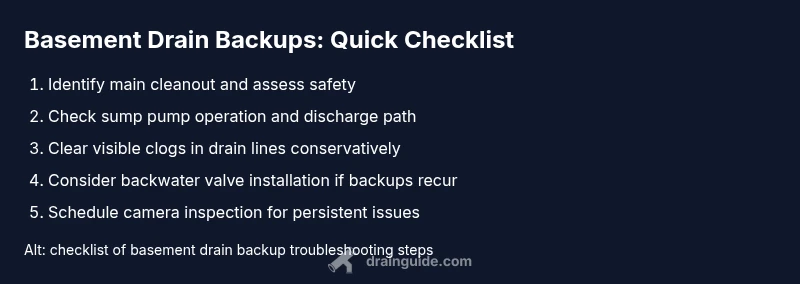
First, locate the basement’s main drain and any cleanouts. Put on protective gear and minimize water usage elsewhere in the house to prevent worsening the backup. Document what you see (water level, smells) to share with a plumber.
Tip: Stay safe: if sewage is present, avoid contact and ventilate the area. - 2
Check the main cleanout
Carefully inspect the main cleanout for a visible clog. If you can access it safely, attempt a gentle rotation with a manual auger to dislodge hair, grease, or small blockages. Do not force the tool if you meet resistance.
Tip: Turn off water supply before any pressure or auger work. - 3
Test the sump pump and discharge path
If you have a sump pump, unplug and test it with water to ensure it runs and discharges properly. Check the discharge hose for kinks or obstructions and verify the outlet point isn’t blocked by debris.
Tip: A failing sump pump is a common basement backup culprit during rain events. - 4
Consider backflow prevention options
If backups are a recurring problem, explore a backwater valve installation or replacement to prevent sewer backflow into the basement. This is a job best done with professional guidance, especially if your home’s sewer line is older.
Tip: A properly installed backwater valve can save costly flood damage. - 5
Plan next steps with a professional
If the blockage persists after DIY steps or if you discover root intrusion or a damaged sewer line, arrange a professional camera inspection and repair plan. Request a written estimate that outlines scope, timing, and any permits.
Tip: Ask about warranty coverage for repairs and components. - 6
Implement a maintenance routine
Create a quarterly maintenance plan that includes sump pump testing, cleanouts, and outdoor drainage checks. Document findings and actions to simplify future troubleshooting.
Tip: Preventive maintenance reduces emergency calls and keeps your system healthy.
Diagnosis: Basement drains backing up or gurgling during use
Possible Causes
- highBlocked main sewer line or building sewer
- mediumTree roots invading sewer line
- lowSump pump failure or improper discharge
- lowBlocked plumbing vent or outdoor drainage
Fixes
- easyInspect and clear main cleanout; use a plumber's auger safely
- mediumArrange a sewer camera inspection to identify root intrusion
- hardRepair or replace damaged sewer line; install a backwater valve
- easyEnsure sump pump is functional and discharge lines are clear
Got Questions?
What are the first signs of a basement drain backup?
Common early signs include slow drains, gurgling noises, and water backing up into the basement floor drain. A strong sewage smell is a red flag for sewer-related backups. If you notice these, pause nonessential water use and evaluate safety steps before proceeding with DIY fixes.
Look for slow drains and gurgling sounds near basement fixtures. If you smell sewage, treat it as urgent and call a professional.
Can a clogged main sewer line cause a basement backup?
Yes. A blockage in the main sewer line can force wastewater back into basement drains. This often affects multiple fixtures and requires professional clearing and possible pipe repair.
A main sewer clog will affect more than one fixture and usually needs a pro to clear safely.
Is a backwater valve required to prevent basement backups?
A backwater valve can prevent sewer backflow into living spaces and is highly effective in flood-prone areas. Installation should be performed by a licensed plumber.
Backwater valves are a strong safeguard, but installation should be done by a professional.
When should I DIY vs call a plumber?
DIY steps are suitable for simple checks like cleaning a visible clog or testing a sump pump. Persistent backups, recurring issues, or root intrusion require professional diagnosis and repair.
Try basic checks first, but if it keeps backing up, call a plumber.
Can heavy rain cause basement backups even with a sump pump?
Yes. Heavy rain can overwhelm drainage systems and sewer lines, causing backups even with a working sump pump. Inspect discharge paths and consider professional assessment if it happens often.
Rain can overwhelm the system; if it keeps happening, get a pro to check the whole drainage setup.
What should I expect from a professional camera inspection?
A camera inspection involves inserting a flexible scope into the sewer line to identify blockages, cracks, or root intrusion. The plumber will provide findings and repair options.
A camera inspection shows exactly where the blockage is and what repairs are needed.
Watch Video
The Essentials
- Act quickly to prevent basement flooding
- Avoid harsh chemicals; call a pro for sewer issues
- Check the main cleanout before DIY fixes
- Sump pump and backwater valve are key safeguards
- Schedule camera inspections for persistent backups