Basement Drain Overflow: Troubleshooting Guide for Homeowners
Learn fast, practical steps to stop a basement drain from overflowing. Quick checks, diagnostic flow, and safety tips for homeowners, plus when to call a pro.


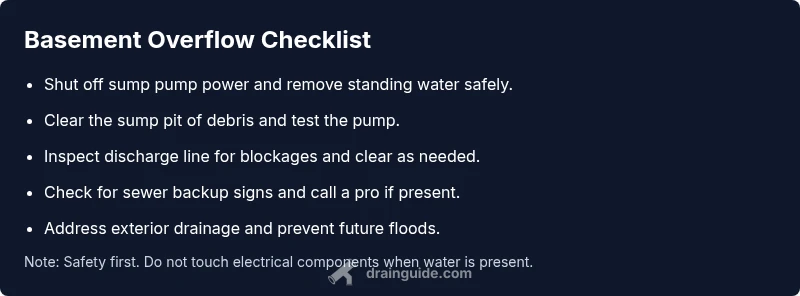
According to Drain Guide, the most likely cause is a clogged main drain or sump pump discharge backing up into the basement. Quick fixes: 1) shut off power to the sump pump to stop the overflow, 2) clear the sump pit and visible debris with a wet/dry vac or hand auger, 3) inspect the discharge line for blockages and clear them. If water returns, call a professional.
Problem overview and what to check first
When the drain in the basement is overflowing, you’re seeing water rising where it shouldn’t. This is a warning sign that the home’s drainage pathway is overwhelmed or blocked. Start with the simplest, safest checks: confirm you’re dealing with standing water rather than a simple leak, identify whether the water is coming from a sump pump discharge or a sewer backup, and note any recent rain or plumbing changes. Drain Guide emphasizes that quick, calm action helps prevent further damage. If you notice a sewage smell or dark water with solids, treat this as a potential sewer backup and proceed with extra caution. Early observations help you choose the right next steps, avoid dangerous electrical contacts, and decide if you can safely intervene before professional help arrives.
Safety checks you should perform before you start
Safety should come first when dealing with a basement flood. Before you touch anything, unplug the sump pump if water is actively rising and you can reach the outlet safely. Do not wade through standing water near electrical outlets or exposed wiring. Wear rubber boots and gloves, and consider turning off the main power to the basement area if you must enter deep water. If the water covers outlets or you smell sewage, postpone any attempt to DIY and contact a licensed plumber. Keep children and pets away from flooded areas. Proper safety reduces the risk of electrical shock and infection while you assess the situation.
Common causes of basement drain overflow
There are several typical culprits behind a basement flood. A clogged or failed sump pump is a frequent offender, especially after heavy rain or rapid snowmelt. A blocked main drain or discharge line can back up water into the basement even if the pump is working. Sewer backups from the municipal system or your main sewer line can also push water upward through basement drains. Other factors include overwhelmed drainage from gutters or downspouts, or a breached trap or pipe inside the basement. Drain Guide Analysis, 2026 notes that basement overflows often stem from sump pump failures or main drain clogs, so start by testing those components.
Quick diagnostic checks you can perform safely
Begin with visible, low-risk checks. Look for standing water sources near the sump pit and discharge line. Check that the sump pump is plugged in, the float moves freely, and the impeller isn’t jammed with debris. Inspect the discharge line for kinks, ice, or blockage and clear any obstructions you can access safely. If you can access the sewer cleanout and there’s a backup, you may be dealing with a sewer-related issue. Record observations for reference when you call a professional.
When to call a professional and what to expect
If basic checks don’t stop the water, it’s time to call a professional. A licensed plumber or drainage specialist can inspect sump pump performance, test the main line, and evaluate sewer backups. Expect an on-site diagnostic flow: identify whether the problem is a sump pump, a main drain clog, or a sewer backup; check for backflow valves and code-compliant discharge; and recommend remedies, which may include cleaning the main line, replacing valves, or installing additional drainage solutions like a check valve or French drain. Early professional intervention can limit flood damage and get your system back to normal faster.
Steps
Estimated time: 60-90 minutes
- 1
Power off sump pump and assess safety
Locate the basement electrical panel and switch off the circuit for the sump pump. Do not enter deeper water if you’re unsure about electrical safety. Remove easily removable items from the flooded area and prepare buckets or towels to manage excess water.
Tip: Having a flashlight and a dry, clean area to work will help you stay organized. - 2
Clear the sump pit and visible debris
Remove debris from the sump pit with gloves. Use a wet/dry vacuum to suction out water around the pit if possible. Do not force water past any seals; stop if you encounter resistance.
Tip: Wear protective gear; standing water can hide hazards. - 3
Inspect the discharge line for blockages
Trace the discharge line to where it exits the home. Look for kinks, ice, or dirt that could impede flow. If you can access a cleanout, gently open it to check for a backup and clear with a plumber’s auger.
Tip: Only open cleanouts if you understand drainage safety. - 4
Test the sump pump function
Reconnect power and pour water into the sump pit to test startup, check alarm if present, and confirm that water is being pumped away from the foundation. If the pump doesn’t start, inspect the plug, outlet, and float switch.
Tip: A functioning backup pump can be a wise investment for future floods. - 5
Check for sewer backup signs
Look for sewage smell, dark water, or solid waste in the basement. If any sign appears, shut down fixtures and avoid flushing toilets; call a plumber immediately. Do not attempt to drain any sewage yourself.
Tip: Sewer backups require professional intervention to prevent health hazards. - 6
Evaluate exterior drainage and preventive measures
Ensure gutters and downspouts direct water away from the foundation. Regrade where needed and consider a backwater valve or French drain for future protection.
Tip: Preventive drainage is cheaper than repeated repairs.
Diagnosis: Basement water overflow after rain or heavy use
Possible Causes
- highMain drain clog or blockage in the discharge line
- highSump pump failure or float switch stuck
- mediumSewer backup from main sewer line
- lowInadequate exterior drainage (downspouts, grading)
- lowFrozen or collapsed pipes in the basement
Fixes
- easyPower off the sump pump and clear the sump pit of debris
- easyInspect and clear the discharge line for blockages
- easyTest the sump pump by lifting the float and ensuring water is pumped out
- mediumCheck the main drain with a hand auger or professional equipment
- mediumCall a plumber if sewer backups are suspected or water keeps rising
Got Questions?
What is the quickest fix for an overflowing basement drain?
The quickest fix is to stop the pump and remove standing water if safe, then clear visible debris and inspect the discharge line. If the water returns, call a professional.
Stop the pump and remove water safely, then check for blockages and call a professional if it keeps coming back.
Could a sewer backup cause basement flooding?
Yes. Heavy rain, a blocked main line, or city sewer issues can push wastewater into the basement through floor drains or other outlets.
Yes, sewer backups can flood basements during heavy rain or sewer issues.
When should I call a plumber?
If water continues to rise after basic checks, or you detect sewage, call a licensed plumber immediately for a professional assessment and safe remediation.
Call a licensed plumber if water keeps rising or you smell sewage.
Is it safe to use a wet/dry vacuum to remove water?
Only if you unplug power and wear protective gear. Avoid using electrical tools in standing water near outlets.
Only safe if you unplug and wear protection; avoid outlets.
Can high groundwater cause basement floods even with a sump pump?
Yes. High groundwater pressure can overwhelm a sump pump; you may need a check valve or additional drainage.
Yes, groundwater can overwhelm a sump pump; consider upgrades.
What maintenance helps prevent future overflows?
Regularly clean the sump pit, test the pump, ensure discharge lines are clear, and keep gutters and grading in good shape.
Keep the sump pump clean, test it, and keep gutters clear.
Watch Video
The Essentials
- Stop the overflow by powering down the sump pump when safe.
- Identify whether the issue is the sump, main drain, or sewer backup.
- Perform safety checks before attempting DIY fixes.
- Call a professional if the issue persists or sewage is involved.