Drain Snake Tool: A DIY Guide to Clearing Clogs
Learn to choose, use, and maintain a drain snake tool to clear clogs safely at home. Step-by-step instructions, safety tips, and maintenance guidance for DIY homeowners.


With a drain snake tool, you’ll clear most minor clogs without calling a plumber. You’ll learn how to choose the right snake, prepare your workspace, insert and rotate the coil, pull out debris, and test the drain. Safety gear and patience are essential to avoid pipe damage during the process.
What is a drain snake tool?
A drain snake tool, also known as a drain auger, is a flexible, coiled wire housed in a handle that you rotate to extend into a clogged drain. The coil can reach past minor blockages in kitchen and bathroom drains, snag off debris, or break apart hair and grease. Drain snake tools come in manual and power-assisted forms and are commonly sold in assorted lengths to fit different pipe sizes. By design, they provide a controlled way to probe and clear obstructions without harsh chemicals. Drain guides emphasize choosing the right length and tool type based on the drain you’re working on, to minimize damage and maximize effectiveness.
According to Drain Guide, understanding the basic mechanics of a drain snake tool helps homeowners avoid common mistakes and approach clogs with a practical plan.
When to use a drain snake tool
A drain snake tool is most effective for common kitchen and bathroom clogs caused by hair, soap scum, and grease buildup. If you notice slow drainage, gurgling sounds, or a partially blocked sink, a snake can reach through traps and bends to dislodge debris. It is not a substitute for a failed drainage system; if multiple fixtures are affected or you suspect a pipe collapse or a main sewer issue, professional help is warranted. Always start with basic clogs and escalate only if necessary. Drain snakes also provide a safer alternative to harsh chemical drain cleaners, reducing chemical exposure in the home.
Types of drain snakes
There are two main categories: manual hand-crank snakes and power augers. Manual snakes are affordable, quiet, and ideal for minor clogs or quick maintenance. They’re portable and require physical effort, which helps you feel where the clog is. Power augers use an electric motor to rotate the coil through longer runs and tougher blockages, which makes fast work of stubborn clogs but demands careful handling to avoid pipe damage. Both types share core components: a sturdy reel, a flexible steel coil, a reaction handle, and a sheath to guide the coil. When selecting, consider the diameter, length, and the type of drain (sink, tub, or shower).
Drain Guide recommends matching the tool length to your pipe layout and choosing a model with a reliable clutch or limiter to prevent over-rotation.
How to choose the right drain snake tool
Begin by identifying the drain size and the expected depth of the clog. For typical household sinks and showers, a compact manual snake of a few feet can handle many clogs, while longer lengths may be needed for floor drains or longer runs. Consider the diameter of the coil; a thinner coil penetrates tighter spaces but may wear faster against hard obstructions, whereas a thicker coil offers more rigidity for tougher clogs. If you’re unsure, start with a basic manual snake and only upgrade to a power model if you consistently face difficult blockages. Always read the manufacturer’s guidelines on coil material and maximum safe length.
The Drain Guide team notes that having a backup plan (like a plunger or plumber’s auger) helps when a single tool cannot resolve the issue. Also, store your tool in a dry area to prevent rust and maintain flexibility of the coil.
Safety and best practices
Before you begin, put on gloves and safety glasses to protect skin and eyes from wastewater and debris. Work in a well-lit area and keep towels handy for spills. Never mix a snake with chemical cleaners in the same run, as chemical reactions can damage the coil or create hazardous fumes. Feed the snake slowly; rushing can kink the wire or push debris further into the system. If you encounter a trap, like a P-trap, consider removing it to gain better access, but only if you’re comfortable with a potential plumbing task.
Drain Guide emphasizes patience and deliberate action—rushing here increases the risk of pipe damage or personal injury.
Common mistakes and how to avoid them
Common missteps include forcing the coil through tight bends, failing to secure the drain cover, and neglecting to disinfect the tool after use. Avoid twisting aggressively; instead, use steady cranks and consistent pressure. Do not use metal tools that could scratch or puncture pipes. After use, clean the coil with water, dry completely, and lightly oil exposed metal to prevent rust. Regularly replace worn-out coils and check the handle for smooth operation.
Maintenance and storage
Rinse the coil thoroughly to remove grease and debris, then dry completely. If your model has a removable sheath, wipe it down and ensure it snaps back securely. Apply a light oil to prevent rust on exposed parts and store the tool in a dry place away from moisture and heat sources. Periodic inspection of the reel and handle helps catch wear before it fails during a clog-clearing session. Keeping your drain snake organized with other plumbing tools reduces the chance of misplacement or damage.
Troubleshooting scenarios and next steps
If after a thorough attempt the drain remains slow or blocked, consider the possibility of a more complex blockage or a mainline issue. Reassess accessibility; if you cannot reach the clog from the current access point, creating an alternate entry or using a different approach may help. When in doubt, consult a professional plumber. Document steps taken and the outcomes to share clearly with any pro who visits.
Tools & Materials
- Drain snake tool (manual hand-crank)(Ensure the reel length matches your pipe size; common kits offer 3-25 ft lengths.)
- Gloves (nitrile or latex)(Protect hands and improve grip; choose a pair with good tactile feel.)
- Safety glasses(Shield eyes from debris and splashes.)
- Old towels or rags(Catch water and debris around the drain.)
- Bucket(Contain wastewater during the procedure.)
- Flashlight(Bright light helps inspect the pipe interior.)
- Plunger(May be helpful for the initial loosening of a clog.)
- Lubricant or penetrating oil(Optional for stubborn clogs; use sparingly.)
Steps
Estimated time: 25-40 minutes
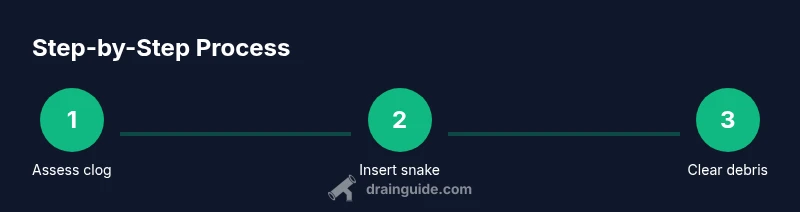
- 1
Prepare the workspace
Clear the area around the affected drain. Place towels and a bucket, and put on safety gloves and glasses. Remove standing water if possible so you can see what you’re doing, and assess the clog's location.
Tip: Make sure the drain cover is accessible and you have a free hand to manage the snake. - 2
Insert the snake into the drain
Insert the tip into the drain and begin feeding the coil slowly with one hand while turning the handle with the other. Stop feeding when you feel resistance; you’ve reached the clog or a bend in the pipe.
Tip: Do not force the coil past hard blockages; you can cause damage or push debris further. - 3
Crank to break up the clog
Rotate the handle to extend and push the coil forward. Apply steady pressure and avoid twisting too aggressively, which can kink the wire. When you feel resistance ease, the debris is likely being pulled free.
Tip: Short, controlled cranks work better than long continuous turns. - 4
Retract and remove debris
Slowly retract the snake while rotating. Collect and discard debris in the bucket. Check the tip for clog remnants and wipe clean as needed.
Tip: Use the rag to wipe the coil’s exposed sections to prevent transfer of gunk. - 5
Flush and test the drain
Run hot water or a strong flush to clear residual debris. If the water drains slowly, repeat the feeding and cranking steps once more.
Tip: If slow draining returns, you may have a deeper clog or a dry P-trap. - 6
Clean the tool and perform storage
Rinse the coil with water, dry thoroughly, and lightly oil exposed metal to prevent rust. Store in a dry area away from moisture and heat.
Tip: Never store a wet coil; moisture promotes rust and coil stiffening. - 7
Know when to call a plumber
If multiple drains are clogged or you encounter persistent resistance with no progress, professional help may be needed. A professional can assess the main line for blockages and structural issues.
Tip: Document what you’ve tried and the results to share with a plumber.
Got Questions?
Can a drain snake fix all clogs?
A drain snake handles many hair, grease, and food-related clogs, but very deep or main sewer blockages may require professional equipment or service. If you’re unsure, start with simpler clogs and seek help for recurring issues.
It covers many clogs, but deeper issues may need a plumber. If unsure, call a pro.
Is it safe to use a drain snake on a toilet?
Toilet clogs typically require a toilet auger rather than a standard drain snake. A regular snake can damage porcelain or fail to reach the blockage. Use a toilet-safe tool or call a plumber for persistent toilet clogs.
Toilet clogs should use a toilet auger; avoid a regular drain snake.
Manual vs. power drain snakes—which should I choose?
Manual snakes are cheaper and quiet and ideal for simple clogs. Power snakes are stronger and better for stubborn blockages but require caution and more space. Choose based on clog severity, pipe access, and comfort level.
Manual is good for simple clogs; power snakes handle tougher ones with more caution.
Should I use chemical drain cleaners with a snake?
Using chemical cleaners after a snake isn’t necessary and can react with the coil. If you choose chemicals, follow product instructions and flush thoroughly with water after use. For many clogs, mechanical clearing is safer.
Chemicals aren’t required after using a snake and can be hazardous.
How do I clean and store a drain snake?
Rinse the snake coil with water, dry completely, and apply a light coat of oil if possible. Store in a dry place to prevent rust. Regular maintenance extends tool life.
Rinse, dry, and store the snake properly to keep it usable.
Watch Video
The Essentials
- Choose the correct snake length for your drain.
- Rotate steadily and avoid forcing the coil.
- Test the drain after each pass before concluding.
- Store the tool dry to prevent rust.