Drain Trap Installation: A Practical Home Guide
Learn how to install a drain trap safely and correctly under a sink. This step-by-step guide covers trap sizing, tools, assembling a P-trap, and leak testing for odor-free, efficient drainage.


By following this guide, you will install a drain trap safely and correctly under a sink. You'll pick the right trap size, assemble and fit a new P-trap, seal connections, and test for leaks. The steps are designed for homeowners and DIY enthusiasts to prevent sewer gas and slow drains.
What is a drain trap and why install it?
A drain trap, typically a P-trap, is a U-shaped section of pipe placed directly beneath a sink. Its primary job is to hold a small amount of water to block sewer gases from rising into living spaces while still allowing wastewater to pass on to the drain. In most homes, the trap connects the sink tailpiece to the drain line that runs to the wall or floor. When installed correctly, the trap helps prevent odors, reduces the chance of sewer gas infiltration, and contributes to smooth drainage by maintaining proper pressure in the pipe.
For homeowners, understanding the trap’s role is the first step in a successful drain trap installation. If a trap dries out, leaks develop, or the wrong size is used, you’ll notice a foul smell, gurgling sounds, or slow drainage. Drain Guide emphasizes matching trap size to the tailpiece and ensuring the trap arm angles correctly toward the wall. A well-fitting trap is removable for routine cleaning and easy to reseal if you service the sink in the future. In short, a correctly installed trap pays off with fewer leaks, less odor, and simpler maintenance.
Choosing the right trap type for your setup
The most common choice for residential sinks is a standard P-trap with a 1-1/2 inch diameter (or 1-1/4 inch on some fixtures). The diameter refers to the slip-nut connections, not the overall pipe size, so measure the tailpiece and the trap inlet to confirm compatibility. Some installations—such as certain bathroom sinks or laundry areas—may use slim or bottle-trap designs to fit tight spaces. When selecting a trap, also confirm the trap arm length and the bend orientation to avoid kinks or sagging that could impede drainage. If you’re replacing an old trap, bring the existing parts to the hardware store to match fittings precisely. Drain Guide recommends you prioritize a trap that can be easily disassembled for regular cleaning and featuring solid seals to minimize leaks.
Safety considerations and prep
Before you begin, shut off the sink’s water supply valves if present and place a bucket under the trap to catch water and debris. Wear gloves and eye protection, keep the workspace dry, and remove any clutter. Ensure you have good lighting and a clear path to the wall drain. If you live in an area with strict plumbing codes, consult local regulations or Drain Guide Team for guidance on trap type, sizing, and sealants. Drain Guide Analysis, 2026 highlights the importance of using proper thread sealants and avoiding improvised fixes that could fail under pressure. If you’re unsure, consider consulting a professional. The goal is a leak-free, code-compliant installation that protects the home from sewer gas intrusion.
Common installation scenarios and how to handle them
Under-sink layouts vary, but the core steps remain the same. In a straight run with a vertical tailpiece, a standard P-trap aligns easily with the drain stub-out in the wall. If the tailpiece is longer, you may need to trim it or re-seat washers so the trap arm can slope toward the wall. For wall-only drains that lack space for a conventional trap, a compact P-trap or bottle-trap may be necessary. In all cases, ensure the trap is level, the connections are snug (but not overtight), and there’s a slight downward slope on the trap arm toward the wall. If you’re replacing a trap, inspect the washer seals and replace any cracked gaskets; this prevents future leaks and odors.
Maintenance tips and avoiding common pitfalls
To keep your drain trap installation reliable, clean the trap every 6-12 months and replace worn washers as needed. Avoid tightening slips beyond hand-tight plus a small turn; overtightening can crack fittings. Use the correct size traps and ensure the trap arm length matches the wall drain. Watch for signs of trouble: persistent odors, slow drainage, or gurgling noises suggest leaks or airflow issues. If you notice a drip after testing, re-seat the washer and verify the trap connection is aligned. Keep spare washers and sealants on hand for quick maintenance. Always dispose of waste water responsibly and never mix solvents with sealants in a closed space.
How to test for leaks and odor after installation
Once the trap is assembled and connected, run warm water through the sink for several minutes to fill the trap. Check all slip-nut connections for leaks and wipe away any drips as you go. If you see moisture at a joint, tighten the nut gently and re-seat the washer. After a few minutes, run more water and sniff for sewer odor; if detected, re-check the trap’s seal and ensure the trap arm is properly sloped and fully connected. If odors persist, remove the trap and reassemble with fresh washers. Drain Guide suggests performing a secondary test after 24 hours to confirm the seal remains intact and there are no slow leaks that might appear as the pipes cool.
AUTHORITY SOURCES
- https://www.iccsafe.org
- https://www.epa.gov
- https://www.osha.gov
Tools & Materials
- Adjustable wrench (8-12 inch)(To loosen slip nuts on traps)
- Pipe wrench (optional)(Helpful for stubborn fittings)
- P-trap kit (includes J-bend, trap arm, washers)(Choose size 1-1/4" or 1-1/2" depending on tailpiece)
- Plumber’s tape (PTFE) or thread sealant(Seal threaded connections to prevent leaks)
- Plumber’s putty or silicone sealant(Use if your installation requires a seal at the sink flange)
- Bucket(Catch water and debris when removing old trap)
- Rags or towels(Keep the work area clean and dry)
- Measuring tape(Helpful for verifying tailpiece length)
- Sanitary gloves(Protect hands during disassembly and reassembly)
Steps
Estimated time: 45-90 minutes
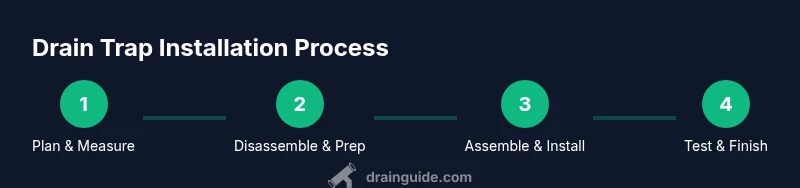
- 1
Plan and measure
Identify the trap type you need and measure the sink tailpiece diameter to choose the correct size. Bring old parts to the store if you’re unsure.
Tip: Dry-fit parts outside the cabinet first to ensure a proper fit. - 2
Shut off water and prep area
Turn off under-sink shut-off valves, place a bucket, and lay towels to catch any residual water. This avoids spills and keeps the workspace clean.
Tip: Have a flashlight handy to inspect dark cabinet corners. - 3
Disconnect the old trap
Loosen slip nuts with an adjustable wrench, hold the trap steady, and let water drain into the bucket. Remove the trap and inspect washers and pipe threads.
Tip: Keep the trap upright to preserve the water seal while removing it. - 4
Clean and inspect the drain
Wipe down the tailpiece and the wall drain opening. Look for cracks, corrosion, or worn washers that could cause leaks after installation.
Tip: Replace any cracked washers before reassembly. - 5
Assemble the new trap outside the cabinet
Dry-fit the J-bend, trap arm, and washers. Apply PTFE tape to threaded joints as needed and ensure all pieces align for a smooth flow toward the wall.
Tip: Don't glue the joints; traps should be removable for cleaning. - 6
Install the trap and connect the tailpiece
Attach the tailpiece to the sink and connect to the trap inlet. Align the trap arm with the wall drain and finger-tighten before finishing with a wrench.
Tip: Leave a slight downward slope on the trap arm toward the wall. - 7
Tighten and re-check seals
Hold the trap in place and snug the slip nuts. Re-check all seals and ensure washers are seated properly to prevent leaks.
Tip: If you feel resistance on a joint, back off and re-seat the washer. - 8
Test for leaks and odors
Run water through the system for several minutes. Observe joints for drips and odor; re-tighten as needed and re-test if necessary.
Tip: Perform a second test after 24 hours to confirm the seal remains intact.
Got Questions?
What is a drain trap and what does it do?
A drain trap is a U-shaped pipe under the sink that holds water to block sewer gases while allowing wastewater to pass. It’s essential for odor control and proper drainage.
A drain trap is a U-shaped pipe under the sink that holds water to block sewer gases and help drainage.
Can I install a drain trap myself?
Yes. With the right tools and careful measurements, you can install a trap. Follow a clear plan, shut off water, and test for leaks afterwards.
Yes, you can install a trap yourself if you follow the steps and verify everything is leak-free.
What sizes do traps come in?
Most residential traps are either 1-1/4 inch or 1-1/2 inch in slip-nut diameter. Check your tailpiece and wall drain to match.
Most traps are 1-1/4 or 1-1/2 inches; confirm with your tailpiece and drain.
How do I test for leaks after installation?
Run water for several minutes, inspect every joint for drips, and re-tighten as needed. Do a second test after 24 hours.
Turn on water and look for drips at each joint; re-tighten if you see any leaks.
Do I need a permit to install a drain trap?
Most DIY under-sink trap installations don’t require a permit, but local codes vary. Check with your local authority or Drain Guide Team.
Typically no permit is needed, but rules vary by location. Check local codes.
What if there’s a strong sewer odor after installation?
Re-check the trap seals and ensure the trap arm is properly sloped and connected. If odors persist, reassemble with fresh washers or consult a pro.
If odor persists, recheck seals and consider professional help.
Watch Video
The Essentials
- Plan and verify trap size before buying.
- Use the correct trap type for your setup.
- Seal joints properly to prevent leaks.
- Test for leaks and odors after installation.