Drain vs Pipe: A Comprehensive Comparison for Homeowners
A thorough, analytical comparison of drains vs pipes for homeowners. Learn definitions, materials, sizing, and maintenance to plan safe, code-compliant projects.


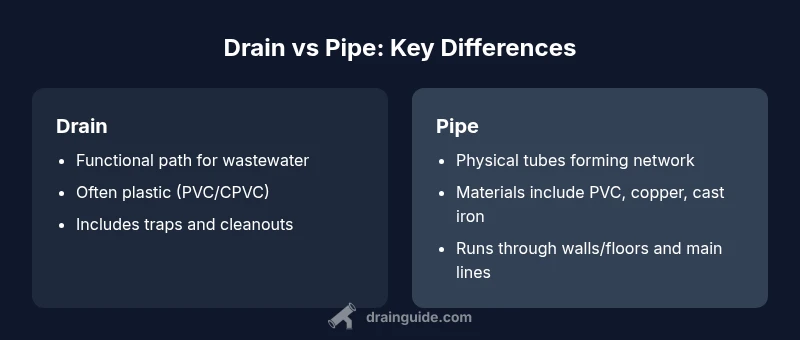
Drain vs pipe: Drain describes the path that removes wastewater from fixtures, while pipe refers to the tubes that form the network carrying that flow. For homeowners, this distinction guides planning, material choices, and maintenance. See our detailed chart for clearer decisions on installations and repairs.
What drains and pipes are, and why the distinction matters
Understanding the difference between drain and pipe is more than vocabulary—it's practical for diagnosis, repair planning, and budgeting. Drain vs pipe describes two parts of the same wastewater system: drains refer to the functional paths that collect and carry used water away from fixtures to a sewer or septic system, while pipes are the actual tubes that form that network. According to Drain Guide, clarifying these terms helps homeowners avoid common missteps when shopping for replacements or planning a project. In most homes, you will encounter both along with traps, vents, and cleanouts. This article explains the distinction in clear terms, then shows how to apply that knowledge to real-world scenarios, from under-sink clogs to mainline leaks, using language that is accessible to DIYers and homeowners.
Core functions: drainage vs conveyance
At a high level, drainage is the actionable process of moving used water away from fixtures. The drain system includes the drain pan at the bottom of a fixture, the trap that holds water to block sewer gases, the vertical drop into a horizontal drain, and the connections that lead to the main sewer or septic line. Pipes, by contrast, provide the physical routes that carry that water from point A to point B. In residential systems, you’ll see supply lines for fresh water and drain lines for wastewater; vent pipes maintain proper pressure and help wastewater flow smoothly. Understanding these roles helps you diagnose where a problem originates: a clog in a trap is a drain issue, a leak in a wall pipe is a pipe issue. This functional separation anchors the rest of the guidance in this article.
Common materials and their implications
Drain and pipe materials influence reliability, cost, permeability to clogs, and long-term durability. PVC and CPVC are the standard for many modern drains and pipes because they resist corrosion, are lightweight, and easy to install. ABS is another common plastic option with similar properties. For metal pipes, copper and cast iron have been traditional choices, though they may not be suitable for all climates or codes. Cast iron drains are excellent at dampening noise, while copper offers antimicrobial properties but can be more expensive. Material compatibility matters: certain adhesives, sealants, and couplings are designed for specific plastics or metals; mixing incompatible components can lead to leaks or failures. When planning a repair or replacement, match the pipe and drain materials to the local code requirements and the rest of the system. Drain Guide notes that choosing the right material reduces future maintenance and helps you plan a longer-lasting solution.
Sizing and standards you should know
Pipe and drain sizing follows standard diameters and schedules that influence flow, trap depth, and venting needs. In residential work, common drain sizes include 1-1/2 inches and 2 inches; larger main lines use 3 or 4 inches in some cases. Vertical stacks and vent lines have their own sizing rules that affect drainage speed and gas venting. Sizing is not arbitrary: it’s governed by plumbing codes, which vary by locality. Before selecting a replacement or attempting a repair, confirm the required size with your local building department and reference the current code edition. The wrong size can create slow drainage, frequent clogs, or gurgling sounds. If you’re unsure, start by measuring the current line and compare it with the fixture’s outlet size. The distinction between drain and pipe also helps you decide whether the task is a simple sealant job, a trap replacement, or a more involved reroute.
Location and layout: where drains and pipes live in a typical home
Drains pathway runs from the fixture to the building sewer, typically through cabinets, walls, and floor cavities. In kitchens and bathrooms, you’ll encounter sink drains, trap assemblies, and vertical stacks that pass through cabinets into the wall and eventually down to the main drain. Supply pipes for hot and cold water run parallel, often on studs or inside walls, with shutoff valves near fixtures. In basements or crawl spaces, main lines and cleanouts become more visible, and older homes might reveal lead or galvanized piping that requires attention. Recognizing where drains versus pipes sit helps you plan access, isolate problems safely, and estimate repair time. Drain Guide emphasizes that understanding layout reduces exploratory damage and speeds up diagnostics.
Maintenance realities: cleaning, preventing clogs, corrosion
Preventive maintenance focuses on both components but with different tactics. Drains benefit from regular cleaning schedules, strainer baskets, and mindful disposal habits to reduce grease and food particles. Clogs commonly occur in trap areas, elbow joints, and long horizontal runs. Pipes, especially older metal varieties, are prone to corrosion, pinhole leaks, and mineral buildup that can reduce flow and eventually require replacement. Use of enzyme-based cleaners can help maintain drains without harsh chemicals, while mechanical augers or plumbers’ snakes address deeper blockages in pipes or main lines. Regular inspections, such as listening for slow drainage or identifying damp spots near joints, enable early intervention. Drain Guide recommends pairing routine maintenance with a plan for seasonal checks, especially in homes with older piping or frequent leakage history.
Cost considerations: upfront vs long-term
Costs for drains versus pipes hinge on material choice, labor, and local market conditions. PVC-based drains are typically cheaper to install than metal pipes, though the overall price depends on the project scope. Replacement or rerouting of pipes tends to be more labor-intensive, often requiring access through walls or floors and may involve permits. Drain maintenance or minimal repairs often cost less upfront but should be weighed against potential longer-term issues, such as frequent blockages or hidden leaks. Drain Guide analysis shows that the decision to repair a drain or replace piping should factor in age, material condition, and the likelihood of recurring problems. Using a proactive approach—addressing root causes early—can reduce total cost over time and minimize disruption to living space.
DIY viability: what you can safely tackle
Many routine tasks fall within DIY scope if precautions are followed. You can unclog a sink trap, replace a P-trap, or seal minor leaks with appropriate sealants and washers. More complex jobs, such as rerouting drain lines, replacing long sections of pipe, or cutting through walls, typically require a licensed plumber and sometimes a permit. Always shut off water supply before work and confirm whether the work affects home safety systems (venting, backflow, or gas lines). Use proper PPE and test for leaks after restoration. If you’re uncertain about the pipe material or the right solvent bonding method, consult the manufacturer’s instructions or a local pro. The goal is to prevent accidental damage and ensure code compliance.
Tools and safety: essential tips
Equipping yourself with the right tools reduces time and errors. Basic kit: adjustable wrench, pliers, pipe cutters, Teflon tape, thread sealant, bucket, rags, and a flashlight. For deeper work, you may need a drain snake or auger, a pipe locator, and a backer board for wall access. Safety matters: turn off power to nearby outlets in damp spaces, avoid using open flames near gas lines, and follow local safety guidelines when cutting into walls or floors. Testing for leaks after any repair is essential, and documenting where joints and traps live helps future maintenance. Drain Guide recommends keeping a small inventory of spare gaskets and washers, as well as a simple log of fixes and dates for future planning.
Case studies: typical scenarios
Scenario A: under-sink leak. The issue is often a faulty P-trap or loose connection in the drain line, and resolving usually involves tightening connections or replacing the trap. Scenario B: gurgling main line. This suggests venting issues or a partial clog in the main pipe; clearing the blockage and inspecting the vent stack are typical steps. Scenario C: kitchen drain clog. A combination of grease and food particles in the trap or horizontal run is common; using a snake or enzymatic cleaner may restore flow without new pipe installations. Each case illustrates how distinguishing drain from pipe guides actions: the fix starts with the location of the problem, not the label of the component.
Troubleshooting: when you hear gurgling or leaks
Listen for unusual sounds like gurgling or bubbling in drains, or observe damp spots around joints and ceilings—these are signs of pressure issues or leaks. Common culprits include cracked seals, loose connections, and corroded segments in metal piping. Start by testing one section at a time: seal, flush, and monitor for changes. If you detect slow draining that worsens with time, inspect for blockages in the trap or main line. Document quantities and check for backflow indicators near fixtures. For persistent problems, a camera inspection of the pipe network can reveal hidden damage before significant leaks develop.
How to talk to a pro: what to ask and what to expect
Before hiring a plumber, prepare a clear description of the problem and your home’s plumbing history. Ask about whether the issue is primarily a drain or pipe concern, potential materials used in your system, and the required permits. Request a written estimate, including labor, materials, timelines, and potential disruption. Confirm warranty coverage and whether the pro will pull permits if needed. During the visit, expect a diagnostic process that may include access to walls or floors, camera inspection of pipes, and a discussion of long-term maintenance plans. If you’re unsure about the recommended fix, ask for alternatives and a cost/benefit comparison. Drain Guide emphasizes a proactive, code-aware approach to avoid surprises and to ensure safety and reliability.
Comparison
| Feature | Drain | Pipe |
|---|---|---|
| Definition | The functional path that carries wastewater away from fixtures to the sewer/septic | The physical tubes that form the network carrying wastewater |
| Primary role | Move wastewater away from fixtures | Convey water through the building |
| Typical materials | PVC/CPVC, ABS (drains) | PVC/CPVC, copper, cast iron (pipes) |
| Common locations | Under sinks, traps, and vertical drops | Walls, floors, and main lines |
| Maintenance focus | Clearing traps and preventing blockages | Inspecting joints, corrosion, and leaks |
| Code relevance | Drain sizing, traps, and venting per codes | Pipe sizing, venting, and joint standards per codes |
| Cost/value context | Typically cheaper to replace/repair drains | Often more labor-intensive and costly to replace pipes |
Positives
- Clarifies terminology to improve planning and communication
- Supports safer, code-compliant repairs
- Helps prioritize DIY vs professional work
- Improves budgeting by distinguishing system parts
- Reduces diagnosis time by focusing on root causes
Cons
- Terminology can vary by region
- Overemphasis on terms may confuse some homeowners
- Misidentification can occur if one is not careful
Understand drain vs pipe to guide every repair decision.
Knowing the distinction helps homeowners plan, budget, and communicate clearly with pros. Drain-focused fixes are usually quicker and cheaper, while pipe work often requires more planning and potentially permits. Drain Guide’s verdict is to prioritize proper identification and code-compliant solutions.
Got Questions?
What is the practical difference between a drain and a pipe?
A drain is the functional path that removes wastewater from fixtures to the sewer or septic system. A pipe is the physical tube that constitutes that network. Understanding this helps isolate problems and plan repairs more accurately.
Drains are about the path wastewater takes; pipes are the actual tubes that carry the water. Knowing which part is involved guides your fix.
Can a drain fail without a pipe failing?
Yes. A trap, a cleanout, or a connection in the drain line can fail without the main pipe needing replacement. Diagnosing the exact location helps determine whether you need sealant, a trap replacement, or pipe work.
Yes, a clog or leak can be confined to the drain components like traps or joints, not the entire pipe system.
Are drains and pipes the same materials?
Not always. Drains and pipes can share materials (PVC, CPVC) but pipes may also be metal (copper, cast iron). Material choice depends on code, function, and location.
Materials can overlap, but some pipes are metal while drains are often plastic.
When should I call a professional?
If the problem involves main lines, suspected pipe corrosion, gas or sewage smells, or if you’re unsure about local codes, call a licensed plumber. Complex rerouting also requires pro help.
Call a pro for main-line problems or if you’re unsure about codes.
What signs indicate main line problems?
Slow drainage across multiple fixtures, frequent backups, and unusual gurgling noises can indicate a main line issue. Inspect vents and consider camera inspection.
If several drains act up at once, or you hear gurgling, it might be the main line.
Do local codes affect drain vs pipe choices differently?
Codes govern both, but differences may arise in venting, sizing, and materials allowed for drains vs pipes. Always verify with local authorities before major work.
Codes apply to both, but the specifics for drains and pipes can differ by locale.
The Essentials
- Define the problem before you act
- Know whether you’re dealing with a drain issue or a pipe issue
- Check local codes before replacements
- Choose materials that suit the system and climate
- Ask a pro early for complex pipe work