Drain vs Sewer: A Clear Side-by-Side Comparison
Learn the key differences between drain systems and municipal sewers, how to diagnose common issues, and practical maintenance tips for homeowners navigating drain vs sewer challenges.


What drain vs sewer means for your home
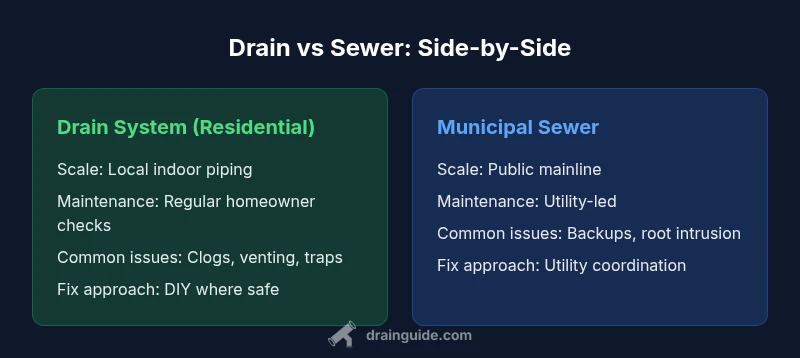
Understanding drain vs sewer is essential for homeowners who want to diagnose problems quickly and avoid unnecessary service calls. The term drain refers to the network of indoor pipes that carry wastewater away from fixtures such as sinks, showers, and washing machines. The sewer, by contrast, is the larger municipal or private mainline that collects wastewater from many buildings and transports it to a treatment plant. This distinction matters because most residential issues originate on the drain side, while sewer problems typically involve the mainline or public infrastructure. According to Drain Guide, clarifying whether trouble is a local drain issue or a sewer main issue helps you decide who to call and what repairs to attempt first. In practice, many "drain vs sewer" scenarios stem from simple culprits like a clogged trap, an obstructed vent, or a misaligned trap arm. Recognizing this difference empowers homeowners to triage safely and schedule the right expert when needed. Drain Guide analysis reinforces that early identification saves time and money.
Key differences in design and function
The drain system inside your home is designed to collect wastewater from individual fixtures and funnel it toward the building's main stack. It relies on gravity, proper venting, and traps to prevent sewer gas from entering living spaces. The sewer system, meanwhile, is public-facing infrastructure that aggregates wastewater from hundreds or thousands of homes. It must cope with peak flow, varying water usage, and occasional root intrusion. When evaluating drain vs sewer, consider scale, maintenance responsibility, and typical failure modes. Drain lines are more susceptible to local issues like hair clogs, grease buildup, and vent blockages. Sewer mains are more prone to root intrusion, sewer gas release, and backups that affect multiple properties. Drain Guide notes that both systems share similar principles—proper slope, clean traps, and functional venting—but the scope of the problem determines who fixes it and how long it takes. This awareness helps you communicate clearly with plumbers and city crews, avoiding unnecessary misinformation about the drain vs sewer divide.
Drains: common problems and fixes
Within the home, drains deal with solid waste and soap scum that gradually builds up and narrows pipes. Common drain issues include hair and soap scum clogs in bathroom drains, grease buildup in kitchen lines, and venting problems that cause gurgling or slow drainage. Fixes range from simple DIY steps—clearing strainers, flushing with hot water, using a drain snake on accessible lines, and inspecting for trapped water—to more involved measures like camera-inspection-based cleaning or replacing a damaged section. When addressing drain vs sewer questions, remember that many symptoms point to the drain: slow drainage that occurs in a single fixture, a recurring clog in a sink, or a toilet that gurgles after flushing. Regular maintenance, such as annual trap cleaning and proper use of strainers, dramatically reduces the risk of future clogs. Drain Guide's guidance emphasizes safe, non-chemical methods first to protect pipes and indoor air quality.