Drainage Problem Complaint Number: Quick Troubleshooting Guide
Urgent, practical troubleshooting for drainage problem complaint number issues—step-by-step checks, safety tips, and when to call a pro. Drain Guide helps you diagnose and fix clogs, vents, and mainline backups fast.


A drainage problem complaint number often signals a clog or venting issue affecting one or more fixtures. The quickest fix is to clear the blockage with a plunger or hand auger, then test drainage. If water still backs up, stop and check for venting problems or a partially closed shutoff. For safety, avoid chemical drain cleaners that can damage pipes.
Understanding the phrase drainage problem complaint number and why it matters
When homeowners encounter a drainage problem complaint number, it usually points to a recurring issue rather than a single symptom. The phrase helps triage the problem: is it localized to a sink, a shower, or the main sewer line? In many homes, a complaint number appears after a service call, an online claim, or a plumber's diagnostic report. For Drain Guide readers, recognizing this cue early can save time and prevent escalation. The key takeaway is that urgency rises when multiple fixtures back up, or there is a strong sewer odor. As you navigate this guide, keep safety at the forefront and document your observations clearly. According to Drain Guide, recognizing and addressing these signals promptly reduces the chance of a costly emergency.
Common causes you should test first
Most drainage problems start with simple, avoidable causes. Hair and soap scum can form stubborn clogs in bathroom drains; kitchen grease and food residue can accumulate in the disposal or pipe. A partially closed main valve or a slow vent can mimic a clog. Before you reach for chemical cleaners, inspect the trap, test with a plunger, and verify that the vent stack isn’t blocked by debris or a bird's nest. Drain Guide emphasizes starting with the basics: remove obvious blockages, flush with hot water, and note which fixtures are affected. If you find standing water in multiple fixtures, the issue is more likely a main line or vent problem.
Quick checks you can do before tackling the drain
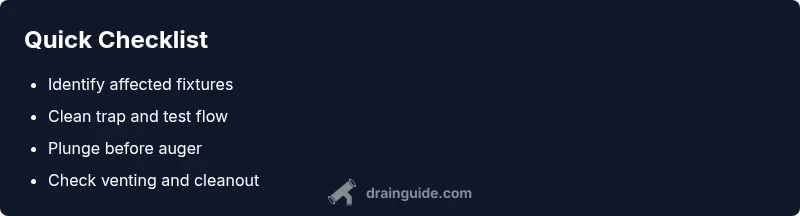
Safety first: wear gloves, use eye protection, and avoid mixing cleaners. Start by locating the cleanout access and placing a bucket underneath. Remove the trap to check for debris, then reassemble and run hot water for several minutes. Use a plunger on sinks and tubs first, then move to a hand auger if plunging fails. If you notice gurgling sounds after draining, that’s a sign the vent is battling air pressure or the plumbing is siphoning water from traps. Document the sounds and timing to aid diagnosis later.
Diagnostic mindset: building a flow for fast resolution
Approach drainage issues with a flowchart in mind: symptom → suspected cause → test → solution. Start with the simplest potential cause (a blockage near the fixture) and confirm by observing water flow after each step. If plunging works but the problem returns, the blockage may be deeper or past a trap. When more than one fixture is affected, switch to evaluating the vent and mainline geometry. Keep a log of each test, the tool used, and the result so you can retrace steps if needed. Drain Guide recommends framing the process this way to avoid guesswork and wasted time.
Prevention and long-term fixes to reduce future drainage problems
Once the blockage is cleared, adopt preventive habits: use a drain guard to catch hair, avoid pouring grease down the sink, and flush drains with hot water weekly. Regular maintenance reduces the chance of recurring clogs and odors. If you have hard water, consider a mild mineral buildup plan and periodic use of a safe descaler. For a persistent drainage problem complaint number that keeps returning, schedule a professional evaluation to verify venting and sewer line integrity. Drain Guide’s approach combines immediate fixes with long-term care to minimize future emergencies.
Steps
Estimated time: 60-90 minutes
- 1
Gather tools and safety gear
Collect a plunger, bucket, towels, adjustable wrench, hand auger, flashlight, and gloves. Put on eye protection and gloves. Clear the area and ensure kids/pets are away from the work zone.
Tip: Keep a towel ready to catch splashes. - 2
Inspect and clean the trap
Place the bucket beneath the trap, unscrew the trap from the pipe, remove debris, rinse, and reassemble. This clears the most common source of blockages.
Tip: Take a photo of the trap layout before disassembly if you’re unsure. - 3
Plunge the fixture
Seal the drain and apply steady pressure with the plunger. Work in short strokes and pause to feel for movement. Repeat until water clears.
Tip: Use a wet rag to seal any gaps for better suction. - 4
Use a drain auger for deeper clogs
Insert the auger into the drain, rotate slowly, and push forward to break through the clog. Retract gradually to bring debris out.
Tip: Don’t force the auger; stop if you feel resistance. - 5
Check the vent and cleanout
With the water off, inspect the vent opening (often on the roof) for debris. Clear blockages gently or call a pro if you’re uncomfortable.
Tip: Safety first: never access the roof without proper equipment. - 6
Test water flow and reseal
Run hot water for several minutes and observe for complete drainage. Refit any panels and clean up. If water still backs up, consider professional help.
Tip: Document the results for future reference.
Diagnosis: Slow drainage or backups in one or more fixtures with occasional gurgling
Possible Causes
- highHair, soap scum, or grease buildup causing a clog
- mediumVent stack blockage causing poor drainage and siphoning
- lowPartial valve shutoff or damaged trap leading to slow flow
Fixes
- easyDisassemble and clean the trap; use a hand auger or plunger for shallow blockages
- mediumInspect and clear vent opening; use a plumber's snake or hire pro if vent is blocked by debris
- mediumCheck the main shutoff valve and replace damaged traps or piping as needed
Got Questions?
What does drainage problem complaint number indicate?
It signals a documented drainage issue that may involve clogs, venting problems, or mainline backup. Start with simple checks and escalate if the problem recurs.
A drainage problem complaint number points to a documented issue you should start with basic checks and escalate if needed.
Can I use chemical drain cleaners to fix the problem?
Chemical cleaners can damage pipes and are not recommended as a first fix. They may provide temporary relief but can worsen blockages.
Chemical cleaners can harm pipes and aren’t ideal as a first fix.
When should I call a plumber?
If plunging and basic cleaning don’t clear the backup, or if you notice multiple fixtures backing up or strong sewer odor, call a plumber.
Call a plumber if simple methods fail or you smell sewer gas.
What signs point to venting issues?
Gurgling sounds, slow drainage, and air bubbles in the sink or tub suggest vent problems.
Gurgling and slow drainage point to venting problems.
How long should it take to clear a clog with basic tools?
Most simple clogs clear within 15-30 minutes of plunging or using a hand auger. If not, move to deeper fixes.
A simple clog usually clears in 15-30 minutes.
Watch Video
The Essentials
- Identify the likely cause before disassembly
- Start with trap cleaning, then plunging
- Check venting if backups persist
- Document tests and results for future reference
- Call a professional if multiple fixtures back up