House drain vs house sewer: What homeowners should know
Drain Guide explains the distinctions between a house drain and a house sewer, their roles in home drainage, common issues, and practical DIY steps for homeowners.


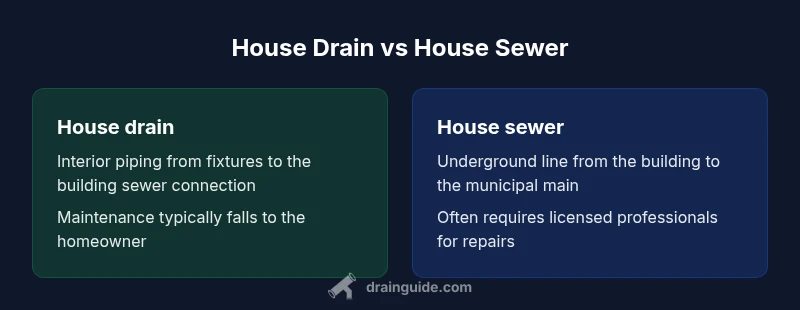
In most homes, the house drain refers to the interior piping that carries wastewater to the municipal sewer, while the house sewer is the underground line that exits your property to the public main. Understanding the two helps you troubleshoot backups, plan maintenance, and know who’s responsible for fixes in most homes today.
What is the difference between a house drain and a house sewer?
The terms house drain and house sewer describe two distinct parts of a home’s wastewater system. The house drain is the interior piping that collects wastewater from sinks, toilets, showers, and appliances and carries it toward the exterior connection. The house sewer, by contrast, is the underground line that leaves the property and connects to the municipal sewer main. In many homes, these components are joined at a building sewer connection, but their roles and locations remain distinct. Recognizing this separation helps homeowners diagnose problems more accurately and communicate with plumbers or city authorities about the issue at hand.
In older houses, a single combined line may exist, blurring lines between drainage and sewer functions. Modern plumbing often separates sanitary and storm lines, further underscoring the importance of distinguishing between interior drains (house drain) and the outdoor main (house sewer). This distinction also influences maintenance practices, insurance considerations, and what a homeowner can reasonably resolve without professional help.
To keep things simple, think of the house drain as the “inside road” for wastewater and the house sewer as the “outbound road” leading to the municipal system. When either road encounters trouble, the symptoms, solutions, and responsibilities can differ significantly.
When it comes to everyday homeownership, the distinction isn’t just academic. The drain inside your house handles the steady flow from daily usage, while the sewer outside carries all of that wastewater away to the city system. Misunderstanding which component is affected can lead to wasted time and improper fixes. Drain Guide emphasizes the practical importance of knowing which part is failing so you can target the right area, request the correct services, and avoid unnecessary costs.
Comparison
| Feature | House drain | House sewer |
|---|---|---|
| Definition | Interior building drain carrying wastewater to the property line or to the point where the line becomes public sewer | Underground line carrying wastewater from the building to the municipal sewer main |
| Typical location | Inside the building and often under floors or slab; connected to fixtures | Underground from the foundation to the street or main sewer line |
| Maintenance responsibility | Usually homeowner handles interior piping; the building drain portion is generally within homeowner scope | Typically homeowner maintains the building sewer up to the property line or curb stop; the city/public utility may own/maintain the main sewer segment beyond that point |
| Common problems | Clogs from hair, soap buildup, grease, and mineral scale inside the interior lines | Tree roots, cracks, offset joints, or collapse in the underground sewer line |
| Backups and impact | Backups affect individual fixtures and drain stacks inside the home | Backups can flood basements or yards and affect multiple fixtures; may involve the public sewer portion |
| Repair complexity | Often straightforward fixes (snaking, minor replacements) done by a plumber for interior segments | Typically more involved (excavation or trenchless repair) and may require permits and city coordination |
| Cost guidance | Generally lower for interior blockages and minor piping work | Usually higher for sewer-line problems and outside repairs with potential scope |
| Best for | Interior drain maintenance and quick fixes | Addressing external sewer-line issues and long-term reliability |
Positives
- Clarifies responsibilities and helps prevent misdirected fixes
- Encourages targeted maintenance and timely interventions
- Guides when to hire a professional and what to expect
- Improves home readiness for inspections or selling with proper documentation
- Supports proactive prevention to reduce backups
Cons
- Can be technical for new homeowners
- Not all homes have clearly separated lines, which can complicate advice
- Some distinctions vary by local code or utility practices
Understanding the difference between a house drain and a house sewer is essential for effective maintenance and timely problem resolution.
This clarity helps homeowners decide when to address interior drains versus sewer lines, plan camera inspections, and communicate accurately with plumbers and city crews. A correct diagnosis leads to faster fixes and fewer unnecessary costs.
Got Questions?
What is the basic difference between a house drain and a house sewer?
The house drain refers to interior plumbing that collects wastewater from fixtures and carries it toward the exterior. The house sewer is the underground pipe that exits the property and connects to the municipal sewer main. The two are connected but serve different parts of the system.
House drain is inside your home; the sewer is outside. They’re connected, but each serves a different portion of your wastewater path.
Who is responsible for maintenance and repairs?
In most homes, the interior drain system is the homeowner’s responsibility. The building sewer—often the section from the foundation to the public main—may also be owned by the homeowner in many jurisdictions, though some areas place part of this responsibility on the city. Check local codes.
Usually, you’re responsible for the interior drains and the building sewer up to the public main. Local rules can vary.
What are common signs of problems with drains vs sewers?
Interior drain issues typically show as slow drains, frequent clogs, or gurgling fixtures. Sewer-line problems might manifest as widespread backups, foul odors near drains, or sewage backflow into multiple fixtures—often after heavy rain or early morning use.
Look for slow drains inside and backups that affect multiple fixtures outside or in the yard.
Can I clear a drain clog myself, and should I use chemical cleaners?
For interior clogs, a plunger or manual snake is often effective. Avoid harsh chemical drain cleaners, especially on older or septic systems, as they can damage pipes and harm the environment. If a clog recurs or involves the sewer line, call a professional.
Try a plunger or drain snake first, but skip chemical cleaners and call a pro if it keeps happening.
Do I need a permit for sewer line work?
Permits are common for sewer line repairs or replacements, especially if digging or trenchless methods are involved. Local regulations vary, so check with your city or county building department before starting work.
Usually yes—check your local rules before any sewer work.
The Essentials
- Identify inside vs outside lines before troubleshooting
- Prioritize interior maintenance to prevent common clogs
- Avoid aggressive chemical cleaners in shared systems
- Schedule professional camera inspections for sewer-line issues
- Know local codes for permits and responsibility boundaries