How to Know If Your Drain Has Collapsed: A DIY Troubleshooting Guide
Learn the signs of a collapsed drain, safe checks you can perform, a clear diagnostic flow, and step-by-step fixes. Includes when to call a pro and how to prevent future failures. Drain Guide provides practical guidance for homeowners troubleshooting drainage issues.


Most likely sign of a collapsed drain is a sudden backup across multiple fixtures, often with a foul odor or gurgling. Quick actions: stop using the drain, avoid flushing, and contact a licensed plumber for a camera inspection and repair. If you hear sewer smells or see water rising, evacuate downstairs, ventilate, and call emergency services if backed-up waste enters living spaces.
Understanding the Question: how do you know if your drain has collapsed
If you’re reading this, you’re likely worried about a drain failure. How do you know if your drain has collapsed? In plumbing terms, collapse means the pipe has structurally failed, usually due to age, root intrusion, or severe pressure. According to Drain Guide, recognizing the problem early can prevent backflow into living spaces and costly excavation. A collapsed drain often starts with slow draining in one fixture, then progresses to backups across other fixtures, accompanied by foul odors and visible damp spots around the drain area. In older homes, clay or cast-iron pipes are more prone to collapse, especially where trees grow near the line. The key is to observe patterns: does water back up in sinks, tubs, and toilets after a single flush? Do you hear unusual rumbling or air bubbles when water enters the drain? These signs suggest trouble beyond a simple clog and warrant professional inspection.
Drain Guide emphasizes that acting quickly can limit damage and protect your home’s foundation and basement.
Signs your drain may have collapsed
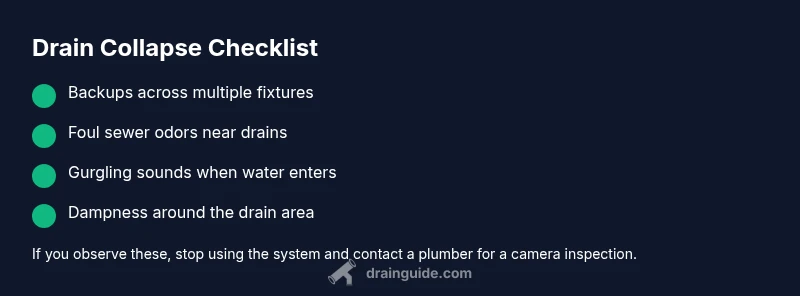
- Backups across multiple fixtures (sink, shower, toilet) that occur even after short use. This pattern is a classic red flag indicating the main line or branch line is compromised.
- Foul sewer odor in or near the drain area, especially when the fixtures are used or the area feels damp.
- Gurgling sounds from the drain or the plumbing when water enters, signaling air flow problems in the line.
- Standing water or damp spots around the drain and nearby floor surfaces, sometimes with staining or mold growth.
- Slow drainage that worsens over time, not just a temporary clog.
- Cracks or damp patches in basement or crawl space walls near where the drain runs.
- Water or waste backing up into another fixture after flushing or running water.
- Unexpected high water bills or wet soil around exterior drainage often indicates a compromised line farther underground.
Common causes and risk factors
Drain collapse often results from a combination of aging material, ground movement, and external pressures. Tree roots can grow into old clay or cast-iron pipes, gradually displacing segments and creating weak points that finally fail under normal use. Shifts in soil after heavy rain or frost can also stress the line, especially where the pipe runs under foundations or driveways. Poor initial installation or the use of improper backfill can leave pipes vulnerable to movement and collapse. In homes with hard water mineral buildup or corrosive wastewater, pipe walls weaken over time, accelerating collapse risk. The presence of multiple signs together (backups in several fixtures plus odors) strongly points toward a line failure rather than a simple clog, and calls for a professional inspection and potential repair plan. Drain Guide’s guidance emphasizes proactive assessment to prevent structural damage and sewage exposure.
What to check first (safely) to avoid further damage
Begin with non-destructive, safe checks before considering any digging or extensive removal. Do not attempt to “force” a blockage out with chemical cleaners or mechanical shovels. Check for obvious signs around exterior drains or yard cleanouts; look for wet soil or depressions that could indicate a leak along the line. Inspect the trap for blockages by disconnecting the P-trap under sinks or tubs only if you are comfortable and can reassemble it securely. Test one fixture at a time using modest amounts of water and observe if the backup persists across other fixtures. If you detect sewage odors, signs of backflow, or wet areas, stop testing and call a licensed plumber for a camera inspection. Drain Guide reminds homeowners that safe, measured steps protect you and your property while professional tools determine the exact damage.
Diagnostic flow: symptom → diagnosis → solutions
Symptom: Backups in multiple fixtures with possible odors or gurgling.
Diagnosis possibilities: (a) Collapsed drain pipe or sewer line (high likelihood); (b) Major blockage causing pressure buildup (medium-high likelihood); (c) Venting issues leading to poor drainage (medium); (d) External intrusion like root growth (low to medium).
Solutions pathway: If collapse is suspected, immediately stop using the system and schedule a camera inspection. Minor blockages can be cleared with a proper auger, but collapsed pipes generally require professional repair or replacement. Do not attempt to excavate or DIY extensive repairs. Drain Guide recommends a staged approach: confirm with a video inspection, then plan repair or replacement as needed.
Step-by-step fixes for the most likely scenario
- Stop using the affected drains and isolate the area to prevent cross-contamination. 2) Put on protective gloves and eyewear; sewage exposure requires caution. 3) Disconnect and inspect accessible traps if you feel safe doing so; remove and clean if clear, then reassemble. 4) If the trap is clear but backups persist, use a plumber’s auger to address localized clogs. 5) Do not force the line; schedule a professional camera inspection to confirm collapse and plan repair. 6) After any repair or replacement, return to full testing with water from multiple fixtures to ensure proper drainage. Tip: label shutoffs and keep a clear path for the plumber to access cleanouts.
Safety, warnings, and professional help
Gas, sewage, and compromised plumbing pose real hazards. Never enter damp basements or crawl spaces with standing sewage; never attempt to excavate major lines yourself. If you smell gas, hear hissing, or see pooling waste, evacuate and call emergency services. A collapsed drain is a critical emergency that requires a licensed plumber with camera inspection equipment. Drain Guide emphasizes documenting symptoms and keeping notes to share with your contractor for faster diagnosis and repair planning.
Prevention and maintenance to minimize future risk
Regular maintenance is your best defense against collapse. Use hair strainer screens to reduce solids, avoid pouring grease or fibrous materials down drains, and run hot water through sinks to wash out buildup. Schedule periodic inspections if you have old piping or large trees nearby. Avoid chemical drain cleaners; they can damage pipe walls and trap seals, accelerating deterioration. If you notice gradual changes—slower drainage, intermittent backups, or new odors—address them early with a professional consult. Drain Guide recommends a proactive plan: annual checks after heavy seasons, prompt attention to outdoor cleanouts, and keeping a log of issues for quick reference during service calls.
Steps
Estimated time: 60-120 minutes
- 1
Stop and secure the area
Cease use of the affected fixtures and contain the area to prevent spills. If you suspect sewage, keep occupants away and ventilate the space.
Tip: Turn off the main water supply if you can safely reach the shutoff. - 2
Gather basic tools and safety gear
Gather gloves, eye protection, a flashlight, a bucket, and basic hand tools. Safety is the priority when handling potential sewage exposure.
Tip: Avoid mixing cleaning agents—this can create dangerous fumes. - 3
Inspect accessible traps carefully
If you can access a P-trap safely, remove and inspect for clogs or damage. Clean and reinstall securely, ensuring gasket integrity.
Tip: Take photos before disassembly to aid reassembly. - 4
Try a controlled auger clearance
Use a plumber’s auger (snake) to address a localized blockage you can reach. Do not force beyond resistance.
Tip: Rotate slowly to avoid pipe damage. - 5
Schedule a professional camera inspection
If backups persist after traps and a minor clog attempt, call a licensed plumber for a camera inspection to confirm collapse and plan repair.
Tip: Request a written report with video or photos. - 6
Test the system after repair
After any repair, slowly run water through fixtures to verify drainage, ports, and seals are functioning properly.
Tip: Monitor for any repeating signs over the next 24-48 hours.
Diagnosis: Drain backed up across multiple fixtures with unusual gurgling or sewer odor
Possible Causes
- highCollapsed drain pipe or sewer line
- mediumSevere blockage causing pressure buildup
- mediumVentilation issue leading to poor drainage
- lowTree roots infiltrating sewer line
Fixes
- easyStop using the system and contact a licensed plumber for a camera inspection
- hardSchedule camera inspection and possible repair/replacement
- easyIf a localized clog is reachable, clear with a plumber’s auger
Got Questions?
What is considered a drain collapse?
A drain collapse occurs when a pipe structurally fails, allowing the line to crack or cave in. You may see widespread backups, sewer odors, or damp areas around the pipe. A professional camera inspection is typically required to confirm the damage and plan repair.
A drain collapse is when the pipe itself fails, causing backups and odors. A plumber usually confirms it with a camera and plans a repair.
Can I fix a collapsed drain myself?
Most collapsed drains require professional repair or replacement. Minor blockages might be cleared with proper tools, but structural failure needs diagnostic equipment and equipment that homeowners typically don’t own.
Most collapses need a pro. Minor clogs might be cleared safely, but a collapse requires a camera inspection and repair.
How long does a camera inspection take?
A typical camera inspection can take between 1 and 2 hours, depending on access, length of the run, and any needed preparations before repair work begins.
Usually about one to two hours for a camera inspection, depending on access and length of the line.
Should I wait for a collapse to worsen before calling a plumber?
No. If you notice backups in multiple fixtures, odors, or damp areas, contact a plumber promptly. Early assessment can prevent costly damage and reduce exposure to sewage.
If you notice backups and odors, call a plumber now rather than waiting.
Is a collapsed drain dangerous for my family?
Yes. Sewage exposure is hazardous. A suspected collapse requires quick action to prevent leaks into living spaces and potential health risks for occupants.
Yes, sewage exposure is hazardous. Get professional help quickly.
What can I do to prevent future drain collapses?
Maintain drains with screens, avoid pouring grease or fibrous waste down the drain, and schedule occasional professional inspections, especially in older homes or where trees near the line exist.
Keep drains clean, avoid grease, and have regular professional checks.
Watch Video
The Essentials
- Recognize warning signs early to prevent collapse from worsening.
- Avoid DIY excavation; a camera inspection is essential.
- Act quickly and contact a licensed plumber for safe repair planning.
- Prevent future failures with routine maintenance and proper waste disposal.