How to Tell If a Drain Pipe Is Broken: Quick Guide
Learn how to recognize signs of a broken drain pipe quickly with practical checks, safe testing methods, and a step-by-step repair flow. Drain Guide's urgent, homeowner-friendly troubleshooting for 2026.


Common signs of a broken drain pipe include sudden backups in sinks or tubs, gurgling noises from the drainage system, damp spots or mold on walls, and strong sewage odors near affected areas. Look for visible cracks or pooling around joints as clear indicators. If you notice these, prioritize safety, shut off water, and follow these diagnostic steps to verify the issue.
How to tell if drain pipe is broken: Quick signs you should not ignore
A broken drain pipe often announces itself with a cascade of observable symptoms. The most urgent indicators are water backing up in multiple fixtures, gurgling noises that don’t align with normal drainage, and damp spots that appear without an obvious leak. In older homes, you may even smell sewage near the plumbing fixtures. According to Drain Guide analyses in 2026, homeowners who notice multiple signs should treat it as an active plumbing problem rather than a nuisance. Start with safety: avoid contact with any standing sewage water, and ventilate the area if you can. This foundation helps you proceed without exposing yourself to harmful gases. Early recognition can prevent costly damage to floors, ceilings, and adjacent rooms.
Safe, proactive steps include keeping children and pets away from damp zones and turning off the main water supply if you detect active leaks. While some signs can indicate a simple blockage, many symptoms point to a broken pipe at the joints or along a section of pipe that has fractured due to shifting soil or aging materials. The Drain Guide team emphasizes documenting what you observe (location, time, and conditions) to share with a plumber later for a faster diagnosis.
Key takeaway from this section: if you observe backups in more than one fixture, unusual noises, and persistent dampness, assume pipe damage and proceed to a structured diagnostic flow rather than guessing.
- Look for wet patches on ceilings or walls under bathrooms or kitchens.
- Check nearby cabinets and basements for standing water or mold growth.
- Note any slow drains that suddenly worsen, especially after heavy use.
If the signs are clear, do not attempt major disassembly yourself; instead, move to safer checks and prepare for a professional assessment. Drain Guide and its researchers recommend avoiding chemical drain cleaners as a first move because they can mask the real issue and damage pipes further.
What to do next
- Turn off the main water supply to minimize further leakage while you inspect.
- Document locations of signs and any smells or wet areas.
- Prepare to share details with a licensed plumber for a definitive repair.
wordCount":null},
diagnosticFlow":{"symptom":"Water backup and gurgling in multiple fixtures along with damp spots and strong odor near plumbing", "causes":[{"cause":"Cracked or fractured pipe from shifting foundation or heavy loads","likelihood":"high"},{"cause":"Broken joints or loose connections at pipe fittings","likelihood":"high"},{"cause":"Root intrusion or collapsed sewer line","likelihood":"medium"},{"cause":"Severe blockage causing pressure buildup","likelihood":"low"}],"fixes":[{"fix":"Shut off the main water supply to limit damage and avoid exposure to sewage","difficulty":"easy"},{"fix":"Contain leaks with temporary sealant or epoxy putty only if you can do so safely","difficulty":"easy"},{"fix":"Document signs and call a licensed plumber for a full pipe replacement or repair","difficulty":"hard"},{"fix":"If root intrusion is suspected, request a camera inspection and sewer line clearing","difficulty":"medium"}]},
stepByStep":{"steps":[{"number":1,
title":"Assess safety and locate the source","description":"Begin by turning off the main water supply and shutting off electricity near wet areas if there’s standing water. Visually trace from exposed fixtures to the main line to identify where the problem is most pronounced. Take photos for reference and keep kids/pets away from the area.","tip":"Wear waterproof boots and gloves; sewage exposure requires caution."},{"number":2,"title":"Check for obvious leaks and cracks","description":"Inspect visible pipes under sinks, along the wall cavity, and in the basement for cracks, pooled water, or corrosion. Note the location and size of any cracks or joint leaks to guide the next steps and to inform the plumber.","tip":"Gently touch joints with a dry cloth to confirm active moisture without spreading water."},{"number":3,"title":"Assess drainage pattern and backups","description":"Run water in different fixtures to see which areas back up first. If backups occur in multiple lines, the issue is more likely a broken pipe rather than a local clog.","tip":"Record the order of backups to help diagnose whether the problem is along the main line or a branch."},{"number":4,"title":"Perform a non-destructive test","description":"Use a flashlight to inspect accessible pipe sections and look for hairline cracks or corrosion. Avoid lifting tiles or cutting into walls unless you are trained.","tip":"Do not use power tools near water; safety first."},{"number":5,"title":"Decide on temporary remediation","description":"If you can safely seal a small crack with epoxy putty or a temporary sealant, do so only as a temporary measure. Permanent repairs require licensed professionals.","tip":"Temporary fixes are not a substitute for professional replacement."},{"number":6,"title":"Plan for professional inspection","description":"Arrange a camera inspection to identify hidden damage inside the walls or underground. Request a written estimate and discuss options for pipe repair or replacement.","tip":"Ask about permits and potential disruptions to service before work begins."}],"estimatedTime":"45-90 minutes"},
tipsList":{"tips":[{"type":"warning","text":"Never pour chemical drain cleaners into a suspected broken pipe; they can cause chemical burns, damage, and mask the real issue."},{"type":"pro_tip","text":"Wear protective gear and ensure proper ventilation when inspecting damp areas to avoid mold exposure."},{"type":"note","text":"Document observations with photos and dates to support your plumber’s diagnosis."},{"type":"warning","text":"If you smell sewage or hear continuous gurgling, treat it as an emergency risk and contact a professional promptly."}]},
keyTakeaways":["Act quickly on obvious signs of damage","Shut off water before inspecting to limit damage","Call a licensed plumber for definitive repairs","Document findings for faster diagnosis","Plan for prevention after repair to avoid recurrence"],
videoEmbed":{"videoQuery":"how to tell if drain pipe is broken repair tutorial"},
faqSection":{"items":[{
question":"What are the first signs that a drain pipe might be broken?","questionShort":"First signs","answer":"Look for backups in multiple fixtures, gurgling noises, wet spots or mold near pipes, and a strong sewer odor. These are common early indicators of pipe damage and should not be ignored.","voiceAnswer":"Common early signs include backups, gurgling, and smells near the drainage, which should prompt a professional check.","priority":"high"},{
question":"Can a clogged drain look like a broken pipe?","questionShort":"Clog vs broken","answer":"A clog can cause backups, but rapid emergence of leaks, damp patches, or visible cracks points to pipe damage rather than a simple blockage. A professional can differentiate the two with a camera inspection.","voiceAnswer":"Backups alone can be a clog, but damp spots and cracks suggest pipe damage; a camera check clarifies.","priority":"high"},{"question":"Is it safe to DIY repair a broken drain pipe?","questionShort":"DIY safe?","answer":"Small, temporary fixes may be performed by homeowners with caution, but most pipe repairs require a licensed plumber to ensure a proper seal and code compliance.","voiceAnswer":"DIY can be risky; for actual repairs, hire a licensed plumber.","priority":"medium"},{"question":"When should I call the city or utility for a sewer line problem?","questionShort":"City call?","answer":"If you suspect a sewer main or interconnected sewer line is damaged, contact your local utility or a licensed plumber, as such issues often involve city infrastructure and permits.","voiceAnswer":"If it’s a main sewer issue, involve the utility and a plumber.","priority":"high"},{"question":"What is the typical cost range for repairing a broken drain pipe?","questionShort":"Cost range","answer":"Costs vary widely based on pipe location, extent of damage, and whether excavation is needed. Expect a range that reflects the complexity, but get a detailed quote from a licensed professional.","voiceAnswer":"Costs vary; get a detailed quote after inspection.","priority":"low"}]},
mainTopicQuery":"drain pipe"},
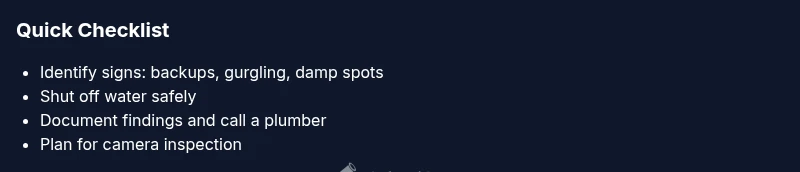
mediaPipeline":{"heroTask":{"stockQuery":"Home plumbing emergency kitchen drain","overlayTitle":"Broken Drain Pipe","badgeText":"2026 Guide","overlayTheme":"dark"},"infographicTask":{"type":"checklist","htmlContent":"<div class="w-full"><h2 class="text-xl font-bold">Quick Checklist</h2><ul class="list-disc pl-6"><li>Identify signs: backups, gurgling, damp spots</li><li>Shut off water safely</li><li>Document findings and call a plumber</li><li>Prepare for camera inspection</li></ul></div>","altText":"Checklist for diagnosing a broken drain pipe","caption":"Steps to identify and address a broken drain pipe"}},
taxonomy":{"categorySlug":"drain-troubleshooting","tagSlugs":["drain-pipe","hair-clog","drain-troubleshooting","gurgling-drain"]}}} } }
version":"1.0"} } }
Steps
Estimated time: 45-90 minutes
- 1
Assess safety and locate source
Begin by turning off the main water supply and shutting off electricity near wet areas if there’s standing water. Visually trace from exposed fixtures to the main line to identify where the problem is most pronounced. Take photos for reference and keep kids/pets away from the area.
Tip: Wear waterproof boots and gloves; sewage exposure requires caution. - 2
Check for obvious leaks and cracks
Inspect visible pipes under sinks, along the wall cavity, and in the basement for cracks, pooled water, or corrosion. Note the location and size of any cracks or joint leaks to guide the next steps and to inform the plumber.
Tip: Gently touch joints with a dry cloth to confirm active moisture without spreading water. - 3
Assess drainage pattern and backups
Run water in different fixtures to see which areas back up first. If backups occur in multiple lines, the issue is more likely a broken pipe rather than a local clog.
Tip: Record the order of backups to help diagnose whether the problem is along the main line or a branch. - 4
Perform a non-destructive test
Use a flashlight to inspect accessible pipe sections and look for hairline cracks or corrosion. Avoid lifting tiles or cutting into walls unless you are trained.
Tip: Do not use power tools near water; safety first. - 5
Decide on temporary remediation
If you can safely seal a small crack with epoxy putty or a temporary sealant, do so only as a temporary measure. Permanent repairs require licensed professionals.
Tip: Temporary fixes are not a substitute for professional replacement. - 6
Plan for professional inspection
Arrange a camera inspection to identify hidden damage inside the walls or underground. Request a written estimate and discuss options for pipe repair or replacement.
Tip: Ask about permits and potential disruptions to service before work begins.
Diagnosis: Water backup and gurgling in multiple fixtures along with damp spots and strong odor near plumbing
Possible Causes
- highCracked or fractured pipe from shifting foundation or heavy loads
- highBroken joints or loose connections at pipe fittings
- mediumRoot intrusion or collapsed sewer line
- lowSevere blockage causing pressure buildup
Fixes
- easyShut off the main water supply to limit damage and avoid exposure to sewage
- hardDocument signs and call a licensed plumber for a full pipe replacement or repair
- mediumIf root intrusion is suspected, request a camera inspection and sewer line clearing
Got Questions?
What are the first signs that a drain pipe might be broken?
Look for backups in multiple fixtures, unusual gurgling noises, damp spots or mold near pipes, and a strong sewer odor. These are common early indicators of pipe damage and should not be ignored.
Common early signs include backups, gurgling, and smells near the drainage, which should prompt a professional check.
Can a clogged drain look like a broken pipe?
A clog can cause backups, but rapid emergence of leaks, damp patches, or visible cracks points to pipe damage rather than a simple blockage. A professional can differentiate the two with a camera inspection.
Backups alone can be a clog, but damp spots and cracks suggest pipe damage; a camera check clarifies.
Is it safe to DIY repair a broken drain pipe?
Small, temporary fixes may be performed by homeowners with caution, but most pipe repairs require a licensed plumber to ensure a proper seal and code compliance.
DIY can be risky; for actual repairs, hire a licensed plumber.
When should I call the city or utility for a sewer line problem?
If you suspect a sewer main or interconnected sewer line is damaged, contact your local utility or a licensed plumber, as such issues often involve city infrastructure and permits.
If it’s a main sewer issue, involve the utility and a plumber.
What is the typical cost range for repairing a broken drain pipe?
Costs vary widely based on pipe location, extent of damage, and whether excavation is needed. Get a detailed quote from a licensed professional after inspection.
Costs vary; get a detailed quote after inspection.
Watch Video
The Essentials
- Act quickly on obvious signs of damage
- Shut off water before inspecting to limit damage
- Call a licensed plumber for definitive repairs
- Document findings for faster diagnosis
- Plan for prevention after repair to avoid recurrence