Understanding Drainage After Mastectomy
Understand how much drainage is normal after mastectomy, how to monitor drains, and when to contact your surgeon. Practical tips from Drain Guide to help you manage post-surgical drainage safely.


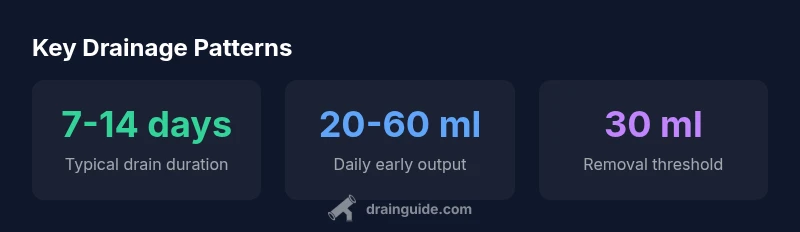
Normal drainage after mastectomy varies; there isn’t a single universal amount. Drain output typically declines over the first week as healing progresses. In practice, many surgeons consider removing a surgical drain when the daily output falls to about 30 milliliters or less for 1–2 consecutive days, assuming the surrounding wound appears healthy.
Understanding post-mastectomy drainage
Surgical drains prevent fluid buildup after mastectomy. Most patients receive Jackson-Pratt or similar suction drains that collect fluid in a bulb or reservoir. Drainage amounts vary widely depending on the extent of surgery, reconstruction, anesthesia, and individual healing. There is no universal 'normal' quantity; focus on daily trends and healing progress rather than a fixed number. In addition to volume, monitor color and consistency, as thick or foul drainage can signal infection. Always report sudden increases or new symptoms to your care team promptly. The goal is to keep the wound clean and draining appropriately as you recover.
How much drainage is normal after mastectomy
There isn’t a single fixed amount considered normal for every patient. Instead, look at daily trends and healing over time rather than a exact number.
blockTypeStringItIsNotUsedInJSON?null?],
Drain output patterns after mastectomy
| Measurement | Typical range | Notes |
|---|---|---|
| Initial daily output (first 24h) | 30-150 ml | Higher with more extensive surgeries |
| Mid-postop (days 2-7) | 10-80 ml | Usually declines over time |
| Before removal criteria | ≤30 ml/day for 1-2 days | Subject to surgeon discretion |
| Total drain duration | 7-21 days | Depends on healing and guidelines |
Got Questions?
What is normal drainage after mastectomy?
There isn’t a single normal amount. Drain output varies by surgery extent and healing. Daily totals should trend downward, and your surgeon will guide when to remove the drain.
There isn’t one fixed amount—drainage should trend downward as you heal, and your surgeon will decide when to remove it.
When should I call my surgeon about drainage?
Call if drainage suddenly increases, becomes foul-smelling, changes color to bright red, or if you develop fever or severe pain.
Call your doctor if drainage changes abruptly or you develop fever or pain.
Showering with a drain after mastectomy?
Follow your surgeon’s instructions. Some allow careful showering with a covered drain; others require restrictions until the wound heals.
Check with your surgeon—many patients can shower with precautions.
How should I care for the drain at home?
Empty and record daily output, keep the area clean, and avoid pulling on the tubing. Wear loose clothing to avoid pressure.
Empty, log your output, and keep the area clean; secure the tubing.
What are signs of infection around drain?
Look for fever, increasing redness or warmth, swelling, foul drainage, or a bad smell. Contact your team if any appear.
Watch for fever or redness and notify your team if drainage smells unusual.
How long does a mastectomy drain stay in?
Drain duration varies; most stay in for about 1-3 weeks depending on healing and doctor’s plan.
Drains stay in for a variable period; follow your surgeon’s timeline.
Is it normal to have pain around the drain site?
Some tenderness is normal after surgery, but increasing pain, swelling, or warmth should be evaluated.
Tenderness can be normal, but worsening pain or swelling needs medical advice.
“There is no universal amount of drainage after mastectomy; output depends on healing and the extent of surgery. Use daily trends to guide removal in collaboration with your surgeon.”
The Essentials
- Track daily drainage and trends, not fixed numbers.
- Drainage typically decreases as healing progresses.
- Follow your surgeon’s criteria for drain removal.
- Record output daily and monitor for signs of infection.
- Seek medical attention for sudden changes or concerning symptoms.