Drain Removal Timing After Breast Reduction
Learn when drains after breast reduction are typically removed, what factors influence timing, and how to care for incisions during recovery. This Drain Guide, 2026, covers expectations, signs to watch, and safe steps.


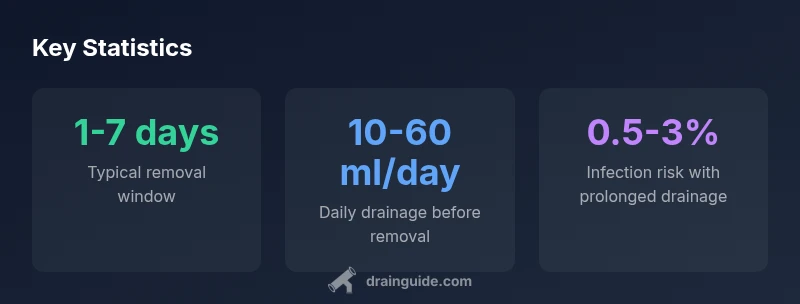
After a breast reduction, drain removal timing varies by healing progress, drainage volume, and surgeon preference. In most cases, drains are removed within 1 to 7 days post-op, with many patients reaching removal around day 3 to day 5 if drainage is low and healing proceeds normally. Always follow your surgeon’s specific plan.
Why drains are used after breast reduction
After breast reduction, surgical drains are placed to evacuate blood and serous fluid, reduce swelling, and minimize the risk of hematoma or seroma formation. Drains connect to small collection bulbs or suction devices and require monitoring until output slows and incisions heal. The question, "When can drains be removed after breast reduction?" is common because timing varies with each patient. According to Drain Guide, follow-up plans are tailored to healing progress and fluid output, not a fixed calendar. The surgical team evaluates daily drainage, incision condition, and patient comfort to decide the safest removal point. This approach helps reduce infection risk and prevents premature removal that might compromise healing. Expect a brief hospital stay or early discharge with clear instructions on how to monitor the drain site and activity limits during recovery.
Removal timing by drainage volume after breast reduction
| Scenario | Typical Removal Window | Key Considerations |
|---|---|---|
| Low drainage (≤20 ml/day) | 1-3 days | Low risk; ensure proper wound care |
| Moderate drainage (21-60 ml/day) | 3-5 days | Monitor for seroma; arrange follow-up |
| High drainage (>60 ml/day) | 5-7+ days | Infection risk; possible longer drainage |
Got Questions?
How soon after breast reduction are drains typically removed?
Drains are usually removed within 1-7 days post-op, depending on daily output and healing progress. Your surgeon will determine the exact timing based on fluid drainage, incision healing, and absence of signs of infection.
Drain removal usually happens within a week, depending on how much fluid drains and how well the incisions are healing.
Can I shower with drains in place?
Showering is generally allowed once your surgeon approves and the drain site is protected. Use gentle cleaning around the incision and avoid soaking the drain area until cleared.
You’ll usually be able to shower after your surgeon says it’s okay, just keep the area dry where the drain is attached.
What signs indicate a drain should stay longer after breast reduction?
Keep drains longer if output remains high, there are increasing signs of infection, fever, redness spreading from the incision, or if you notice a new swelling or a seroma.
If drainage stays high or you see signs of infection, your doctor may delay removal.
Does activity affect drain removal timing?
Light activity is usually encouraged, but you should avoid heavy lifting or strenuous exercise until the drain is removed and the surgeon clears you for more vigorous activity.
Be sure to follow movement limits—don’t push too hard until the doctor says it’s okay.
Is drain removal painful?
Drain removal is typically a quick, relatively painless procedure. Some patients feel a brief tug or pressure as the drain comes out, followed by mild soreness.
Most people feel only a short sting when the drain is removed, then tenderness subsides quickly.
What should I do if drainage increases after removal?
If you notice a sudden increase in drainage after removal, contact your surgeon promptly. It may indicate an ongoing collection or infection requiring evaluation.
If drainage rises after removal, call your surgeon right away for guidance.
“Drain timing must be tailored to each patient’s healing and fluid output, not a fixed calendar. Following your surgeon’s plan reduces infection risk and supports a smoother recovery.”
The Essentials
- Follow your surgeon's plan for drain removal.
- Monitor daily drainage, color, and comfort.
- Expect removal within 1-7 days under typical conditions.
- Prolonged drainage may signal complications requiring evaluation.
- Report fever, increasing redness, or worsening pain promptly.