How to Drain Coolant from Reservoir: A DIY Guide
Learn how to safely drain coolant from your vehicle's reservoir, dispose of old coolant responsibly, and refill with the correct mix. This step-by-step guide covers safety, tools, bleeding air, and maintenance.


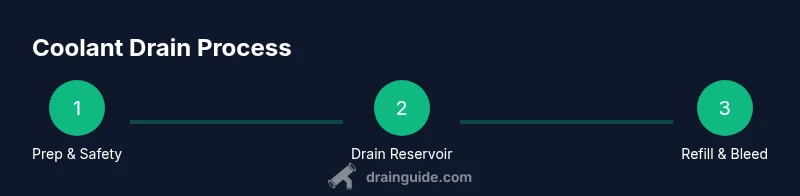
Drain coolant from the reservoir by ensuring the engine is cold, placing a catch pan, opening the reservoir cap for venting, then loosening the drain valve to let coolant flow into the pan. Refill with fresh coolant and bleed air according to your vehicle's manual.
Safety first: prepping for a coolant drain
Before you touch the cooling system, confirm the engine is completely cold. Hot coolant under pressure can cause severe burns. Park the vehicle on level ground, engage the parking brake, and disconnect electrical accessories if you plan to remove components near the reservoir. Put on chemical-resistant gloves and safety glasses. Collect the correct coolant type specified for your vehicle and have a compatible disposal container ready. Place a rigid catch pan under the reservoir drain or lower hose connection. Work in a well-ventilated area and keep children and pets away. If your plan includes flushing, check the owner's manual for the recommended steps, and never mix coolant types. According to Drain Guide, safety and proper containment are the foundations of any drain project; rushing this step can create leaks or injuries.
Tools & Materials
- Catch pan (rigid, leak-proof)(Capable of holding at least 1.5–2 liters of liquid; position under drain point.)
- Chemical-resistant gloves(Nitrile preferred; protects skin from coolant exposure.)
- Safety glasses or face shield(Protect eyes from splashes.)
- Funnel and clean rags(For pouring and wiping spills.)
- Container for used coolant(Sealable bottle or dedicated coolant disposal container.)
- Wrench or pliers (if needed for drain valve)(Some reservoirs have a built-in valve that requires a tool.)
- New coolant (pre-mixed or concentrate with correct mix ratio)(Use the specification in your owner's manual.)
- Thermometer or temp-safe indicator (optional)(Helps confirm the system isn’t overheating during bleed.)
Steps
Estimated time: 60-90 minutes
- 1
Ensure engine is completely cold
Park on level ground, apply the parking brake, and turn off the engine. Wait at least 15 minutes after shutdown to let coolant decoagulate and pressure drop. This minimizes the risk of scalding during cap removal or hose work.
Tip: Never open the coolant cap when the engine is hot or under pressure. - 2
Position the catch pan under the drain point
Place a sturdy catch pan beneath the reservoir drain port or lower hose connection. Position the pan so any spills are contained and easy to transfer to the disposal container later.
Tip: If you’re unsure where the drain point is, consult the manual or a service diagram for your exact model. - 3
Loosen the reservoir cap to vent
Carefully loosen the reservoir cap just enough to vent air as coolant begins to flow. Leaving it closed can create a vacuum that slows draining or damages hoses.
Tip: Vent slowly to avoid splashing hot coolant. - 4
Open the drain valve or disconnect the hose
If your vehicle has a drain valve, loosen it with the appropriate tool if needed. If there’s no valve, carefully loosen the hose clamp and drain hose to allow coolant to flow into the pan.
Tip: Control the flow to minimize spills; aim the hose toward the center of the catch pan. - 5
Let coolant drain completely
Allow the reservoir to drain until no more liquid comes out and the level noticeably drops. This may take several minutes depending on the system.
Tip: If you notice air pockets, gently wiggle the hose or valve to encourage drainage. - 6
Inspect for leaks and clean up spills
Quickly check surrounding hoses, clamps, and the drain port for any signs of leaking. Wipe spills with rags and dispose of contaminated towels according to local guidelines.
Tip: Keep a clean environment to prevent slips and reduce contamination risk. - 7
Rinse the reservoir area if needed
If you plan a flush, you can introduce a small amount of coolant to rinse the reservoir area before draining again. Otherwise skip to refilling.
Tip: Avoid introducing too much water into a hot system; follow manufacturer guidance. - 8
Dispose of old coolant responsibly
Seal the used coolant in a labeled container and take it to an approved recycling or hazardous waste facility. Do not pour it on the ground or down the drain.
Tip: Always follow local environmental regulations. - 9
Prepare fresh coolant and refill
If using a pre-mixed coolant, pour the recommended amount into the reservoir using a funnel. If using concentrate, dilute to the correct ratio first, then pour.
Tip: Double-check the spec for your vehicle to avoid cooling system problems. - 10
Bleed air from the cooling system
With the system partially full, start the engine and let it reach normal operating temperature with the surge tank cap slightly loosened to vent air. Watch the level as air escapes and keep adding coolant to maintain the proper level.
Tip: Air pockets can cause overheating—don’t skip this step. - 11
Check the level and re-tighten caps
Once the engine has cooled again, recheck coolant level in the reservoir and fill to the recommended mark. Securely close the reservoir cap and any radiator caps.
Tip: Color and warning lights should normalize after a proper bleed. - 12
Test drive and final inspection
Take a short test drive to bring the system to operating temperature, then recheck for leaks and coolant level once cooled. Confirm there are no unusual noises or temperature fluctuations.
Tip: Document the service in your vehicle’s maintenance log.
Got Questions?
Is it safe to drain coolant when the engine is hot?
No. Draining coolant with a hot engine can cause severe burns and damaged components. Wait until the engine is fully cooled and pressure is released before starting.
No. Wait until the engine cools before draining to avoid burns and scalding liquids.
Can I reuse old coolant after draining?
Old coolant can be reused only if it remains clean, correctly colored, and within the vehicle’s specification. Most DIYers opt to replace with fresh coolant to ensure proper protection.
Usually better to replace with new coolant unless the old one is clear and within spec.
Should I flush the cooling system after draining the reservoir?
Flushing is recommended in some cases (contaminants or corrosion). Check your manual to confirm whether a flush is required for your vehicle.
Flushing depends on your car's needs; consult the manual to decide.
How often should I drain and replace coolant?
Most manufacturers recommend a coolant replacement every 5–7 years or 60,000–100,000 miles, depending on the product and vehicle. Always follow your owner’s manual.
Check your manual for the recommended interval; it varies by vehicle and coolant type.
How should I dispose of old coolant safely?
Coolant is hazardous; take it to a recycling center or hazardous waste facility. Do not pour it down the drain or on the ground.
Recycle or dispose of coolant at a proper facility; never dump it.
Do I need to bleed the system after refilling?
Yes. Bleeding removes air pockets to prevent overheating. Follow the bleed procedure outlined in your manual or this guide.
Yes, bleed the system to remove air and prevent overheating.
Watch Video
The Essentials
- Plan safety first before starting.
- Identify the correct drain point and vent the system.
- Bleed air thoroughly after refill for reliable cooling.
- Dispose coolant responsibly and document the service.