How to Drain on LG Washer: A Practical Step-by-Step Guide
Learn how to drain on LG washer safely and efficiently. This comprehensive guide covers drain locations, safe tools, manual and pump-assisted draining, maintenance tips, and troubleshooting to prevent odors and clogs.


By following these steps, you will safely drain the washer's drum and reservoir, prevent overflow, and prepare the machine for cleaning or service. You’ll identify the correct drain location, gather containers, and perform a controlled drain plus manual pump relief. Safety reminders and quick troubleshooting tips are included for common issues.
Understanding LG Washer Drain Systems
If you’re wondering how to drain on lg washer, you’ll want to understand the two core parts: the drain pump and the drain hose. LG washers, whether front-load or top-load, use a pump to push water through a drain hose to the household plumbing or a standpipe. The drain path also includes a filter or screen in many models, which catches lint and debris before the water exits. When this path becomes blocked or the pump struggles, you’ll notice slower draining, gurgling sounds, or standing water in the drum. Understanding these components helps you diagnose issues quickly and safely. The goal is to help you drain the tub and reservoir safely, restore normal draining, and prevent future clogs. By understanding the drain architecture, you’ll know which parts to check first and how to approach maintenance without risking the machine.
Symptoms That Signal a Drain Issue in LG Washers
Common drain-related symptoms signal that it’s time to inspect the system. Water fails to drain after a cycle, you hear a loud humming from the pump, or the drain hose feels stiff or kinked. You might notice a gurgling noise or a rotten-egg smell from trapped water, which signals a buildup of residue. To verify, run a short cycle with the door closed and observe water exit flow from the drain hose. If water backs up or leaks around the housing, inspect the filter, housing, and hose connections. By recognizing these indicators, you can decide whether a simple cleaning or professional service is required.
Safety First: Precautions Before Draining
Drain work involves water and electricity; follow strict safety steps. Unplug the machine before touching any internal components. Keep the area dry and wear rubber gloves to protect your hands from sharp edges and hot water. Use a shallow tub or pan to catch water as you drain, and place towels to manage spills. Do not pull on hoses with the machine plugged in, and never attempt to remove the pump housing beyond your model’s access panel. If you notice burning smells or exposed wiring, stop immediately and contact a licensed technician. This precautionary guidance reduces risk while you perform drain-related tasks.
Preparing Your Area and Tools
Set up a clean, organized workspace before starting. Gather a drain pan or shallow tub that can hold the burst of water, a bucket for the first portion, a sturdy towel, a flashlight for low-light areas, and flexible gloves for grip. You may also need a screwdriver for access panels and pliers to loosen clamps. Clear the area around the washer and disconnect the power cord. Having everything ready reduces delays, minimizes mess, and helps you stay in control of water flow during draining.
Accessing the Drain Filter and Hose
Many LG models place the drain filter behind a small access panel at the bottom front. Open the panel slowly, then prepare to catch water by positioning a tub beneath. If your model has a threaded drain filter cap, rotate it counterclockwise and let water drain into the tub. Clean any lint or debris from the filter and housing with a soft brush, then reinstall the filter and seal. If there is no accessible filter, inspect the drain hose entry for kinks and clear obstructions from the hose and inlet port. This step ensures a smooth exit path for water.
Manual Drain vs Pump-Assist Drain: Key Differences
There are two primary drainage methods. A manual drain relies on gravity through the drain hose to exit water into a standpipe or tub. A pump-assisted drain uses the built-in pump to push water through the hose toward the home’s plumbing. If the water does not flow properly, determine whether you have an obstructed filter or a blocked pump. For a manual drain, you may need to reposition hoses or tilt the washer slightly to encourage flow. For a pump issue, residential service may be required. Recognizing which method your model uses helps you choose the right steps and avoid unnecessary disassembly.
Post-Drain Cleanup and Inspection
After draining, wipe the area dry and inspect the hoses and clamps for signs of wear or damage. Look for cracks in the drain hose and loose clamps, and replace any damaged components. Reconnect the power and run a short rinse to examine drainage and leaks. If you notice lingering odors, consider a light cleaning of the drum with a non-abrasive cleaner and run another rinse. Document any recurring issues so you can address them during routine maintenance.
Troubleshooting Common Drain Problems in LG Washers
If water drains slowly or not at all, start with the simplest explanations: a kinked hose, a clogged filter, or a buildup in the pump. Check the hose for kinks and signs of crushing under the machine; straighten the hose and test. Remove any lint, coins, or hair from the filter housing, then run a short cycle to confirm flow. If drainage remains poor, the pump might be weak or failing—this requires professional service. Finally, if you notice odors, a trapped water column or standing water in the drum could indicate a need for a deeper cleaning.
Maintenance and Prevention: Keeping Drainage Smooth
Prevention is easier than repair. Schedule a periodic check of the drain hose, filter, and pump. Clean the filter monthly or per your LG model’s instructions, and keep the drain area free of lint and debris. Use appropriate cleaners sparingly and avoid harsh chemicals that could damage hoses. If you smell odors or notice gurgling, perform a quick flush with a mild cleaner (following product labels and safety precautions). By establishing a routine, you’ll minimize the risk of clogs and maintain efficient drainage over time.
When to Call a Pro: Signals You Need Expert Help
Not all drain problems are DIY-friendly. When you hear unusual noises, observe water leaks around the base, or suspect a blown pump, it’s time to call a professional. If you’ve attempted the basic steps to drain but see no improvement after several cycles, avoid making the issue worse by persisting. A certified technician can diagnose electrical or motor issues and replace worn components safely. Drain Guide suggests using DIY steps for minor clogs but recognizing when a professional is required.
Tools & Materials
- Drain pan or tub(Deep enough to hold incoming water)
- Buckets and towels(Contain spills and dry the area)
- Flashlight(Inspect hoses and filter entries)
- Rubber gloves(Protect hands from water and debris)
- Screwdriver (Phillips head)(Open service panels if needed)
- Pliers(Loosen clamps if necessary)
- Rags(Wipe spills)
- Old toothbrush or brush(Clean debris from filter housing)
Steps
Estimated time: 30-60 minutes
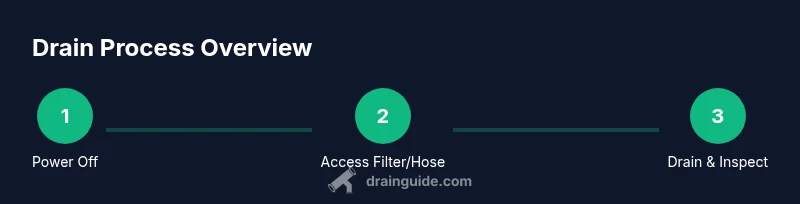
- 1
Unplug and prep area
Power off the washer and unplug from the wall. Move it slightly to access the front panel and drain area, then lay towels to catch any incidental spills.
Tip: Unplug first to reduce shock risk; never reach behind a live appliance. - 2
Locate the drain access
Find the drain filter or service panel according to your LG model. It is usually behind a small access door at the bottom front of the machine.
Tip: Refer to the user manual for exact location; some models bypass a filter entirely. - 3
Prepare to drain
Place a tub or pan beneath the drain outlet and have a bucket ready for the first water. If your model has a filter, slowly unscrew the cap to allow water to escape.
Tip: Be ready for water flow; have a towel to catch splashes. - 4
Drain and inspect filter
Let water drain completely, then remove the filter and rinse out debris. Reinstall the filter and seal tightly before running a quick test cycle.
Tip: Do not over-tighten—hand-tight is enough to seal. - 5
Check hoses and clamps
Inspect the drain hose for kinks and wear. Replace any damaged sections and secure clamps to avoid leaks when you run the next cycle.
Tip: If the hose reaches a standpipe, ensure it is properly inserted and fastened. - 6
Run a test cycle
With the drain system cleared, run a brief empty cycle to verify drainage and ensure no leaks. Observe the process and listen for abnormal sounds.
Tip: Stop the cycle if you notice leaks or unusual noises; re-check connections.
Got Questions?
How can I tell if my LG washer is draining properly?
Observe the drain hose during a cycle and listen for the pump. Water should flow steadily and exit the hose without kinking. If water remains in the drum after a cycle, inspect the filter and pump for blockages.
Watch the drain hose while the washer runs and listen for the pump; if water stays in the drum, inspect the hose and pump.
Can I drain LG washers without removing the filter?
Some LG models have no accessible filter; others require filter removal. If your model has a filter, you may need to remove it for cleaning. If unsure, consult the manual.
Some LG models have filters you remove; others don’t. Check your model to be sure.
Is it safe to drain a washer while it is spinning?
Draining during a spin is not recommended as it can cause water spray and damage. Allow the drum to stop, then drain using the proper access point.
Don’t drain while spinning. Let the drum stop first.
What safety gear should I wear when draining?
Wear rubber gloves and eye protection if splashes are likely. Use a towel and keep liquids away from power outlets.
Wear gloves and keep the area dry to avoid slips and contact with hot water.
How often should I drain to prevent odors?
Regularly inspect and clean the drain hose and filter every few months, especially if you notice odors or gurgling. Prompt maintenance prevents buildup and odors.
Clean the drain hose and filter every few months to keep odors away.
What should I do if water drains slowly even after cleaning?
Slow drainage often means a clogged pump or partial blockage in the hose. Recheck the filter, remove debris, and test again. If it remains slow, a professional may be needed.
If water drains slowly after cleaning, check the pump and hose for blockages, and consider professional help if it doesn’t improve.
Watch Video
The Essentials
- Identify your LG drain path before starting
- Drain water safely with a tub and towels
- Inspect filters and hoses for blockages
- Test run to confirm drainage after maintenance
- Call a professional for pump failures or electrical issues