Washing Machine Drain Clean: A DIY Guide
Learn how to safely clean a washing machine drain, prevent clogs, and restore proper drainage with our practical, DIY-friendly guide from Drain Guide. Includes tools, safety, step-by-step actions, tips, and maintenance to keep drains clear.


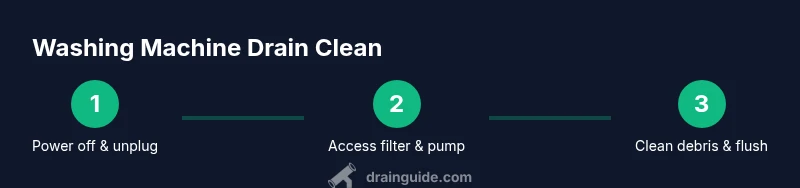
You can clean a washing machine drain by safely accessing the pump or filter, removing lint and soap scum, clearing the intake hose, and flushing the line with water. Gather basic tools, towels, and gloves, then test run the washer to confirm proper drainage. Avoid chemical cleaners near electronics; Drain Guide recommends starting with the filter and inspecting hoses.
Understanding the drain path in a washing machine
A washing machine drains through a short path that begins at the drum and pump, travels through the filter housing or pump area, exits via the drain hose, and ends at the home’s standpipe or wastewater line. Over time, lint, hair, detergent residue, and fabric fibers accumulate in this path. This buildup constricts flow, slows drainage, and can cause backups or odors. According to Drain Guide, most residential washer drainage issues originate in the filter housing or discharge hose. Understanding the exact route helps you target the correct component and reduces the risk of leaks or electrical hazards when performing maintenance. Regular checks and gentle cleaning keep your machine performing at peak efficiency and lessen the chances of expensive repairs.
How the washer drain system works
Most washers use a small internal pump to move water out of the drum. Water then passes through a lint filter (if your model has one), into a short drain hose, and out to the standpipe or drain line. The pump and filter are the most common choke points, but kinks, collapsed hoses, or loose connections can also impede flow. Knowing these zones helps you diagnose issues without tearing the entire appliance apart. A clean drain path also minimizes odors that can arise from standing water and soap scum residues. Drain Guide notes that routine inspection is more effective than reactive fixes after a backup occurs.
Safety first: electrical and water safety when accessing the drain
Safety must come first. Always unplug the washing machine before starting any work. Turn off the hot and cold water supply to prevent accidental leaks while disconnecting hoses. If you must move the machine, use proper lifting technique and keep the power cord clear of water. Wear rubber gloves and eye protection when dealing with dirty water or sharp metal edges. Never attempt to disassemble the electrical control area unless you are trained. Drain Guide emphasizes that electrical safety reduces the risk of shock and damage to the machine during maintenance.
Tools and materials you'll need (overview)
Before you begin, gather the essentials: gloves, towels or rags, a shallow tray or bucket, a flashlight, screwdrivers (flat and Phillips), pliers or adjustable wrench, a drain snake or auger, and a stiff brush. Optional items include a small amount of white vinegar, baking soda, and a replacement hose clamp if you notice hose leaks. Having everything ready prevents mid-task trips to the toolbox and keeps the drain clean process smooth. Drain Guide notes that using the right tools minimizes damage to clips, seals, and hoses during maintenance.
Common causes of drainage blockages
Clogs in washing machine drains commonly come from lint buildup, hair, and detergent residue collecting in the filter housing or pump area. Overloaded loads push more debris through the system, accelerating buildup. Fabric softener residues can also stick to hoses, narrowing passages over time. Foreign objects accidentally dropped into the drum—like coins or buttons—can lodge in the pump or filter. Regular inspection and gentle cleaning reduce these issues and extend the life of your machine.
Step-by-step preliminary checks you can do before disassembly
Start with non-invasive checks to save time. Verify the machine is unplugged, then move it away from the wall to access the back panel or front filter (depending on model). Check visible hoses for kinks, cracks, or loose clamps. If your model has a removable lint filter, inspect and clean it first. If water remains in the drum after a cycle, note where it pools and whether it drains slowly or not at all. These observations help you choose the right disassembly path if needed later. Drain Guide suggests performing these checks to avoid unnecessary disassembly and to pinpoint the likely clog location.
The core drain-clean procedure (summary in plain language)
This section covers the practical, hands-on steps to clear a clog and restore drainage. Start by unplugging, then gain access to the filter/pump area. Remove the lint filter, clean out debris, and inspect the pump inlet. Use the drain snake to clear any stubborn buildup inside the hose or pump housing, then flush the system with clean water. Reassemble all parts securely, and run an empty hot-water cycle with a bit of vinegar to rinse residual gunk. Finish by confirming smooth drainage in a test wash. Drain Guide recommends a calm, methodical approach to avoid disturbing seals and causing leaks.
Post-clean verification and maintenance
After reassembly, perform a cautious test: run a small, empty cycle with no clothes to confirm drainage is steady and complete. Listen for unusual noises, which can indicate a misaligned hose or a partially blocked pump. Dry the area thoroughly to prevent mold growth and odor. Keep an eye on the filter and hose connections during the first few washes. Regular maintenance, like cleaning the lint filter after each load and checking hose condition every few months, dramatically lowers the chances of future clogs, according to Drain Guide.
Maintenance habits to prevent future clogs or odors
Create a simple maintenance routine that reduces buildup. Clean the lint filter after every couple of loads, avoid overloading the drum, and periodically run an empty hot-water cycle with a splash of vinegar or baking soda to dissolve soap scum. Keep hoses free of kinks and replace brittle hoses promptly. Store a small towel nearby to catch spills during routine checks. Adopting these habits minimizes grime accretion and odors, helping your washer drain clean consistently over time. Drain Guide’s team emphasizes proactive care as the easiest path to reliability.
Tools & Materials
- Rubber gloves(Protect hands from dirty water and sharp edges.)
- Towels or rags(Clean up spills and wipe components during work.)
- Shallow bucket or tray(Catch water when you remove the filter or hoses.)
- Flashlight(See inside the pump housing and along hoses.)
- Screwdrivers (flat and Phillips)(Remove any screws securing panels or the filter cover.)
- Pliers or adjustable wrench(Loosen hose clamps and hardware if needed.)
- Drain snake/auger(Clear compacted debris inside hoses or pump inlet.)
- Replacement hose clamp (optional)(Use if a hose clamp is damaged during disassembly.)
- Old toothbrush or stiff brush (optional)(Scrub away stubborn grime from the filter housing.)
- Vinegar or baking soda (optional)(Mild cleaning rinse for after-flush cycle.)
Steps
Estimated time: 60-90 minutes
- 1
Power off and prepare
Unplug the washer from the wall and switch off the water supply to prevent leaks. Move the unit slightly away from the wall so you can access the back or front panel. Gather towels and lay them around the work area to catch spills.
Tip: Always start with safety; prevent water from contacting electrical outlets. - 2
Access the drain area
Depending on your model, remove the front filter panel or the back access panel to reach the pump and filter housing. Use a flashlight to inspect the drain hose and clamp areas for obvious kinks or cracks. Have the bucket ready to catch any residual water.
Tip: Take photos during disassembly to guide reassembly. - 3
Remove and clean the filter
Carefully remove the lint filter and wipe away lint, soap scum, and hair with a brush or cloth. Rinse the filter under running water and inspect the seal for wear. Reinsert once clean or replace if damaged.
Tip: Keep the seal clean; a dirty seal can cause leaks after reassembly. - 4
Clear the drain hose and pump inlet
Detach the drain hose from the standpipe or pump inlet if needed and inspect for blockages. Use the drain snake to gently dislodge any obstruction and pull out debris. If access is limited, snaking from the filter housing can still improve flow.
Tip: Do not force the snake; rotate gently to avoid damaging the hose. - 5
Flush and rinse
Reconnect hoses temporarily and run a short hot-water cycle with the drain unobstructed to flush out loosened debris. Stop the cycle if you notice leaks, then recheck hose clamps and seals before proceeding.
Tip: A vinegar rinse can help dissolve soap scum; avoid mixing strong cleaners with metal parts. - 6
Reassemble and test
Secure all panels and tighten clamps. Plug the machine back in and run a full test cycle with no clothes to ensure proper drainage and no leaks. If water backs up, reassess seal integrity and hose connections.
Tip: Document the steps you took so you can replicate the process later if needed.
Got Questions?
What is the first step to clean a washing machine drain?
Unplug the washer, turn off the water supply, and prepare the area. Access the filter or pump housing so you can inspect for debris. These initial steps reduce risk and focus your effort where clogs most commonly form.
First unplug the washer, shut off water, and get to the filter where debris often collects.
Is it safe to use chemical drain cleaners in a washing machine drain?
Chemical drain cleaners are not recommended for washing machine drains. They can damage hoses, seals, and electronic components. Mechanical cleaning with a snake or manual removal is safer for most machines.
No. Avoid chemical cleaners near the washer; use mechanical cleaning instead.
How do I know if the drain is blocked due to lint or soap scum?
If water drains slowly or pools after a cycle, the drain is likely blocked. Check the filter housing and drain hose for visible buildup, then probe with a snake if needed.
Slow drainage usually means a blockage in the filter or hose.
Do I need to unplug while disconnecting hoses?
Yes. Unplug the machine and turn off the water supply before touching hoses to prevent electric shock or leaks.
Always unplug and shut off the water first.
When should I call a professional?
If backflow persists after cleaning, the pump is likely damaged, or you cannot safely access the drain, contact a licensed professional.
Call a pro if backups persist or you’re unsure about safe disassembly.
What maintenance helps prevent clogs in the future?
Regular lint-filter cleaning, avoid overloading, and periodic hot-water cycles with vinegar or baking soda help prevent buildup and odors.
Keep up with filter cleaning and regular flushes to stay clog-free.
Watch Video
The Essentials
- Power off before starting any work
- Target filters and hoses first for quicker results
- Inspect hose integrity; replace damaged parts promptly
- Test with a short cycle before full use
- Maintain by cleaning filters regularly and avoiding overloading