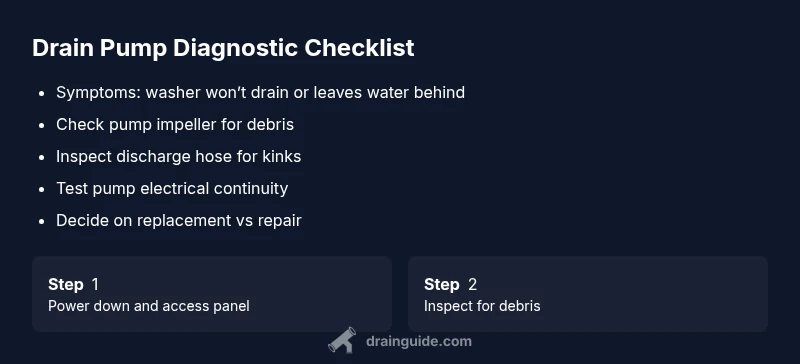
How to tell if drain pump is bad on washer
Learn to diagnose a failing drain pump in your washer with practical checks, safe tests, and clear steps. Drain Guide guides homeowners through symptoms, testing, and when to replace.


Most washers stop draining because the drain pump is clogged, jammed, or burned out. Quick fix: 1) unplug the machine and disconnect power. 2) locate the drain pump (behind the access panel), remove the safety screen, and inspect for debris or a seized impeller. 3) test the pump with a multimeter or replace if it shows open/short.
What the drain pump does in a washer
The drain pump is the small electric motor paired with a plastic impeller that sits at the end of the washing machine's drain hose. When the cycle ends or the machine detects excess water, the pump activates to push used water out through the drain line. If the pump jams or fails to spin, water can remain in the tub, leading to a soggy load or a fault code. In many homes, a malfunctioning drain pump is the single most common reason a washer won't drain. According to Drain Guide, the root cause is often debris buildup, mineral deposits, or worn bearings that prevent the impeller from turning. Electrical failure due to worn motor windings or a damaged connector can also stop drainage. If you're troubleshooting, start with the drain pump as the likely culprit before inspecting hoses or the timer. This approach aligns with Drain Guide Analysis, 2026, which shows that pump-related drainage problems are frequently mistaken for clogged hoses but are caused by pump performance. Recognizing the pump's role helps you diagnose more quickly and prevent overflows.
What the drain pump does in a washer
The drain pump is the small electric motor paired with a plastic impeller that sits at the end of the washing machine's drain hose. When the cycle ends or the machine detects excess water, the pump activates to push used water out through the drain line. If the pump jams or fails to spin, water can remain in the tub, leading to a soggy load or a fault code. In many homes, a malfunctioning drain pump is the single most common reason a washer won't drain. According to Drain Guide, the root cause is often debris buildup, mineral deposits, or worn bearings that prevent the impeller from turning. Electrical failure due to worn motor windings or a damaged connector can also stop drainage. If you're troubleshooting, start with the drain pump as the likely culprit before inspecting hoses or the timer. This approach aligns with Drain Guide Analysis, 2026, which shows that pump-related drainage problems are frequently mistaken for clogged hoses but are caused by pump performance. Recognizing the pump's role helps you diagnose more quickly and prevent overflows.
Steps
Estimated time: 45-60 minutes
- 1
Power down and unplug the washer
Unplug the unit and turn off any nearby water supply. This prevents electric shock and avoids water spraying when panels are opened. If you have a front-load model, remove the kick panel as per the manual to access the pump area.
Tip: Keep the power cord unplugged for at least 60 seconds before handling any components. - 2
Access the drain pump and hoses
Open the access panel or lift the bottom front panel to reveal the drain pump and attached hoses. Disconnect the hoses from the pump once you’re sure the area is dry. Inspect for cracks or loose clamps that could cause leaks.
Tip: Take photos of hose connections before removal to ensure correct reassembly. - 3
Check for clogs and debris
Remove the pump screen and inspect the impeller housing for hair, lint, coins, or fabric pieces. Clean out any obstruction with a small brush. Reconnect hoses when finished and ensure clamps are snug.
Tip: Always wear gloves; debris can be sharp and break easily during removal. - 4
Test electrical continuity
With the power still disconnected, unplug the pump connector and test the coil wires with a multimeter for continuity. A reading of no continuity or an open circuit indicates a failed pump. Compare readings to the manufacturer’s spec if available.
Tip: If you don’t own a multimeter, consider inspecting visually for obvious motor damage and plan for a replacement. - 5
Decide on repair vs replacement
If the pump shows no continuity or the impeller is damaged beyond cleaning, replacement is the safer option. If the unit still turns and pumps water when powered (rare), you may be able to repair seals or replace the impeller only, but that’s model-dependent.
Tip: Replacement often saves time and reduces future leaks compared to partial repairs. - 6
Reassemble and test the cycle
Reconnect hoses and power, run a short test cycle with no load to verify drainage. Look for leaks and confirm the washer drains completely within the expected interval.
Tip: Have a towel or bucket ready in case of minor leaks during the first test run.
Diagnosis: Washer won't drain or leaves water in the tub after a cycle
Possible Causes
- highClogged or stuck drain pump impeller
- mediumBurned-out pump motor or failed windings
- lowKinked or blocked discharge hose
Fixes
- easyClean debris from the pump and impeller housing; remove any blockages in the discharge hose
- mediumTest electrical continuity of the pump; replace if resistance is infinite or reading is out of spec
- hardReplace the entire pump assembly if electrical test fails or the impeller is damaged
Got Questions?
What are the signs that a washer drain pump is failing?
Common signs include the washer not draining, a buzzing or humming noise during drainage, water leaks near the pump, and error codes related to drainage. If you notice these, inspect the pump first before replacing other components.
Common signs are no drainage, buzzing noises, or visible leaks around the pump. Check the pump first if you see these symptoms.
Can I run my washer if the drain pump is bad?
Running a washer with a bad drain pump can lead to water damage and floods. Do not run the machine until drainage issues are resolved or a professional confirms it’s safe to proceed.
No. Don’t run it until drainage is resolved; it could overflow.
How do I test a drain pump with a multimeter?
Disconnect power, remove the pump and measure continuity across the terminals. A healthy pump will show a low resistance and a failed pump will show infinite or very high resistance. If in doubt, replace the unit.
Test continuity by measuring resistance across the pump terminals. If it’s open, replace it.
Should I replace just the impeller or the whole pump?
In most cases, replacing the entire pump is easier and more reliable than trying to repair the impeller. Some models allow impeller replacement, but that requires exact parts and skill.
Most people replace the whole pump for reliability, unless you have model-specific impeller parts.
When should I call a professional?
If you’re uncomfortable with electrical testing, don’t have the right tools, or the unit is still leaking after a fix, it’s safer to hire a pro. A professional can confirm the diagnosis and ensure safe repair.
If you’re unsure or the job seems risky, call a professional.
Is it safe to open the panel myself?
Opening the panel is generally safe when unplugged and water is controlled, but avoid tampering with soft wiring or refrigerant lines in other appliances. If in doubt, consult the manual or a trained technician.
Sure, but only if unplugged and you follow the manual.
Watch Video
The Essentials
- Inspect the pump before hoses and timers.
- Test continuity to confirm electrical failure.
- Choose replacement when in doubt for reliability.
- Always safety-check and unplug before work.