How to Use Caustic Soda to Unblock a Drain Safely at Home
Learn how to use caustic soda to unblock a drain with safety in mind. This guide covers PPE, step-by-step actions, risks, and safer alternatives from Drain Guide.


This guide shows how to use caustic soda to unblock a drain by following product directions, wearing proper PPE, and prioritizing safer methods first. Use caution: caustic soda is highly caustic and can burn skin, eyes, and pipes if misused. If unsure, consult a professional. This quick answer is a starting point; read the full article before attempting any chemical treatment, and consider non-chemical options first like plunging or mechanical snaking.
The reality of using caustic soda for drains
How to use caustic soda to unblock drain is a common question for DIY homeowners. Sodium hydroxide dissolves organic clogs by generating heat and saponifying fats, but it is extremely caustic and corrosive. The Drain Guide team emphasizes that this method should be used only when safer options have failed and that proper safety steps are non-negotiable. Before you reach for chemical cleaners, try safer approaches first: mechanical plunging, hot water, or enzyme-based products where appropriate. If you decide to proceed, work in a well-ventilated space and keep bystanders away. Always keep the product out of reach of children and pets, and store it according to the label. Drain systems vary; what works on a kitchen sink may not be suitable for a toilet or an old metal pipe. This article provides a practical, safety-first framework to help you evaluate whether caustic soda is appropriate in your situation.
According to Drain Guide, safety and careful planning are essential, especially in homes with older plumbing or septic systems. Treat this method as a last resort after exploring mechanical options like plunging or using a drain snake. Proper handling reduces the risk of burns, fumes, and accidental contact. This article blends practical steps with cautionary notes so you can decide whether to proceed with caustic soda or call a professional.
How sodium hydroxide interacts with clogs and pipe materials
Sodium hydroxide is a strong base that acts on organic matter such as hair, grease, and soap scum. It generates heat as it reacts, which can loosen buildup; however, it can also damage certain pipe materials and finishes if misused. PVC pipes are generally more tolerant than older metal pipes, but repeated exposure or high concentrations can still cause stress over time. Enzymatic or mechanical methods may be preferred for septic systems because caustic cleaners do not always reach the bacterial balance. Drain Guide's research highlights that the most reliable results come from using caustic soda only when the block is clearly organic and when the plumbing configuration is compatible with caustic cleaners. Do not expect overnight miracles: some clogs simply require professional intervention.
Essential safety gear and good working conditions
Always treat caustic soda like a hazardous chemical. Put on chemical-resistant gloves and splash goggles, and wear long sleeves and pants. Work in a well-ventilated area, preferably with a window open or a fan directed away from your face. Keep a bucket or sink within reach for rinsing, and have plenty of water available to flush the drain after the dwell time. Never mix caustic soda with other cleaners, especially those containing acids or bleach, as dangerous gases can form. Prepare the space by clearing the area of household items that could be damaged by splashes, and ensure children and pets are kept away during the procedure.
Valuable safety reminder from Drain Guide: always check the chemical’s SDS and follow the manufacturer’s safety instructions. Proper PPE and ventilation dramatically reduce the risk of burns and fumes, making a potentially hazardous task more manageable.
When to avoid caustic soda and safer alternatives to try first
If your home uses older metal pipes, or if the clog is in a toilet, on a septic system, or near a trap, consider non-chemical methods first. For many home situations, plunger use or a plumber's auger (drain snake) can resolve the issue without the hazards of caustic soda. Enzyme-based cleaners can help with organic buildup over time and are gentler on pipes. If you still want to pursue chemicals, choose a product labeled for the specific drain type and always follow the manufacturer's directions precisely. If unsure, pause and seek professional advice.
Drain Guide emphasizes using non-chemical methods as the first line of defense and reserving caustic soda for clear organic blockages that refuse mechanical solutions.
Practical setup and prep steps (non-chemical)
Before applying any chemical treatment, prepare the area: remove items from under the sink, cover the floor, and lay towels to catch spills. Measure and prepare the product according to the label, and have a clear exit path in case you need to move away quickly. Create a simple workflow: identify the blockage, attempt a safe mechanical method, and only then consider chemical treatment as a last resort. Consider taking a photo of the drain configuration for reference if you later call a pro. Always ensure you have a friend present to assist or monitor for fumes or splashes.
Common mistakes and how to avoid them
A frequent error is mixing caustic soda with other cleaners, especially bleach or acids, which can release toxic gases. Another mistake is pouring too large an amount or not following dwell times, which can damage pipes or create dangerous reactions. Skipping PPE or neglecting ventilation increases the risk of chemical burns or inhalation. Users often skip checking the drain type or assumption about the blockage, leading to wasted product and a harsher cleanup. Finally, resistance to exercising caution can turn a routine unblock into a hazardous situation; always prioritize safety and, when in doubt, stop and call a professional.
What to expect after treatment and how to maintain drains
If the blockage clears, flush the line with plenty of clean water to remove residues and test for a slow drain by running water for a minute. Refrain from mixing cleaners in the future and adopt regular maintenance habits like monthly hot-water flushes or enzyme-based prevention, depending on your home. If you notice leaks, corrosion, or ongoing odors, stop using chemical cleaners and seek professional help. Drain protection also means being mindful of what goes down the drain: grease, fat, coffee grounds, and hair are common culprits that accumulate over time. Regular maintenance reduces the need for harsh cleaners and prolongs pipe life. Drain Guide recommends a measured, safety-conscious approach.
Long-term drain care and safety reminders
Keep caustic cleaners as a rare emergency option. Prevent clogs by using screens, avoiding grease buildup, and cleaning traps regularly. If you must use chemicals, always choose the lowest effective concentration, never exceed the label's dwell time, and rinse thoroughly with water after the specified period. Finally, document your maintenance routine and be prepared to consult a licensed plumber for persistent issues.
Tools & Materials
- Caustic soda drain cleaner (sodium hydroxide)(Ensure it is labeled for household drains and PVC-safe)
- Chemical-resistant gloves(Nitrile or neoprene, rated for caustics)
- Safety goggles(ANSI Z87.1 rated)
- Long-sleeved clothing(Protect skin from splashes)
- Ventilation (window fan or open window)(Keep the area well-ventilated)
- Measuring cup or bottle cap for dosing(Use only the amount directed on label)
- Plastic bucket or container for rinsing(Contain spills and aid cleanup)
- Old towels or splash mats(Protect surfaces)
- Plunger or drain snake (alternative)(Use if attempting non-chemical methods)
Steps
Estimated time: 60-90 minutes
- 1
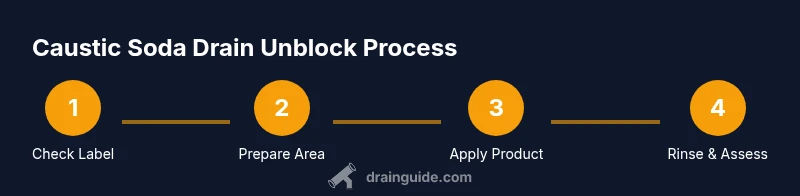
Read the product label and safety warnings
Review the label and safety data sheet to confirm drain compatibility, the recommended dosage, and the dwell time. Understanding the product limits helps prevent pipe damage and chemical injuries. If the instructions conflict with your plumbing setup, stop and seek guidance.
Tip: Always read the label before handling; if in doubt, skip the chemical step. - 2
Put on PPE and ensure ventilation
Wear chemical-resistant gloves and splash goggles, and ensure the area is well-ventilated. Open a window or use a fan directed away from you. This minimizes exposure to fumes and skin contact during the procedure.
Tip: Having a second person present can help manage spills and monitor safety. - 3
Clear the drain opening and remove debris
If safe, remove visible debris from the drain opening using protective gloves. This reduces the amount of clog material the chemical must penetrate and lowers splashing risk. Do not push solid material further into the pipe.
Tip: Only tackle what you can safely remove by hand. - 4
Pour the recommended caustic soda amount into the drain
Slowly apply the caustic soda product into the drain following the label’s dose. Keep hands away from the stream and avoid splashes. Do not mix with water from other sources beyond what's specified on the label.
Tip: Pour calmly and away from your body to minimize splash risk. - 5
Wait the dwell time as directed by the product label
Allow the chemical to work for the dwell time specified on the product label. Do not run water or use additional cleaners during this period. Rushing can worsen pipe damage or cause dangerous reactions.
Tip: Check the label for exact timing and do not improvise dwell times. - 6
Rinse the drain thoroughly with water
Flush the drain with a generous amount of clean water to clear residues and test for flow. If the blockage persists, do not overuse chemicals; consult alternative methods or a professional. Follow up with another rinse to ensure no residue remains.
Tip: Use warm water if permitted by the product label; avoid scalding temperatures. - 7
Assess result and decide next steps
Evaluate whether the drain is clear. If still blocked, consider mechanical methods or call a plumber. Do not repeat chemical treatment immediately; repeated exposure increases risk. Document the outcome for future reference.
Tip: If unsure, stop and seek professional help rather than proceeding again. - 8
Clean up and store materials safely
Wipe all surfaces, seal the caustic soda container, and store it away from children and pets. Dispose of any rags or towels according to local regulations. Wash hands thoroughly after cleanup.
Tip: Label and store caustic soda separately from other cleaners.
Got Questions?
Is it safe to use caustic soda every time I have a clog?
No. Caustic soda should be used sparingly and only when safer options have failed or are not suitable for the clog. Repeated use increases risks of burns and pipe damage.
Caustic soda should be used sparingly and only when safer options have failed; repeated use increases risk.
Can caustic soda damage PVC pipes?
PVC pipes are generally more resistant than metal, but high concentrations or repeated exposure can cause damage over time. Always follow the label and consider alternatives for sensitive piping.
PVC pipes can be damaged by improper use; follow label directions and consider alternatives for sensitive piping.
What PPE should I wear?
Wear chemical-resistant gloves and safety goggles, and protect skin with long sleeves and pants. Ensure proper ventilation to avoid inhaling fumes.
Wear gloves, goggles, long sleeves, and keep the area ventilated.
What should I do if someone is exposed to caustic soda?
Rinse exposed skin or eyes with plenty of running water for at least 15 minutes and seek medical help if irritation or burns persist.
Rinse with plenty of water for at least 15 minutes and seek medical help if burns occur.
Can I mix caustic soda with bleach or acids?
Never mix caustic soda with bleach or acids; this can release toxic gases and cause dangerous reactions.
Do not mix with bleach or acids; it can create toxic gases.
What if the clog remains after using caustic soda?
If the clog persists, consider mechanical methods first (plunger or drain snake) or contact a licensed plumber for professional analysis.
If still blocked, try mechanical methods or call a plumber.
Watch Video
The Essentials
- Wear PPE and follow the product label exactly.
- Caustic soda is effective for organic clogs but poses burn and gas risks.
- Prioritize mechanical methods before chemical treatments.
- If the clog remains after one safe attempt, call a professional.