Is Drainage the Same as Irrigation? A Practical Comparison for Homeowners
Explore the key differences between drainage and irrigation, why they matter, and how to plan a property-wide water strategy without mixing concepts. Clear, practical guidance for homeowners and DIY enthusiasts.


Is drainage the same as irrigation? No. Drainage removes excess water from soil to prevent pooling, erosion, and foundation issues, while irrigation adds water to the soil to sustain plant growth. For homeowners, understanding the distinction helps prevent overwatering, soil damage, and wasted resources. This comparison clarifies goals, components, and maintenance requirements.
Core distinctions at a glance
If you ask, is drainage the same as irrigation, the short answer is no. These are distinct water-management systems serving opposite ends of the water cycle on a property. Drainage focuses on removing excess water from soil to prevent pooling, erosion, and foundation damage. Irrigation, by contrast, adds water to the soil to meet plant needs, support growth, and sustain landscapes during dry periods. The Drain Guide team emphasizes that confusion often arises from everyday language, but the underlying physics and design principles are different. In practice, the two systems influence soil moisture, root health, and long-term property performance in distinct ways. According to Drain Guide, homeowners who treat both as interchangeable risk weak water management and increased repair costs.
Definitions: Drainage vs Irrigation
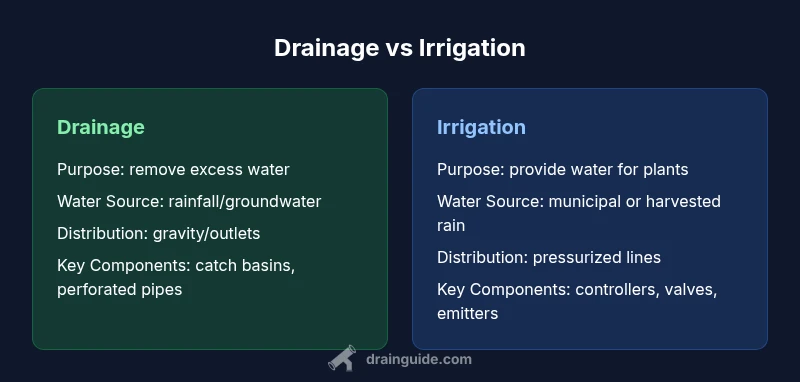
Drainage is the system of removing water from soils, basements, and surfaces. It uses gravity, slope, and conduits to channel water away from structures. Irrigation is a system that delivers water to the root zone through sprinklers, drip lines, or micro-sprinklers to support plant growth. Drainage relies on perforated pipes, catch basins, and slope design to move water to a safe outlet, while irrigation relies on valves, emitters, and controllers to distribute water precisely where plants need it. Understanding these definitions helps homeowners plan with accuracy rather than guesswork. Both systems influence soil structure, quality of lawns, and garden vitality, but they operate on different time scales and with different success metrics.
Why understanding the distinction matters for homeowners
Confusing drainage with irrigation can lead to ineffective water management. Overestimating a drainage need might reduce soil moisture access to roots, while underestimating irrigation can leave landscapes dry and stressed. From a home-maintenance perspective, misclassifying these systems can cause foundation issues, recurring wet basements, or persistent soggy patches in the yard. The Drain Guide team notes that a clear plan, separating drainage and irrigation responsibilities, reduces the risk of overwatering near foundations and under-watering garden beds. This distinction also helps with long-term budgeting for installation, maintenance, and potential upgrades.
System design: components and layout
Drainage design prioritizes water removal. Typical components include catch basins, perforated drain pipes, trenching, and sometimes sump pumps to move water away from structures. The layout emphasizes slope and outlet placement to avoid pooling around the home. Irrigation design, on the other hand, focuses on delivering targeted water to the root zone. Components include irrigation controllers, zone valves, sprinkler heads, emitters, and backflow preventers. Layouts consider sun exposure, soil type, plant water needs, and water pressure. A good design ensures that drainage and irrigation do not undermine each other—e.g., irrigation runoff should not enter drainage lines, and drainage outlets should not deprive plant roots of necessary moisture.
Water sources and distribution methods
Drainage relies on natural inputs like rainfall and groundwater and moves surplus water away using gravity and pressure differences. It does not add moisture to the soil; its goal is to prevent water accumulation that harms soil structure and foundations. Irrigation uses a deliberate input: municipal water, well water, harvested rainwater, or recycled gray water, distributed via pressure-based lines or gravity-fed systems. In many cases, homeowners use both: drainage to protect the property from excess water and irrigation to keep landscapes healthy during dry spells. The distinction is essential for understanding how each system interacts with soil texture, slope, and microclimates.
Maintenance and troubleshooting for homeowners
Maintenance for drainage systems focuses on preventing clogs, ensuring outlets remain clear, and verifying slope remains effective after seasonal changes. Regular inspection of catch basins, cleanouts, and sump pumps helps prevent failures during heavy rains. Irrigation maintenance centers on scheduling, controller calibration, valve and emitter checks, and seasonal adjustments to reflect plant growth and weather. When both systems are present, it’s crucial to avoid cross-contamination of drainage water into irrigation zones, and to prevent irrigation runoff from entering drainage trenches. Drain Guide emphasizes routine checks before and after wet seasons to anticipate potential problems.
Climate, soil, and landscape factors that influence decisions
Soil texture—clay, loam, or sand—greatly affects drainage capacity and infiltration rates. Dense clay soils may require more proactive drainage planning to prevent waterlogged roots, while sandy soils drain quickly but may need more frequent irrigation to maintain consistent moisture. Climate matters too: regions with heavy rainfall benefit from robust drainage planning, whereas arid areas rely more on efficient irrigation scheduling to minimize water loss. Landscape features such as slopes, low spots, and built structures affect both drainage efficiency and irrigation coverage. A thoughtful assessment considers how these factors interact over seasons and with existing plantings.
Case studies: residential setups
In a typical suburban yard, homeowners may install a French drain or perforated pipe network to capture surface runoff and redirect it away from the foundation. Separate irrigation zones deliver water to turf and garden beds via drip lines and sprinkler heads. In renovated landscapes, some homeowners combine water harvesting with drip irrigation in raised beds while maintaining a dedicated drainage outlet to prevent standing water after rainstorms. A coastal yard might rely more on drainage improvements to prevent saltwater intrusion and foundation dampness, while an inland yard prioritizes efficient irrigation to sustain drought-tolerant plantings. Each setup demonstrates that clearly delineated roles for drainage and irrigation support healthier landscapes and more durable homes.
Alternatives and hybrids: integrated approaches
Integrated water management recognizes that drainage and irrigation aren’t mutually exclusive. Hybrid strategies include rainwater harvesting paired with targeted irrigation to reduce municipal water use while implementing drainage improvements to manage runoff. Some homeowners implement soil moisture sensors to tailor irrigation schedules precisely, while using surface swales to slow runoff and promote infiltration. The key is to design systems that respect local codes and prevent unintended interactions, such as drainage discharge entering irrigation zones or irrigation water impinging on foundation waterproofing. Drain Guide recommends documenting water flows on the property so future renovations preserve the integrity of both systems.
Practical steps to assess your property
Begin with a simple walkaround: identify slopes, low spots, and any signs of standing water after precipitation. Map existing drainage outlets and measure the distance to the home to ensure adequate clearance. Next, assess soil moisture and drainage capacity using a simple infiltration test in representative areas. For irrigation, inventory existing lines, valves, and controller schedules; verify backflow prevention and ensure zones align with plant water needs. Finally, consult local building codes or a licensed professional to verify that any changes won’t create drainage issues or irrigation overuse. A methodical, documented assessment helps residents distinguish between drainage and irrigation with confidence.
Comparison
| Feature | Drainage System | Irrigation System |
|---|---|---|
| Purpose | Remove excess water from soil to prevent waterlogging, erosion, and damage | Provide water to the soil to sustain plant growth and lawn health |
| Water Source/Input | Rainwater/groundwater; relies on gravity and outlets | Municipal/well water or harvested rain; relies on pressurized delivery |
| Distribution Method | Gravity-driven or pumped conveyance to outlets | Pressure-driven delivery through pipes, valves, and emitters |
| Typical Components | Catch basins, perforated pipes, trenching, slope design, sometimes sump pumps | Valves, controllers, sprinkler heads, drip emitters, backflow preventers |
| Maintenance Frequency | Seasonal inspections; clear clogs and outlets | Seasonal calibration; check for leaks and coverage; winterize as needed |
| Best For | Preventing waterlogging, erosion control, protecting foundations | Maintaining soil moisture, sustaining plant growth, lawns and gardens |
| Common Risks | Soil saturation, foundation dampness, erosion | Overwatering, runoff, water waste, disease risk in wet foliage |
Positives
- Clarifies water-management goals for homeowners
- Reduces risk of water damage when properly designed
- Improves landscape health by aligning water delivery with needs
- Prevents unnecessary water use through targeted strategies
- Supports better budgeting for maintenance and upgrades
Cons
- Requires professional planning for complex sites
- Misinterpretation can lead to misallocation of resources
- Hybrid designs can be more costly and harder to maintain
- Seasonal variability requires ongoing adjustments
Drainage and irrigation are distinct systems; treat them separately for effective water management.
A clear plan that separates drainage and irrigation reduces water waste and protects property. Use both where appropriate, but design them to complement rather than compete with each other, guided by professional advice when needed.
Got Questions?
What is the difference between drainage and irrigation?
Drainage is about removing excess water from soil to prevent waterlogging and damage. Irrigation adds water to the soil to support plant growth. While both manage water, they serve opposite ends of the moisture spectrum and require different components and maintenance.
Drainage removes water; irrigation adds water. They are not the same and require different setup and maintenance.
Can a single system handle both drainage and irrigation?
In some cases, a property can incorporate hybrids or integrated designs, but typically drainage and irrigation are separate. Each system should be sized and controlled for its distinct purpose to avoid conflicts such as waterlogging or overwatering.
Usually they are separate, but hybrids are possible with careful planning.
What are signs that drainage needs attention?
Signs include pooling water after rainfall, damp basements, shifting foundation soil, and eroded slopes. Investigate whether water is standing on the surface or accumulating in low spots and assess whether outlets and slopes are functioning as designed.
Watch for standing water and damp foundations as red flags.
What maintenance does irrigation require?
Irrigation maintenance includes checking sprinkler coverage, calibrating the timer, inspecting emitters for clogs, and ensuring backflow prevention devices are working. Seasonal adjustments help match plant needs with weather.
Keep zones calibrated and check for leaks or dry spots.
Is there a code or permit issue when installing drainage or irrigation?
Permitting requirements vary by locality. Check with your local building department or planning office before major installations, especially if you modify drainage outlets or interrupt natural runoff patterns.
Check local rules before any major drainage or irrigation work.
How do climate and soil affect these systems?
Soil texture and climate influence how quickly water drains or infiltrates. Clay soils drain slowly and may need more drainage work; sandy soils infiltrate fast but may require more frequent irrigation to maintain moisture.
Soil type and climate shape how you design both systems.
The Essentials
- Define each system’s goal before installing
- Map slopes and soil types to guide design
- Separate drainage and irrigation to avoid conflicts
- Use hybrids carefully with professional design
- Regularly inspect and adjust for seasonal changes