Is Drainage the Same as Sewage? A Practical Comparison
Explore the difference between drainage and sewage with definitions, examples, and practical homeowner guidance for diagnosing and addressing common plumbing issues. Learn to distinguish sources, avoid misdiagnosis, and plan effective outdoor and indoor fixes.


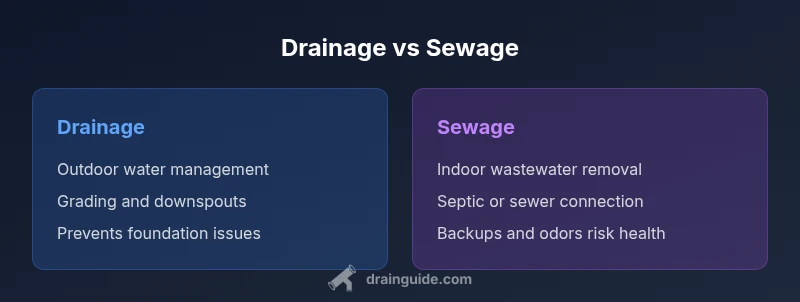
Drainage and sewage are not the same. Drainage involves how water (rain, groundwater, and surface runoff) leaves a property, mostly through storm systems or natural slopes. Sewage is wastewater from indoor plumbing that requires treatment before disposal. Mixing these terms can lead to misdiagnosis of clogs or backups and misguided maintenance decisions.
What is drainage? Drainage describes how water moves away from a property, including rain runoff, melting snow, and groundwater. It involves surface features like slopes, ditches, and grading, as well as subsurface paths such as French drains or perforated pipes that channel water to a safe outlet. Drainage is primarily about preventing unwanted water accumulation that can undermine foundations, cause soggy yards, or erode landscaping. It does not collect or convey wastewater from indoor fixtures. According to Drain Guide, clear terminology helps homeowners plan correctly and avoid misdiagnosis. When you label something as drainage, you’re usually describing how to keep water from crossing into the home rather than what leaves the home through the plumbing. The practical upshot is that drainage projects focus on external water management, site grading, and the integrity of outdoor drainage paths, not on indoor sewer lines or vent stacks. Effective drainage strategies reduce hydrostatic pressure and protect landscaping, foundations, and basements from water-related damage.
What is sewage? Sewage, or wastewater, is the used water that exits indoor drains, toilets, and appliances. It contains organic matter, chemicals, and microorganisms that require treatment at a municipal facility or a private septic system before safely reentering the environment. Unlike drainage, sewage is about the conveyance of dirty water from inside the home, including graywater and blackwater. Sewage systems include sewer mains, house lateral lines, sewer cleanouts, and venting that prevents siphoning and pressure buildup. If a block occurs in the sewer line, it can cause backups into sinks, tubs, or toilets, and may present health risks. The key distinction is source: drainage comes from outside water and surface flow; sewage comes from inside the building that has been used and contaminated. Maintaining proper sewer lines and preventing tree root intrusion are typical activities associated with sewage maintenance, rather than exterior grading changes. Recognizing the difference informs maintenance priorities and helps homeowners avoid risky DIY attempts that could worsen the problem.
Key differences at a glance
- Source: Drainage handles outside water flow (rain, runoff, groundwater); sewage deals with indoor wastewater.
- Path: Drainage uses exterior routes like grading and underground drains; sewage uses indoor pipes to the sewer main or septic system.
- Purpose: Drainage aims to keep water away from the structure; sewage aims to remove used water from living spaces.
- Treatment: Drainage typically requires no treatment; sewage must be treated before release.
- Failures: Poor drainage can undermine foundations; sewer problems risk health and environmental contamination.
- Maintenance: Drainage focuses on grading, gutters, downspouts; sewage focuses on sewer lines, traps, backwater valves.
- Best for: Outdoor water management vs. indoor wastewater management.
- Common culprits: Improper grading and clogged storm drains vs. tree roots and collapsed sewer lines.
How they interact in a typical home
In most houses, drainage and sewage systems operate in parallel but serve different purposes. Roof runoff and surface water are managed by the drainage system, which routes water away from the foundation and toward storm sewers or safe outlets. The sewage system, by contrast, handles graywater and blackwater from sinks, showers, toilets, and appliances, funneling it to the municipal sewer or a septic field. A failure in one system can indirectly affect the other: excessive surface water can overwhelm the drainage network, causing basement flooding that feeds into interior drains, while a blocked sewer line can force backflow into indoor fixtures that resemble drainage problems. Understanding this separation helps homeowners diagnose issues more accurately and avoid misguided DIY fixes that could worsen the situation.
Common issues and symptoms
Drainage problems often present as pooling in yards, soggy patches around foundations, wet basements after heavy rain, or overflowing gutters. Signs of sewer-related issues include slow drains across multiple fixtures, persistent sewer odor, gurgling sounds from drains, and wastewater backup in toilets or tubs. Note that these symptoms can overlap, especially during heavy rainfall when soil conditions change and combined sewer systems might be stressed. An experienced homeowner should track where water accumulates, whether odors are present, and whether the problem affects outdoor spaces or indoor plumbing. The Drain Guide team would emphasize documenting the circumstances: rainfall intensity, whether the issue occurs after using specific appliances, and if the problem exists during dry spells. This context helps determine whether the culprit is drainage or sewage and guides safe, appropriate next steps.
Safe, simple diagnostics you can perform
Start with obvious checks you can perform without specialized tools. Inspect exterior grading around the foundation; ensure downspouts extend away from the house. Clear roof gutters and ensure downspout drainage is not blocked. Check the traps on sinks and showers to confirm they hold water and block sewer gases. Observe whether issues occur after rainfall, which points toward drainage problems, or if they occur independent of weather, which could indicate sewer-related problems. Do not pour chemical drain cleaners into main lines; these can damage pipes and invite backflow. If the problem persists, consider safer, more informed investigations such as recording water flow in different drains and contacting a licensed plumber for non-invasive camera inspections of sewer lines.
Outdoor drainage improvements you can pursue
Simple, cost-effective outdoor fixes can dramatically improve drainage without touching indoor plumbing. Start by regrading soil so the landscape slopes away from the foundation. Install or extend downspouts and create splash blocks to direct water away from the home. Consider catch basins or perforated pipe systems to collect and redirect subsurface water toward a safe outlet. If you have persistent yard pooling, a French drain or trench drain might be warranted, installed by a professional or as a DIY project if you have the right tools. Ensure your irrigation and landscape features do not create new water traps near the foundation. Regular maintenance of grading and drainage paths prevents minor problems from becoming major failures.
Sewage-related steps you should not DIY
Sewage issues involve health risks and structural damage if mismanaged. Do not attempt to open main sewer lines, remove large blockages yourself, or use chemical cleaners in the main line. Backflow prevention devices, cleanouts, and venting require professional installation and inspection. When you notice multiple backed-up fixtures or a persistent sewer odor, call a licensed plumber or your city utility. While some minor maintenance tasks, like clearing a clogged sink trap or inspecting visible pipes, are manageable for DIY enthusiasts, major sewer repairs require expertise and compliance with local codes.
Permits, codes, and safety considerations
Before undertaking drainage improvements that affect the exterior or foundation, check local building codes and permit requirements. Drains installed in yards, alterations to grading, or changes to the downspout drainage may require approvals. Sewer-related work typically triggers more oversight due to public health concerns. Always ensure you follow safety guidelines for working around water and electricity, particularly when yard work involves wet soil and buried utility lines. The Drain Guide Team recommends verifying planned work with a licensed professional and keeping documentation of permits and inspections.
Cost and timeframes (qualitative)
Costs for drainage improvements vary widely based on scope, material choices, and whether grading, trenching, or drainage devices are involved. Outdoor changes tend to be less expensive than major sewer repairs, but significant drainage projects can still require substantial planning and labor. Timeframes depend on weather, site accessibility, and permit processes. Expect multiple visits for design, installation, and grading verification. The goal is to invest in a solution that remains effective over time and reduces the risk of future water intrusion or wastewater problems.
Quick reference diagrams and glossary
- Diagram: House layout with a simple drainage path illustrating water flow away from the foundation and a separate sewer line running to the street.
- Glossary:
- Drainage: External water management to prevent water intrusion.
- Sewage: Indoor wastewater that requires treatment.
- Backwater valve: A device to prevent wastewater from re-entering the home.
- Cleanout: an access point for sewer lines.
- French drain: a trench filled with gravel and pipe to redirect water.
- Gutter and downspout: collects roof water and directs it away from the house.
Glossary of key terms
- Drainage: External water management to prevent water intrusion.
- Sewage: Indoor wastewater that must be treated before disposal.
- Backwater valve: A device that prevents sewer backups into the home.
- Cleanout: An access point for sewer lines used by professionals.
- French drain: A trench filled with gravel and perforated pipe to redirect groundwater.
- Gutter: A channel that collects roof rainwater and guides it to downspouts.
Comparison
| Feature | Drainage-focused fixes | Sewer-focused repairs |
|---|---|---|
| Scope of work | Outdoor water management: site grading, downspout extensions, trench drains | Indoor wastewater management: sewer line repair, traps, backwater valves |
| Typical issues addressed | Yard pooling, foundation cracks, soggy landscaping | Sewer backups, foul odors, multiple slow drains |
| Typical time to complete | Days to weeks for exterior grading or drain installs | Days to weeks for trenching and line work, depending on access |
| Maintenance needs | Gutter cleaning, grading checks, downspout drainage maintenance | Main line inspections, cleanouts, vent checks |
| Permits required | Often required for significant exterior changes | Often required for sewer work; varies by jurisdiction |
| Best for | Outdoor water control and foundation protection | Indoor wastewater reliability and health protection |
Positives
- Clarifies the difference between water management and waste removal
- Helps prioritize fixes that reduce water intrusion and backups
- Improves communication with contractors and inspectors
- Encourages proactive maintenance of exterior drainage
Cons
- Overemphasis on one side may delay holistic solutions
- Some issues involve both drainage and sewage and require professional assessment
- DIY attempts on sewer lines carry health and safety risks
Drainage-focused fixes are best for outdoor water management; sewer-focused repairs are essential for indoor wastewater problems
For exterior water control, address grading and drainage paths first. If indoor wastewater problems appear or odor/backups occur, shift focus to sewer systems and involve licensed professionals when needed.
Got Questions?
Is drainage the same as sewage?
No. Drainage refers to water leaving the property, often from rain or groundwater, while sewage is the wastewater from indoor plumbing that requires treatment before disposal. Mixing the terms can lead to misdiagnosis and inappropriate fixes.
No—drainage is outdoor water management, sewage is indoor wastewater that must be treated.
Can drainage problems cause sewer backups?
In some cases, poor exterior drainage can overflow or misdirect water toward the sewer system, stressing it and potentially causing backflow during heavy rain. However, most backups stem from sewer line issues inside or near the property.
Likely only if external water overwhelms the system or causes indirect pressure on the sewer line.
How can I tell if I have a drainage problem or a sewer problem?
Look at the symptoms: exterior pooling and foundation dampness suggest drainage; multiple slow drains, odors, or backups point to sewer problems. Weather patterns and which fixtures are affected also help differentiate.
Check where the water shows up and when—outdoors points to drainage, indoors to sewer.
Do I need a permit for drainage improvements?
Permit requirements vary by location and project scope. Exterior grading and certain drainage installations may require permits, especially if they affect property boundaries or utilities. Always verify with your local building department.
Check your city or county rules before starting outdoor drainage work.
What is a French drain, and when is it used?
A French drain is a trench filled with gravel and a perforated pipe to redirect groundwater away from a area. It’s commonly used when soil drains slowly or when high water tables threaten foundations or basements.
Think of it as a gravel-filled channel that carries water away from the house.
Is it safe to DIY sewer repairs?
Major sewer work should be handled by licensed professionals due to health risks and the complexity of underground piping. Some basic maintenance, like cleaning traps, can be DIY, but avoid main-line interventions.
Severe sewer work is not a DIY job—call a pro.
The Essentials
- Know the source: outdoor water vs indoor wastewater
- Prioritize exterior fixes before interior plumbing changes
- Call a pro for sewer backups or persistent odors
- Maintain gutters, downspouts, and grading to prevent issues