JP Drain Complications: Urgent Troubleshooting Guide for Homeowners
An urgent, practical guide to recognizing and addressing jp drain complications. Learn quick fixes, safe home checks, when to seek help, and how to prevent issues after surgery with Drain Guide.


For jp drain complications, the most common issue is blockage from clot or tissue forming near the drain. Quick fixes include checking that the external tubing is not kinked, ensuring the collection bag is below the insertion site, and gently milking or flushing the tubing only if your clinician approved. If drainage remains scant, backflow occurs, or you notice redness or fever, contact your care team immediately.
What jp drain complications are and why they happen
Jackson-Pratt drains (JP drains) are small silicone bulbs connected to tubes that drain postoperative fluid away from the surgical site. While they are essential for preventing fluid buildup, jp drain complications can arise if the system becomes blocked, dislodged, or infected. Common contributing factors include heavy tissue clots, movement that stresses the tubing, inadequate securing dressings, and poor wound hygiene. In many cases, the problem is detectable early by changes in drainage volume, color, or odor. For homeowners and DIY-focused readers, understanding the basics helps you communicate clearly with your medical team and track changes safely. Throughout this guide, Drain Guide will help you identify risks, perform safe checks, and decide when to seek help. Remember: while some checks are safe to perform at home, never attempt to remove a JP drain or reset its suction without explicit clinician guidance. The term "jp drain complications" will recur to reinforce recognition.
Signs to watch for with jp drain complications
Early signs include reduced drainage volume, thick or bloody fluid, or cloudy drainage, plus a sudden new pain around the insertion site. You might notice the collection bulb remains underfilled despite ongoing drainage, or you see backflow into the incision area. Redness, warmth, fever, or spreading swelling can indicate infection. A strong, foul odor around the drain is another concern. Any leakage around the dressing, or the drain suddenly feels loose, also warrants clinician input. Document changes with date and time; this helps your care team gauge whether the jp drain complications are progressing or stabilizing.
Safe, immediate actions if you suspect a complication
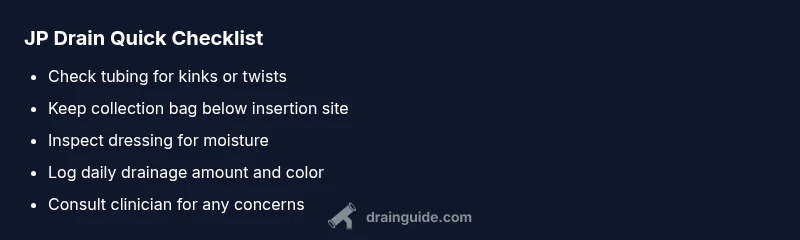
First, wash your hands and prepare a clean work area. Do not pull on the tube or remove the drain. Inspect the external tubing for kinks, clogs, or disconnections, and verify the collection bag is positioned below the insertion site to promote gravity drainage. If safe, gently massage or milking the tubing near the site to encourage drainage flow only with clinician approval. Check the dressing for moisture and changes; a damp or saturated dressing may indicate leakage. Keep a log of drainage amount, color, and timing, and contact your clinician with any concerning changes.
Potential causes and diagnostic clues
Blockage from clots, tissue debris, or thick secretions is the most frequent jp drain complications causing reduced drainage. Dislodgement or accidental tugging can pull the catheter out of position, altering drainage and increasing infection risk. Insertion-site infection presents with redness, warmth, swelling, fever, and sometimes pus. A loose connection or damaged tubing can cause leakage. If available, your clinician may use bedside inspection, palpation, or ultrasound to assess position, or order imaging to confirm patency and placement. Self-diagnostic attempts should be avoided; always contact your care team for interpretation.
Prevention and daily care to reduce risk
Daily care and careful monitoring help prevent jp drain complications. Secure the tube and dressing to reduce movement, keep the site clean and dry, and follow any wound-care instructions from your surgeon. Record drainage volume, color, and timing and compare with prior days or thresholds provided by your clinician. Maintain proper bag height and avoid bending the tubing sharply. Notify your clinician if drainage suddenly changes, if infection signs appear, or if the drain becomes dislodged.
Common myths about jp drain complications
Some homeowners believe JP drains never require monitoring after the initial healing period. In reality, ongoing observation is essential to catch signs of infection, blockage, or displacement early. Others assume drainage volume is the sole indicator of recovery; color and consistency also matter. Finally, some think all drainage should be clear or pale; certain procedures produce bloody or colored drainage, which still requires professional assessment. Regular follow-up with your surgical team remains critical to safety.
Steps
Estimated time: 30-45 minutes
- 1
Inspect external setup
Review all connections from the insertion site to the collection bag. Look for loosened clamps, disconnections, or signs of leakage. Ensure the bag is below the insertion site to promote drainage by gravity.
Tip: Have a helper hold the bag steady while you inspect connections. - 2
Check tubing for kinks
Follow the tubing path from the site to the bag. Gently straighten any bends and remove twists without pulling on the drain.
Tip: Avoid bending the tubing sharply near the skin. - 3
Assess drainage and bag height
Note the amount and color of drainage. Confirm the bag is lower than the insertion site, which helps prevent backflow.
Tip: Log daily changes in a small notebook. - 4
Examine the dressing and insertion site
Look for new moisture, redness, warmth, or swelling around the site. Moisture may indicate leakage.
Tip: Keep the area clean and dry; change dressings per clinician instructions. - 5
Consider gentle milking if approved
If your clinician approved, gently massage the tubing away from the skin toward the bag to encourage flow. Do not force.
Tip: Stop immediately if you feel resistance or increased pain. - 6
Escalation and follow-up
If no improvement in 1–2 hours or if fever, severe pain, or purulent drainage occurs, contact the clinician or seek urgent care.
Tip: Have your clinician’s contact numbers handy.
Diagnosis: Low or stagnant drainage, gurgling, backflow, or visible redness around the insertion site.
Possible Causes
- highBlockage from clotting tissue or thick drainage
- mediumDislodgement or tube kinking due to movement
- mediumInsertion-site infection or skin breakdown
- lowLeakage from a loose connection or damaged tubing
Fixes
- easyCheck the external tubing for kinks, ensure the bag is below insertion, and secure the dressing.
- easyGently milk or flush the tubing only if your clinician approved and there is no resistance.
- mediumReposition the patient and re-secure the drain to prevent tugging; use a dressing that minimizes movement.
- hardIf blockage persists or there is fever/redness/pus, contact the clinician for evaluation; imaging or drain repositioning may be required.
Got Questions?
What is a JP drain and why is it used?
A Jackson-Pratt drain is a medical device that removes postoperative fluids to prevent buildup and infection at the surgical site. It consists of a small bulb connected to tubing that creates gentle suction.
A Jackson-Pratt drain pulls away fluids after surgery to prevent swelling and infection.
What are the most common jp drain complications?
Blockage, dislodgement, infection, and leakage are among the most frequent jp drain complications. Monitoring drainage and site condition helps catch these early.
Common JP drain problems include blockage, dislodgement, infection, and leakage.
How can I tell if my JP drain is blocked?
Watch for little to no drainage, backflow toward the incision, or a change in drainage color or odor. Fever or increasing pain also signals a problem.
If drainage slows or stops, or you notice backflow, tell your clinician.
Is it safe to flush or milk the drain at home?
Flushing or milking should only be done if your clinician approves. Improper handling can damage the drain or push fluids the wrong way.
Only do this if your doctor says it’s okay; otherwise avoid.
When should I call emergency services about JP drain complications?
Call emergency services if you have fever with chills, rapid spreading redness, severe pain, or sudden changes in drainage.
Go to the ER if you have fever, severe pain, or rapid drainage changes.
What steps help prevent jp drain complications long-term?
Follow your surgeon’s care plan, keep the area clean and dry, secure the tubing, and attend all follow-up visits.
Carefully follow your surgeon’s instructions and attend all follow-ups.
Watch Video
The Essentials
- Identify jp drain complications early to prevent infection
- Secure tubing and keep the dressing dry daily
- Do not adjust or remove the drain without approval
- Log drainage volume, color, and timing each day
- Call your clinician for persistent changes or fever