Maytag Washing Machine Won't Drain: Comprehensive Troubleshooting
Struggling with a maytag washing machine won't drain? This urgent troubleshooting guide helps homeowners diagnose common causes, fix clogs, clear the pump, and prevent future drainage issues safely.


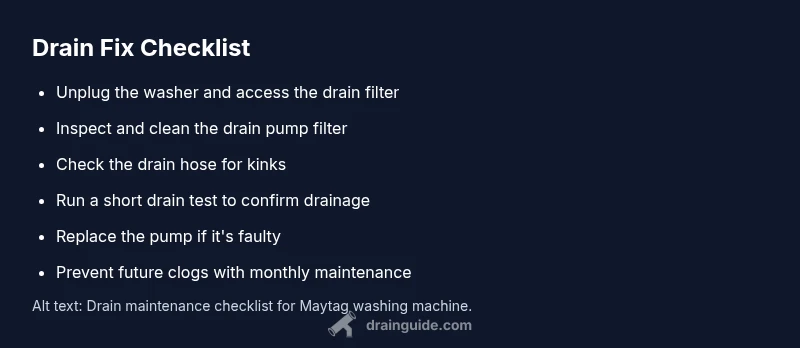
According to Drain Guide, the maytag washing machine won't drain mainly due to a clogged pump or filter. Start by unplugging the unit, then inspect the drain hose for kinks and check the front-access pump filter. Remove debris, rinse it clean, and run a short drain test to confirm the drainage path is clear.
Why maytag washing machine won't drain happens
When a maytag washing machine won't drain, the most common culprit is a clog in the drain pump or its filter. This issue is frustrating but usually fixable with basic tools and a methodical approach. Start by unplugging the machine and turning off the water supply. Locate the drain pump area: on many Maytag front-load models, the filter sits behind a small access panel at the bottom of the front kickplate; on some top-load or compact models, the filter location varies. Inspect for visible debris such as coins, lint, hair, or fabric fibers. Even a single foreign object can jam the impeller and stop drainage. If the pump looks clear, test a drain cycle with a small amount of water to see if the water exits properly. This quick check helps confirm whether the pump or hose is the issue. Remember, drain problems can escalate if you ignore slow draining in the early stages.
Why maytag washing machine won't drain happens
When a maytag washing machine won't drain, the most common culprit is a clog in the drain pump or its filter. This issue is frustrating but usually fixable with basic tools and a methodical approach. Start by unplugging the machine and turning off the water supply. Locate the drain pump area: on many Maytag front-load models, the filter sits behind a small access panel at the bottom of the front kickplate; on some top-load or compact models, the filter location varies. Inspect for visible debris such as coins, lint, hair, or fabric fibers. Even a single foreign object can jam the impeller and stop drainage. If the pump looks clear, test a drain cycle with a small amount of water to see if the water exits properly. This quick check helps confirm whether the pump or hose is the issue. Remember, drain problems can escalate if you ignore slow draining in the early stages.
Quick Diagnostics You Can Do Safe At Home
Before you dismantle anything, perform a few safe checks. Unplug the washer and, if accessible, turn off the water supply. Inspect the drain hose for kinks, crushing, or detaching from the standpipe. If you have a front-load Maytag, access the pump filter via the lower front panel; a shallow tray or towel helps catch water. Remove the filter, clear any debris, and rinse thoroughly under running water. Reinsert and run a short drain test to observe the flow. If water still won’t drain, proceed to inspect the pump impeller and hose connections. Keep in mind that electrical components can be hazardous; if you see burnt smells, exposed wiring, or fluid leaks, stop and call a technician.
How Debris Reaches the Pump and How to Remove It
Debris such as coins, buttons, cotton fibers, hair, and lint can accumulate in the drum and travel to the pump screen or filter. Over time, this buildup restricts the impeller and reduces drainage efficiency. The pump filter acts as a sieve, catching larger particles before they reach the pump. To remove debris, unplug the washer, open the front panel (or access panel on the bottom), locate and remove the filter screen, and extract every piece of foreign matter. Rinse the filter with clean water and reinstall it securely. If you notice a stubborn clog, use a flexible brush to dislodge buildup from the housing. After cleaning, run a short test cycle to ensure proper drainage.
Inspecting the Drain Hose and Standpipe
A damaged or restricted drain hose is a frequent source of drainage problems. Check for kinks, crushing, or detachment where the hose connects to the standpipe or sink. Ensure the hose outlet is fully submerged in the standpipe or drain and that the standpipe diameter is appropriate for your machine’s drainage rate. If the hose is damaged, replace it with a compatible hose. For height considerations, avoid routing the hose too high, which can prevent gravity-assisted drainage. After any hose work, run a test cycle with water to confirm the flow path is clear.
When to Call a Pro and Prevention Tips
If the pump motor hums but won’t spin, or if the pump impeller feels jammed and you cannot free it, professional replacement may be required. A failing pump, a burnt motor, or a faulty lid switch can prevent drainage and may require service. Prevention matters: periodically clean the pump filter, avoid overloading the drum, remove lint traps from pockets, and use the right detergent amount. Drain issues often recur if debris is allowed to accumulate; implementing a monthly quick-clean routine reduces the odds substantially.
Steps
Estimated time: 60-75 minutes
- 1
Power down and prep
Unplug the washer and turn off the water supply. Move the unit slightly if needed to access the front panel or bottom panel. Place towels and a shallow tray to catch any residual water. This prepares you for safe access to the drain system.
Tip: Have a bucket handy for the initial water that may drain out. - 2
Access and inspect the pump filter
For most Maytag front-load models, remove the lower front panel to reveal the drain filter. Place a towel, slowly unscrew the filter, and pull it out. Remove any debris you see and rinse the screen with running water until clear. Reinsert or replace the filter securely.
Tip: Take a photo of the housing before removing anything to note how parts fit back together. - 3
Check the drain hose
Trace the drain hose from the pump to the standpipe. Look for kinks, crush points, or detachment. If the hose is blocked, disconnect and clear it. Reconnect firmly and lower the end into a bucket to test drainage.
Tip: Be careful of residual hot water; wear gloves if possible. - 4
Run a controlled drain test
With everything reassembled, run a short cycle that uses the drain function only. Observe whether water exits through the hose and into the drain. If it stalls, recheck the filter and hose; you may need to repeat steps 2–3.
Tip: If you hear grinding, stop and check for foreign objects inside the pump. - 5
Inspect pump impeller and connections
If drainage still fails, access the pump assembly to inspect the impeller for obstructions. Spin the impeller by hand to confirm it rotates freely. Reconnect all hoses securely and reseal the front panel.
Tip: Do not force the impeller; if it binds, pump replacement may be necessary. - 6
Test and plan next steps
Run a full wash cycle to confirm drainage under normal operation. If water fails to drain, consider that the pump may need replacement. Assess whether the issue could be a control board or lid switch malfunction and plan professional service if needed.
Tip: Document symptoms and attempts for the technician.
Diagnosis: Maytag washing machine won't drain.
Possible Causes
- highClogged pump or debris in the pump screen/filter
- mediumKinked, crushed, or blocked drain hose
- lowBlocked standpipe or sewer line
- lowFailing pump motor or impeller
Fixes
- easyUnplug the machine, access the drain pump filter, remove debris, and rinse thoroughly.
- easyInspect and straighten or replace a kinked drain hose; ensure hose end is free of restriction.
- mediumTest the pump by removing it and manually spinning the impeller to check for obstruction; replace if damaged.
- easyCheck the standpipe; flush the drain line and ensure clear passage to sewer; remove blockages if present.
- hardIf the pump motor or impeller is burned or worn, replace the pump assembly; call a professional if unsure.
Got Questions?
Why won't my Maytag washing machine drain?
Most often the drain pump or filter is clogged or the drain hose is kinked. A blocked standpipe or a failing pump can also cause drainage failure. Start with simple checks and progress to more involved fixes if needed.
Usually the drain pump or filter is clogged, or the hose is kinked. Check those first before progressing to more involved repairs.
How do I locate and clean the pump filter on a Maytag washer?
Unplug the washer, remove the front bottom panel, locate the pump filter, and carefully pull it out. Clear all debris, rinse, and reinsert the filter. Run a short drain test afterward.
Unplug the machine, open the access panel, remove and clean the filter, then test the drain.
Can a blocked standpipe cause drainage issues?
Yes. A blocked or narrow standpipe can back up water and prevent proper drainage. Ensure the standpipe or drain line is clear and of adequate diameter for your washer.
A blocked standpipe can stop drainage; verify the line is clear.
Is it safe to run a drain-only cycle to clear a clog?
Running a drain-only cycle can help clear a partial clog, but avoid excessive cycling if you suspect a mechanical fault. Use it only to test drainage after cleaning the filter and hose.
You can try a drain-only cycle to test drainage after cleaning, but if it doesn’t drain, stop and seek help.
When should I replace the drain pump?
If the impeller is damaged or the motor hums without rotation, the pump should be replaced. Have a professional confirm electrical issues or motor failure.
Replace the pump if the impeller won’t turn or the motor hums without spinning.
How often should I clean the pump filter on a Maytag washer?
Clean the pump filter at least every few months or whenever you notice slower draining. Regular maintenance reduces the chance of unexpected clogs.
Clean the pump filter every few months to reduce clogs.
Watch Video
The Essentials
- Start with the pump filter and drain hose.
- Clean the filter regularly to prevent recurring clogs.
- Replace a faulty pump or impeller if diagnosed.
- Use monthly maintenance to prevent future drainage issues.