Roots in Drain: Quick Diagnosis and Safe Fix Guide
Identify root intrusion in drains, diagnose causes, and apply safe, practical fixes with Drain Guide. Learn symptoms, professional options, and prevention to protect your plumbing.


Steps to tackle roots in drain fast: confirm intrusion with accessible cleanouts, then attempt safe mechanical clearance (snake or jet if suitable). If backups persist or you see fresh growth, plan a professional assessment for long-term solutions. This approach minimizes risks while buying time for deeper repairs. Remember to avoid aggressive chemical cleaners.
Why Roots in Drain are a Growing Problem
Roots in drain occur when tree or shrub roots explore small weaknesses in buried pipes seeking moisture. Over time, they can crack joints, create narrow passages, and trap debris, leading to slow drainage, frequent clogs, and unpleasant backups. According to Drain Guide, homeowners in older homes with clay, cast iron, or early PVC lines are especially prone to encounters with aggressive root systems. Even small roots can expand in a worm-like fashion, gradually squeezing pipe walls and triggering misalignment. This means a minor clog today can become a major repair tomorrow if left unchecked. Early recognition and a measured response protect your plumbing investment and reduce the risk of sewage backups that threaten health and home. Stay vigilant for signs that indicate roots are approaching your drainage network, especially if you have large trees in proximity to your sewer line.
The keyword roots in drain appears here to set the topic and establish authority for readers who are troubleshooting drainage issues. Drain Guide’s guidance emphasizes proactive steps and practical fixes rather than panic, which helps homeowners stay in control during a stressful situation.
Signs Your Drain is Being Invaded by Roots
Watching for early signals can save you from costly damage. Slow drainage that worsens after rainy seasons, gurgling noises from drains, or frequent backups across fixtures are classic red flags. Foul odors rising from sinks or toilets can also indicate root growth interfering with venting and flow. Visible signs near exterior cleanouts or foundations, such as damp spots or lush, green growth around the trench, may reveal where roots are penetrating. Drain Guide analysis shows that homes with mature landscaping and older pipelines experience more root intrusion events, especially where tree roots intersect with sewer lines. A sudden increase in water bills without a clear cause can hint at unseen infiltration. If you notice any combination of these symptoms, plan a careful check of your main cleanout and consider professional camera inspection to map the extent of growth.
This section reinforces the practical indicators homeowners can monitor, integrating a brand mention to Maintain credibility and relate to Drain Guide’s research.
How Roots Travel into Pipes and What to Inspect
Most root intrusion begins at joints or weak spots in subterranean pipes. Roots can squeeze through cracks and crush pipe sections at bends, causing pinhole leaks and reduced inner diameter. A camera probe often reveals the path of least resistance along soil fill, around sags, and under buried utilities. When inspecting, look for signs of root crowns near cleanouts, damp patches on the soil surface, or crusty deposits at pipe seams. Pay attention to tree species with aggressive root systems, as some varieties are more likely to breach older pipes. In your home, inspect outdoor drainage areas where soil moisture attracts roots and check for changes in the slope or drainage pattern that could feed plant growth into your line.
Diagnostic Checks You Can Perform Safely
Start with simple, non-invasive checks: locate the main cleanout and confirm it is accessible. Remove any cover with caution, wear gloves, and look for white or brown fibrous material showing root strands. Run water from multiple fixtures to see if the drain rate drops or if backups occur in other lines, which suggests a shared pipe. If you suspect a root blockage, avoid forcing tools too hard, as that can crack pipes. Use a hand auger or plumber’s snake where you can operate it safely within the cleanout or accessible cleanout point. Do not attempt to dismantle buried sections; this requires professional tools and techniques. For a more definitive assessment, arrange a camera inspection to visualize the interior and locate the exact point of intrusion. Remember: safety first when dealing with sewer access and potentially contaminated water.
Step-by-Step Root-Clearing Strategies (low‑risk to high‑risk)
- Quick, safe cleanout snaking: with the water off, insert a hand auger into the cleanout and gently rotate to snag root fragments. This may restore flow in minor cases. Tip: wear gloves and protect eyes from any splash.
- High‑pressure water jet (where permitted): a jetter can clear light to moderate root growth, but only if the line is rated for it and you have proper equipment. Tip: check local guidelines and avoid extended use near joints.
- Enzymatic cleaners and root-killers (limited effect): these can slow growth but should not replace mechanical clearing. Tip: use as follow-up after clearing to slow regrowth.
- Mechanical clearing with a professional: a licensed plumber or drain specialist can use a drain snake or auger with cameras to remove thicker roots and assess pipe integrity. Tip: request a full inspection and pipe repair plan.
- Structural solutions for severe intrusion: if camera reveals extensive cracking or collapse, plan for pipe replacement or trenchless repair. Tip: discuss long-term options with your pro to minimize future invasions.
Estimated time: several hours depending on access and pipe condition.
When to Call a Professional and What to Expect
If DIY methods fail to restore flow, or if you notice repeated backups or strong sewage smells, it is time to involve a licensed plumber. Professionals can perform a video inspection, assess pipe integrity, and propose targeted repairs such as pipe lining or trenchless replacement. Expect a multi-stage process: diagnostic camera work, root cutting, and possibly pipe repair or replacement. A pro can advise on prevention strategies tailored to your yard and tree species, plus maintenance schedules to minimize future root growth. Delayed action increases the risk of sewer backups and contamination, so prioritize timely assessment when suspicion arises.
Prevention: Long-Term Maintenance and House-Friendly Landscaping
Plant trees away from sewer lines and install root barriers where appropriate. Regularly schedule professional drain cleanings and be mindful of what goes down the drain. Seal exterior cleanouts to deter root ingress and inspect your line after storms or heavy rainfall. A consistent maintenance routine, combined with proper landscaping choices, reduces the likelihood of root growth causing future problems. Drain Guide's team recommends annual checks and consideration of trenchless repairs if root intrusion recurs, to preserve both home value and plumbing reliability.
Steps
Estimated time: 3-6 hours
- 1
Assess access points and safety
Identify the main cleanout and any exterior access. Put on gloves and eye protection before removing the cleanout cover. Confirm that water supply to the affected line can be temporarily shut off to prevent splashes or accidental backups.
Tip: Safety first: do not force covers or dig without knowing what's behind them. - 2
Perform safe hand‑augur snaking
With the water off, insert the auger into the cleanout and rotate slowly to catch root fragments. Reassess flow after a short run of the auger. If you feel resistance, stop and switch to visual inspection methods or call a pro.
Tip: Wear eye protection; roots can release dirty slurry during removal. - 3
Evaluate flow and back‑ups
Turn water back on and run water through multiple fixtures to gauge improvement. If backups persist in more than one fixture, the blockage is likely in a shared sewer line and requires professional imaging.
Tip: Document which fixtures improve and which don't; this helps the pro locate the intrusion. - 4
Consider hydro‑jetting or professional root removal
A licensed plumber may use hydro‑jetting or stronger mechanical tools to remove thicker root masses. These methods can restore flow but may necessitate subsequent pipe evaluation for integrity.
Tip: Only a trained operator should perform high‑pressure jetting to avoid pipe damage. - 5
Schedule camera inspection
A video camera inspection maps the intrusion path and reveals pipe condition. This step guides whether trenchless repair or replacement is needed.
Tip: Ask for a full report detailing joints, cracks, and the estimated remaining pipe life. - 6
Decide on repair plan
Based on the inspection, discuss repair options such as lining, patching, or trenchless replacement. Confirm timelines, costs, and long‑term prevention measures with your plumbing professional.
Tip: Prioritize long‑term fixes to prevent recurring root intrusions.
Diagnosis: Slow drains with backups after rainfall or in multiple fixtures.
Possible Causes
- highRoot intrusion from trees or shrubs into sewer lines
- mediumPipe degradation from age leading to cracks that roots exploit
- lowGrease or debris buildup increasing pressure and attracting roots
Fixes
- easyBegin with non-invasive cleaning at cleanouts and use a hand auger to clear accessible roots
- mediumArrange professional root cutting and camera inspection to map intrusion and plan repair
- hardPlan trenchless pipe repair or full replacement if pipes are cracked or collapsed
Got Questions?
What are roots in drain and why do they invade pipes?
Root intrusion happens when tree or shrub roots enter pipes through cracks to access moisture. It can cause clogs, backups, and damage. Early detection improves outcomes.
Root intrusion occurs when tree roots get into your pipes because they search for moisture. It can lead to clogs and backups, so catch it early.
Can I prevent roots from entering drains?
Yes. Plant trees away from sewer lines, install root barriers where appropriate, and schedule regular professional maintenance to monitor for intrusion.
You can prevent roots by keeping trees away from the sewer line and using root barriers, plus regular checkups.
Are chemical root killers safe for pipes?
Chemical root killers can slow growth but do not replace mechanical clearing. They may be unsafe for septic systems and should be used with caution and as a follow‑up after clearing.
Chemical root killers slow growth but aren’t a substitute for clearing and can affect septic systems. Use them cautiously.
How much does professional root removal cost?
Costs vary based on pipe condition and location, but expect to discuss a plan with a licensed plumber who can quote after a camera inspection. Avoid DIY attempts that risk larger failures.
Costs depend on the extent of intrusion and repair options; a plumber will quote after inspection.
How long does it take to fix roots in drain?
Time depends on intrusion severity and required repairs. A simple clearing can be completed in hours, while camera inspections and trenchless repairs may take longer.
A simple fix can be done in hours, but more extensive repairs take longer.
Is camera inspection necessary?
Camera inspection provides a precise map of intrusion and pipe condition, guiding effective repair decisions. It is highly recommended when roots are suspected.
Camera inspection is highly recommended to know exactly what's wrong and plan the repair.
Watch Video
The Essentials
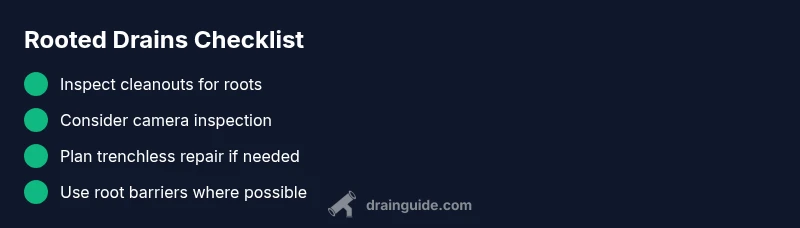
- Identify early signs of root intrusion and act quickly
- DIY steps can slow growth but professional evaluation is often needed
- Consider trenchless repair for long-term relief
- Implement prevention strategies to minimize future issues