Roots in the Drain Pipe: Troubleshooting and Fixes
Discover fast, practical steps to diagnose and fix roots in the drain pipe. Learn quick fixes, long-term solutions, safety tips, and prevention to stop recurring backups.


The most likely cause is tree roots invading the main drain, blocking flow. Quick fix: limit drain use, access the cleanout, and use a drain snake or auger to cut roots several feet into the line. If you smell sewage, see standing water, or backups persist, avoid DIY and call a plumber.
Why roots in the drain pipe demand attention
Tree roots invading underground sewer lines are a common cause of slow drains, frequent backups, and foul odors in homes. Roots seek moisture and will grow toward any crack or joint, widening the opening as they invade. Over time, the blockage caused by these roots can reduce flow so dramatically that wastewater backs up into sinks, tubs, or the yard cleanout. For homeowners, the issue is not only inconvenient but can lead to sewage exposure and costly repairs if ignored. In climates with seasonal freezes, roots can also cause pipe stress and cracks as soil shifts. The key is early detection and a calm, methodical response rather than a panic DIY rush. Drain Guide recommends treating root intrusion as a maintenance problem, not a one-off clog.
Identifying root intrusion early helps you schedule the right tool for the job and prevents downstream damage. Watch for recurring backups after rain, damp crawlspaces, or a musty sewer odor outside near the main line access. If your home is older or has existing tree roots nearby, assume roots in the drain pipe are a real possibility and plan a proactive maintenance strategy.
Signs you’re dealing with root intrusion
Backups that seem to occur in multiple fixtures, including the hardest to drain sinks or the main line, are classic indicators of root intrusion. Slow drainage that never fully clears after standard snaking, gurgling noises from the pipes, and a persistent sewage smell near the floor drain or yard cleanout are also red flags. In some cases you may notice visible roots in the yard cleanout or water backing up into the toilet bowl after flushing. If your main line becomes blocked frequently, professional inspection is wise, as root intrusion can indicate evolving pipe damage. Drain age and water usage patterns, maintenance history, and nearby mature trees all help determine the likelihood of roots in the drain pipe.
Quick checks before tools
Start with the simplest checks: inspect the outdoor cleanout for signs of roots or debris, and confirm you’re not dealing with a simple clog in a trap or p-trap. Run water in several fixtures to identify if backups occur simultaneously, which points to the main line. If you have access to a sewer rodding tool, gently clear the cleanout opening and perform a cautious pull to feel for resistance. Do not force connections or dig into the main line with improvised tools. Remember that root intrusion often requires specialized equipment and may void warranties if misused.
Diagnostic flow: root intrusion vs other issues
Symptom: frequent backups and slow drains across fixtures. Causes: { cause: root intrusion, likelihood: high }, { cause: collapsed pipe or misaligned joints, likelihood: medium }. Fixes: { fix: use a drain snake to cut roots and clear the line, difficulty: easy }, { fix: schedule a professional inspection or hydro jetting if needed, difficulty: hard }. Follow the flow: check the cleanout, attempt a controlled snaking, evaluate for fresh root regrowth, then decide on jetting or pipe replacement if symptoms persist. This systematic approach minimizes wasteful attempts and helps determine if a long-term solution is required.
Step-by-step: remove roots with a drain snake
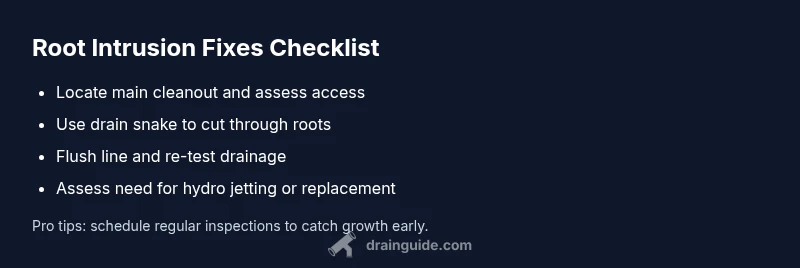
- Locate the main cleanout and prepare the area. 2) Wear protective gloves and eye protection. 3) Use a drain snake or auger to reach several feet into the line, rotating to cut through roots. 4) Pull back the snake and remove loosened material. 5) Rinse the line with water and re-test drainage. 6) If roots persist, repeat with gradual advancement, or move to hydro jetting—do not exceed tool limits. Tip: Work slowly to avoid pipe damage and always stop if you encounter a severe crack.
When to consider hydro jetting or pipe replacement
For stubborn root intrusion that returns after snaking, hydro jetting can dislodge compacted roots and debris from the pipe interior. This method uses high-pressure water to scour the line, but it can damage older pipes if misapplied. If root growth reappears within a short timespan, scheduling camera inspection of the sewer line helps determine whether you need pipe repair or replacement. In some cases, root intrusion is a sign of a larger problem, such as deteriorating joints or broken pipes, which require professional handling to avoid further damage.
Prevention: long-term care to prevent regrowth
Proactive steps dramatically reduce future root intrusion. Regularly scheduled maintenance, such as annual camera inspections, cleanouts that stay accessible, and avoiding chemical root killers (which can damage pipes and the environment) can extend pipe life. Plant trees away from sewer lines or install root barriers to curb intrusion. Periodically flushing the main with a safe, non-corrosive cleaner helps keep the line clear, and addressing small leaks promptly stops root attraction. If you have clay or ABS pipes, consider periodic professional inspections to identify early signs of root growth before a full blockage forms.
Safety, alternatives, and when to call a pro
Root intrusion work can involve confined spaces, heavy machinery, and potential exposure to sewage. Always use appropriate PPE and never enter a sewer line without proper training and equipment. If you are unsure about pipe integrity, if backups persist after snaking, or if your home has an older sewer line near mature trees, contact a licensed plumber. A pro can perform camera inspection, hydro jetting, and if needed, pipe replacement with guaranteed joints and proper venting to prevent future problems.
Steps
Estimated time: 1-2 hours
- 1
Locate the main cleanout
Find and access the main cleanout. Clear the area and prepare protective gear. This step gives you a direct path to the main line for snaking and inspection.
Tip: Wear gloves and eye protection; keep a bucket handy for messy debris. - 2
Examine the line and insert the snake
Carefully insert the auger into the cleanout, rotating as you push to the depth you can safely reach. Stop if you feel sharp resistance indicating pipe damage.
Tip: Do not force the auger through solid sections—this can crack older pipes. - 3
Break through roots
Rotate the snake to cut roots and pull back loosened material. Retrieve the snake regularly to remove debris and prevent tangling.
Tip: Pull out the auger slowly to identify remaining resistance and avoid tearing joints. - 4
Flush and test drainage
Run water to flush the line and observe flow. Check multiple fixtures to confirm the main line is clear.
Tip: If drainage remains slow, proceed to hydro jetting or professional evaluation. - 5
Assess the need for jetting or replacement
If roots regrow quickly or backing returns, hydro jetting or pipe replacement may be necessary after inspection.
Tip: Hydro jetting is powerful but can harm old pipes—use it only with professional guidance. - 6
Document and schedule follow-up
Record findings, photos, and next steps. Schedule preventive maintenance to catch issues early.
Tip: Annual camera inspections can save future headaches.
Diagnosis: Backups and slow drains across fixtures, sometimes with a sewer odor
Possible Causes
- highTree roots invading the main drain
- mediumCollapsed or misaligned pipe joints
Fixes
- easyUse a drain snake or auger to cut through roots and clear the line
- hardSchedule professional inspection or hydro jetting if needed
Got Questions?
What causes roots to grow into drain pipes?
Tree roots seek moisture and can penetrate cracks or loose joints in pipes. Once inside, they grow and widen the opening, causing blockages. Soil moisture and aging infrastructure accelerate intrusion.
Roots seek moisture and can crack pipes; once inside, they grow and block the line.
Are kitchen drains more prone to root intrusion?
Kitchen drains can be affected if the main line is compromised or if there are cracks near the kitchen drain run. However, any main line with root access is at risk, not just kitchen drains.
Roots can access any main line, not just kitchen drains, if there are cracks or leaks.
Can I prevent roots from growing into drains?
Yes. Plant trees away from sewer lines, install root barriers, schedule regular line inspections, and address leaks promptly. Avoid chemical root killers that can damage pipes.
Plant away from pipes, install barriers, and inspect regularly to prevent intrusion.
Is a drain snake effective for root blocks?
A drain snake can clear loose roots and small blockages but may not remove dense root masses or older pipe damage. Recurrent issues often require professional methods.
A snake helps with light blocks but may not solve heavy root masses.
Should I replace the sewer line if roots keep returning?
If root intrusion recurs despite maintenance and jetting, sewer line replacement with proper pipe material and trenching may be necessary. A camera inspection guides this decision.
If roots keep coming back after treatments, replacement may be needed.
How much does professional root removal cost?
Costs vary based on the extent of intrusion and required methods. A professional evaluation with camera inspection helps determine whether snaking, jetting, or replacement is the best long-term solution.
Costs vary; get an expert assessment to choose the right solution.
Watch Video
The Essentials
- Start with the simplest checks and the cleanout.
- Snaking can remove light root intrusion, but persistent issues need pro help.
- Hydro jetting or pipe replacement may be required for severe intrusion.
- Prevent future growth with maintenance and root barriers.
- Schedule regular camera inspections to catch problems early.