Sink Drain Cleaner: A Practical How-To Guide
Learn how to choose, apply, and maintain drains using a sink drain cleaner. This step-by-step guide covers enzymatic vs chemical cleaners, safety tips, troubleshooting, and prevention for a healthier home.


You will learn how to safely choose and use a sink drain cleaner to clear blockages and restore flow. This guide covers evaluating clog severity, selecting enzymatic versus chemical cleaners, pre-cleaning checks, step-by-step application, common mistakes to avoid, and safe disposal. It also explains safety notes for kids and pets.
What is a sink drain cleaner and when to use it
A sink drain cleaner is a product designed to dissolve or loosen organic material that slows or blocks water flow in kitchen and bathroom sinks. It can be enzymatic (biological) or chemical (alkaline/acid-based). Use it when you notice slow drainage or a minor clog, before you reach for more aggressive tools. According to Drain Guide, understanding the clog type helps you choose between gentler enzymatic cleaners and stronger chemical formulas. Always read the label for the recommended contact time, safety warnings, and whether the product is septic-safe. In many homes, a routine maintenance treat can keep drains flowing smoothly, while persistent blocks may require additional steps. This section guides you through product choices, how to apply them safely, and practical maintenance to prevent future clogs.
Enzymatic vs chemical cleaners: pros and cons
Enzymatic cleaners rely on bacteria or enzymes to digest the buildup that narrows a drain. They are typically safer for pipes, less harsh on septic systems, and easier to use for regular maintenance. They may require longer contact times and multiple applications to fully clear a blockage. Chemical cleaners act quickly and aggressively but can weaken pipes, seals, and older plumbing when misused. They often produce heat, strong fumes, and require good ventilation. Drain Guide notes that enzymatic products are good for ongoing maintenance, while chemical cleaners are best reserved for stubborn clogs after other methods have failed. When choosing, consider pipe material, whether you have a septic system, and the age of your home. A cautious, two-step approach—enzymatic first, chemical second—offers safety and effectiveness.
Before you start: safety checks and prep
Safety comes first when handling any drain cleaner. Put on rubber gloves and safety goggles, ensure the area is well ventilated, and keep children and pets away. Clear the sink area of tools and towels, and have a bucket handy for spills. If there is standing water, remove as much as possible with a cup or a sponge to expose the clog. Set up your workspace so you can pour, wait, and rinse without splashing. This prep helps prevent skin contact and minimizes the risk of accidental mixing with other cleaners. Having a plan also reduces the chances of overuse or misapplication.
How to choose the right product for your sink
Start by identifying whether you’re dealing with a kitchen sink, bathroom sink, or a combination, as clogs and residue differ. Read the label to confirm the active ingredient type and the recommended contact time. Check compatibility with septic systems and the age of your pipes. Compare bottle sizes and prices, and consider whether you want a one-off treatment or ongoing maintenance. If you have metal pipes, verify the product’s safety profile to avoid corrosion. Finally, decide between enzymatic products for regular maintenance and chemical formulas for more stubborn blockages, and plan to use the gentler option first.
Step-by-step in practice: reading labels and performing a test
Always start by reading the product label carefully. Note the recommended dosage, contact time, and any warnings about mixing with other cleaners. For most sinks, apply the cleaner, then wait the specified time before flushing with water. If you’re unsure about the clog’s severity, perform a quick test by applying a small amount to a small section and observing any reaction. This helps confirm the product is appropriate and safe for your plumbing. Keep pets away during this process and ventilate the area. If there’s any doubt, stop and consult the product’s instructions or a professional.
Common mistakes and troubleshooting
Most homeowner missteps involve rushing, mixing products, or using too much cleaner. Never mix two different cleaners, especially bleach-based or acidic formulas, as dangerous fumes can result. Don't pour a large amount and wait without supervision; you could cause a stronger reaction or pipe damage. If the drain still runs slowly after the label's contact time, try a second application with the same product, or switch to a different type (enzymatic vs chemical) as appropriate. If the clog persists after repeated attempts, mechanical methods like a plunger or drain snake may be necessary, and professional help should be considered.
Maintenance and prevention after cleaning
Prevent future clogs by running hot water down the drain at regular intervals, ideally daily in kitchens where grease is common. Use drain screens to catch hair, food particles, and soap scum. Rinse with a small amount of very hot water after each heavy use, and avoid pouring grease or coffee grounds into the sink. For households with a septic system, limit chemical cleaners and rely on enzymatic maintenance to protect the microbiology that keeps the system healthy. Regular, gentle maintenance reduces the likelihood of emergency drain calls.
Safety, disposal, and when to call a pro
Always follow label instructions for disposal—do not mix old cleaner with new products. Rinse the sink and container after use and recycle the bottle if possible. If you’ve tried the recommended cleaner and the sink remains clogged or drains slowly, it’s time to escalate. A professional plumber can diagnose underlying issues such as pipe misalignment, heavy grease buildup, or vent problems that home remedies can’t fix. In those cases, Drain Guide recommends seeking expert help to prevent damage and ensure long-term drainage health.
Tools & Materials
- Plunger (cup or flange)(Ensure a good seal; use before chemical cleaners if possible)
- Rubber gloves (nitrile recommended)(Protect hands from irritants)
- Safety goggles(Protect eyes from splashes)
- Measuring cup(For accurate cleaner dosage)
- Old towels or rags(Catch spills; protect counter)
- Bucket(Catch small spills)
- Sink drain cleaner (enzymatic or chemical)(Choose based on clog type and safety)
- Drain snake / auger (optional)(Useful if mechanical clearing is needed)
Steps
Estimated time: 25-40 minutes
- 1
Read label and choose product
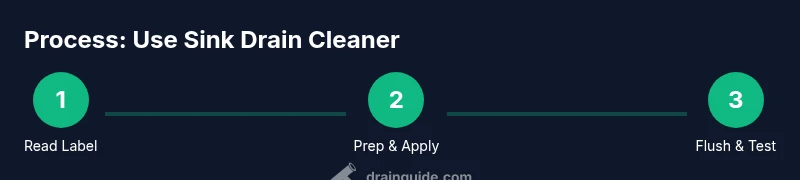
Select enzymatic or chemical based on the clog and plumbing. Note the dosage, contact time, and warnings. Confirm compatibility with septic systems if applicable. This ensures you start with the safest and most effective option for your situation.
Tip: Always verify the product’s compatibility with your piping material before applying. - 2
Prepare the area and remove standing water
Clear the sink of dishes and remove as much standing water as possible. A dry surface helps the cleaner contact the clog more effectively and reduces splashing. Place towels nearby to catch any drips and keep pets away from the workspace.
Tip: A dry basin improves contact time and reduces dilution of the cleaner. - 3
Apply the cleaner with a measured dosage
Pour the prescribed amount slowly into the drain using a measuring cup. Avoid direct skin contact and keep the bottle away from children. If the product has a pour spout, use it to control the flow and reduce splashes.
Tip: If your sink has a trap access, triple-check you’re targeting the correct drain. - 4
Wait the recommended contact time
Let the cleaner sit for the label’s specified duration. Do not disturb the drain during this period, as movement can reduce effectiveness. Set a timer to avoid over-waiting, which can cause overflow or unintended reactions.
Tip: Use a phone timer or kitchen timer to stay precise. - 5
Flush and test the drain
After waiting, flush with hot water to push the cleaner through. Run a full stream and evaluate drainage. If flow remains slow, repeat the process once more with the same product or switch to a different type if advised on the label.
Tip: Start with a gentle flush and increase flow gradually to prevent backsplash. - 6
Clean up and plan maintenance
Rinse tools and store cleaners in their original containers. Consider a maintenance routine with an enzymatic cleaner to prevent future clogs. If the clog recurs frequently, consult a pro for a deeper inspection.
Tip: Record the date of treatment to track clog frequency.
Got Questions?
What is the best type of sink drain cleaner for a slow-draining sink?
For routine maintenance, enzymatic cleaners are safer and gentler on pipes. For stubborn clogs, a chemical cleaner may be effective, but use it sparingly and strictly follow the label. If slow drainage persists, consider mechanical methods or a professional diagnosis.
Enzymatic cleaners are great for regular maintenance, while chemical cleaners can address tougher clogs. If you still have slow drainage after trying the product, you may need a professional diagnosis.
Can I mix cleaners with baking soda and vinegar?
No. Do not mix cleaners with baking soda, vinegar, or any other cleaners. Mixing can cause dangerous fumes or reactions and damage your plumbing.
Never mix cleaners with baking soda or vinegar. It can be dangerous and harm your pipes.
How long should a drain cleaner sit before flushing?
Follow the product label for exact timing. Enzymatic cleaners often require longer contact times, while chemical cleaners may specify shorter durations. Do not exceed the recommended time.
Check the label for the exact wait time, and don’t exceed it.
Is it safe to use drain cleaner on a garbage disposal?
Most chemical cleaners should not be used directly in garbage disposals. They can harm the disposal mechanism and piping. Use enzymatic cleaners around the trap area and mechanical clearing methods for disposals when possible.
Avoid chemical drain cleaners in disposals; use enzymatic options or mechanical methods instead.
When should I call a plumber instead of DIY?
If clogs recur frequently, if drainage is severely slow, or if you notice signs of a more serious issue (gurgling pipes, wastewater backups), contact a licensed plumber for a thorough inspection.
If clogs keep coming back or you see backing up, call a plumber.
Watch Video
The Essentials
- Identify clog type before selecting a cleaner.
- Follow label instructions for dosage and contact time.
- Ventilate and protect skin and eyes during use.
- Enzymatic cleaners are great for maintenance; save harsher options for stubborn clogs.