Sink Drain Size in Bathrooms: A Practical Guide
Learn how to identify and measure bathroom sink drain sizes, why 1-1/4 in and 1-1/2 in are common, and how to replace parts for leak-free plumbing.


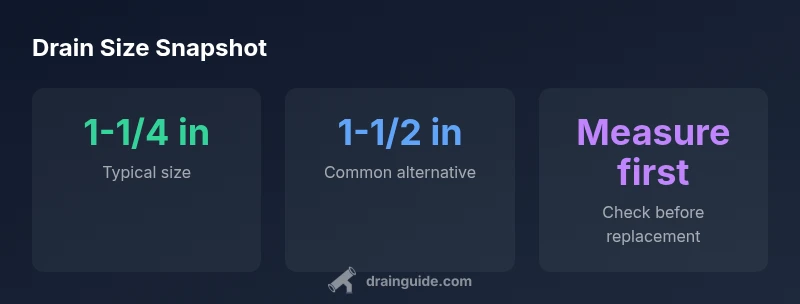
The standard bathroom sink drain size is 1-1/4 inch (about 1.25 in) for many fixtures, with 1-1/2 inch (1.5 in) as the most common alternative. To determine yours, measure the drain opening or tailpiece, and match it to the trap size. When replacing parts, ensure the trap, tailpiece, and strainer all align to form a proper seal.
Understanding the sink drain size bathroom
In residential plumbing, the term sink drain size bathroom refers to the diameter of the drain opening that accepts the sink’s strainer and connects to the tailpiece. According to Drain Guide, the most common sizes you’ll encounter in homes are 1-1/4 inch (about 1.25 in) and 1-1/2 inch (about 1.5 in). The choice between these sizes affects everything from strainer compatibility to P-trap configuration. Vessel sinks or oversized basins often push toward the larger 1.5 in size, while many standard vanity sinks settle on 1.25 in. When planning a repair or replacement, confirm the size of the drain opening and the adjacent tailpiece, then verify that the trap size will accept the new components. Knowing the sink drain size bathroom helps prevent leaks and mismatched parts later on.
From a practical perspective, most homeowners can identify size by measuring the opening or by checking the existing tailpiece diameter. If you’re unsure, start with 1-1/4 in as a baseline and test fit, since many parts are designed to be interchangeable within a narrow range. Drain Guide’s analysis highlights that matching the drain size to the trap and strainer is the quickest route to a leak-free connection and long-term reliability.
How to measure your sink drain size accurately
Accurate measurement is the foundation of choosing the right parts for your sink drain size bathroom project. Follow these steps to confirm size before purchasing replacements:
- Inspect the drain opening: If you can remove the strainer, gently measure the inner diameter of the drain hole. Use a caliper or a ruler with clear markings. For most sinks, you’ll see 1-1/4 in or 1-1/2 in as the nominal size.
- Check the tailpiece diameter: The tailpiece is the straight pipe beneath the sink that runs into the P-trap. A quick measurement of the tailpiece diameter helps ensure the new parts will thread or slip on properly.
- Examine the trap size: The P-trap’s connection size should align with the drain size. If you replace the trap, confirm compatibility with the tailpiece and the drain opening.
- Consider the thread type and gasket: Some drains use threaded assemblies with rubber gaskets. Ensure the thread pitch and gasket type match the new components.
- Confirm fixture type: Vessel sinks or pedestal sinks often require different hardware than standard vanity sinks. Drain guides emphasize measuring across the board to avoid unnecessary trips to the hardware store.
If you’re replacing a vessel sink drain, you may encounter larger tailpieces or unusual thread configurations. Drain Guide recommends starting with the measurement you’ve taken and choosing parts that explicitly list compatibility with your sink drain size bathroom.
Common configurations and implications for replacement
Sinks come in several configurations, and each affects which drain size is most appropriate. The vast majority of residential bathrooms use standard 1-1/4 in drains with compatible P-traps and slip joint connections. Some newer or specialty sinks – such as certain vessel or undermount models – may use 1-1/2 in drains or require larger traps. When replacing, always verify the hole size, tailpiece diameter, and trap size. If you replace with a different size, you’ll likely need to adjust the trap or adapter fittings to maintain a watertight seal. This is especially important for tight spaces under a vanity or on a wall-mounted sink where clearance is limited. Drain Guide notes that a mismatched drain size bathroom configuration is a leading cause of persistent leaks after replacement, so accurate sizing is essential.
A practical approach is to baseline on standard 1-1/4 in components and only move to 1-1/2 in if the fixture clearly warrants it. For vessel sinks, confirm that the drain opening can accommodate the wider strainer and tailpiece without hitting the basin edge or causing misalignment of the trap.
Replacing parts: selecting the right components and tips to seal
Selecting the right components starts with matching the sink drain size bathroom to the rest of the plumbing: the strainer, tailpiece, and P-trap must all align. Start with a compatible strainer that fits the sink and seal it with a fresh gasket. If you’re changing to a 1-1/2 in setup, you may need a larger trap or an adapter to fit the existing tailpiece. When reinstalling, use appropriate plumbers tape on threaded connections and apply a gasket or plumber’s putty to prevent leaks at the flange. Avoid overtightening threaded connections, which can crack the sink or cause thread damage. If you’re unsure about compatibility, consult the product specs or opt for adjustable traps that support multiple drain sizes. Drain Guide emphasizes verifying all connections before running water, as a quick leak check can catch misalignment early.
For DIYers, keeping a small kit with a few common gaskets, adapters, and pruning tools is useful. In tight cabinet spaces, consider flexible trap extensions that allow you to adjust alignment without forcing loose joints. By planning for the largest possible size your fixture can reasonably accommodate, you can reduce the need for future replacements and ensure a reliable seal.
Maintenance and troubleshooting to avoid leaks
Preventing leaks starts with proactive maintenance and correct sizing. Regularly inspect under-sink connections for moisture, corrosion, or mineral buildup that can compromise seals. If you notice a slow drip around the drain ring, re-seat the gasket and ensure the flange is clean and evenly tightened. For older homes with magnetized or corroded hardware, replacing the entire drain assembly may be more cost-effective than chasing leaks with sealants. Drain Guide recommends periodic checks, especially after replacement, to catch leaks before they cause water damage. If you rely on chemical cleaners, avoid harsh drain cleaners that can erode gaskets and seals; opt for mechanical cleaning methods or enzymatic cleaners that are gentler on fittings.
In summary, the sink drain size bathroom determines much of the work’s complexity. By measuring accurately, selecting compatible components, and performing careful resealing, you can achieve a durable, leak-free drain system that will last for years.
Quick tips and common pitfalls to avoid
- Always measure before buying; size mismatch is the most common source of leaks.
- Use fresh gaskets or Teflon tape as appropriate; don’t reuse old sealants.
- If your sink has a vessel basin, don’t assume standard parts will fit without an adapter.
- Don’t overtighten connections; this can crack the flange or strip threads.
- Keep the workspace clean and dry during installation to avoid slipping a tool or misplacing a part.
Common bathroom drain sizes and their typical fixture associations
| Drain Size (inches) | Common Fixture Type | Notes |
|---|---|---|
| 1.25 | Most standard bathroom sinks | Fits standard P-traps and strainers |
| 1.5 | Newer installations or vessel sinks | May require larger tailpieces and traps |
| 1.25–1.5 | Range when unsure | Measure opening and tailpiece to decide |
Got Questions?
What is the standard bathroom sink drain size?
The standard sizes are typically 1-1/4 inch or 1-1/2 inch. Always measure the drain opening and tailpiece to confirm the exact size before purchasing parts.
Most bathrooms use 1-1/4 or 1-1/2 inch drains; measure to confirm before buying parts.
Can I replace a 1-1/4 inch drain with a 1-1/2 inch one?
Upgrading is possible if the trap and waste fittings can accommodate the larger size. You may need adapters or a new trap to ensure a proper seal.
Yes, but you might need adapters or a new trap to seal properly.
How do I measure my bathroom sink drain size?
Remove the strainer if possible and measure the opening diameter. Check the tailpiece diameter and the trap size, then compare with standard sizes.
Measure the opening and tailpiece, then match to standard sizes.
What tools do I need to size a drain?
A tape measure or caliper, adjustable wrench, pliers, and replacement gaskets. Having a small adapter kit helps with mixed sizes.
Have a tape, wrench, and gasket kit handy for sizing.
Why does my drain leak after replacement?
Leaks usually result from a mismatched size, damaged gasket, or improperly tightened connections. Recheck sizing, replace worn gaskets, and reseal carefully.
Often due to size mismatch or a worn gasket—check both and reseal.
Should I hire a plumber for drain sizing issues?
If you’re unsure about measurements or encounter vessel-sink complications, a licensed plumber can ensure correct sizing and a leak-free installation.
If unsure, a plumber can ensure the right size and a solid seal.
“Accurate measurement of your sink drain size is the quickest way to avoid leaks and compatibility issues.”
The Essentials
- Identify your drain size before buying parts
- Most bathrooms use 1.25 in or 1.5 in drains
- Measure opening, tailpiece, and trap for accuracy
- Match drain, tailpiece, and trap sizes to avoid leaks
- Check manufacturer specs or consult a pro for vessel sinks