Snake for Bathroom Sink Drain: Step-by-Step DIY Guide
Learn to clear a bathroom sink clog with a drain snake. This DIY guide covers tool selection, safe snaking techniques, and post-cleanup steps to keep drains flowing smoothly.


A manual drain snake is your first line for clearing a bathroom sink clog. With careful insertion, rotation, and gentle withdrawal, you can dislodge hair and soap scum at the P-trap without harsh chemicals. Always prepare the area, wear gloves, and follow step-by-step safety precautions for best results. If you cannot reach the clog or it persists, stop and reassess; repeating steps or calling a professional may be required.
What is a drain snake and when to use it
A drain snake, also known as a manual auger, is a flexible coil designed to reach and dislodge obstructions inside a drain. When people talk about a "snake for bathroom sink drain," they’re usually referring to a handheld auger that you feed into the drain and turn to break up hair, soap scum, and mineral buildup. According to Drain Guide, a manual drain snake is a safe, effective first step for many bathroom sink clogs. It lets you reach beyond the visible surface and tackle the clog at the source, often avoiding messy chemical cleaners. When used correctly, a snake for bathroom sink drain minimizes damage to pipes and fixtures while restoring steady drainage.
In most cases, a snake works best on hair-heavy clogs or buildup near the S-trap or P-trap. It is not a powerful tool for completely blocked mains lines or severely corroded pipes, but for routine bathroom sink stoppages, it is a practical, cost-effective solution. The key to success is patience—feed slowly, rotate steadily, and avoid forcing the tool through tight bends. With care, you’ll often clear the clog without removing the entire drain system.
Safety note: always protect your eyes and hands, work in a well-lit area, and keep a catch basin ready. If you feel resistance that can’t be overcome with moderate pressure, stop and reassess; continuing to push could push debris further into the plumbing. For many homeowners, this approach integrates cleanly with routine maintenance and reduces the need for permanent chemical cleaners.
noteTitleIncludedInBlockFormat?IntentionallyMalformed?OverrideNotAllowed?":null
note":null},
secondBlockPlaceholder
Tools & Materials
- Manual drain snake (hand-crank auger)(6–8 ft length recommended for most bathroom sinks; buy one with a sturdy handle and corrosion-resistant coil.)
- Bucket or shallow tray(To catch water and dislodged debris.)
- Gloves (rubber or nitrile)(Keep hands clean and protected; durable grip helps during twisting.)
- Adjustable wrench or pliers(Loosen trap nuts if you need to access the drain directly.)
- Towels or rags(Contain spills and protect surfaces.)
- Flashlight or headlamp(Improves visibility inside the cabinet and drain opening.)
- Dish soap (optional)(A few drops can help the snake glide through the pipe.)
Steps
Estimated time: 20-45 minutes
- 1
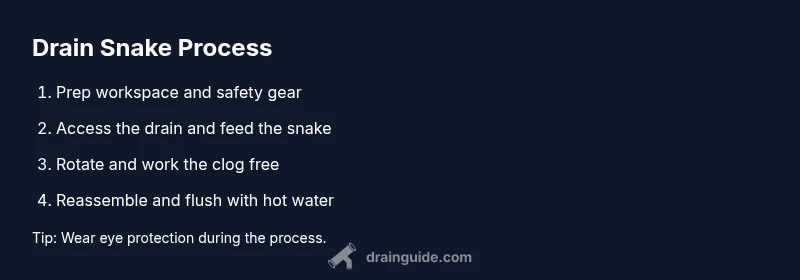
Prepare workspace and safety gear
Clear the area under the sink and place a bucket and towels within easy reach. Put on gloves and eye protection. This reduces mess and protects you from splashes while you work. Make sure the faucet is dry and unplug any nearby electronics; you don’t want water to surge unexpectedly.
Tip: Keep a clear route to the trap and keep pets away from the work area. - 2
Shut off water and position your catch
Turn off the water supply to the sink to prevent unexpected flow. Place a bucket beneath the P-trap to catch water when you loosen fittings. This step minimizes a flood of dirty water if the trap is pulled loose during snaking.
Tip: If the sink is already draining slowly, you may skip full shutoff for brief tests, but keep water control in mind. - 3
Access the drain and prepare the snake
If needed, loosen the P-trap with a wrench and remove it to gain direct access to the drain opening. Thread the snake’s coil into the drain, guiding it gently past any bends until you meet resistance. Do not force the coil beyond the point of entry.
Tip: Ensure the snake’s first contact is smooth; coercing it through a bend can kink the coil. - 4
Feed the snake into the drain
Turn the handle in a slow, steady motion to advance the coil into the pipe. Maintain gentle pressure and rotate to help the coil navigate hair and buildup. When you feel resistance, you’ve probably reached the clog or a tight bend.
Tip: Small, controlled movements reduce the risk of puncturing seals or creating new damage. - 5
Break up and capture the clog
Continue rotating and pushing forward slightly, then pull back slowly to bring debris with the coil. This action helps to break apart hair and gunk that are binding the clog. Retrieve the snake carefully to pull material out of the pipe rather than pushing it further in.
Tip: Pull the snake out with a slow, even motion to avoid pushing debris deeper. - 6
Reassemble and test drainage
Reinstall the P-trap if you removed it, tighten nuts securely, and run hot water to flush the pipes. Observe whether the water drains freely without gurgling or backing up. If the drain still gurgles or drains slowly, you may need to repeat the snake pass or consider alternative methods.
Tip: A thorough flush helps prevent immediate re-clogging by dislodged particles settling again. - 7
Assess results and clean up
If the water now flows freely, wipe down the area and dispose of any debris. Check underneath for leaks around the trap, then run a final test by filling the sink and letting it drain. This confirms a successful clearance and proper sealing.
Tip: Even small leaks left unchecked can cause hidden water damage over time. - 8
Maintain and prevent future clogs
Consider a routine maintenance plan: avoid using excessive hair products, use a fine sink strainer, and periodically flush the drain with hot water or a mild cleaner. This helps reduce the frequency of clogs and keeps your bathroom drain healthy over time.
Tip: A simple strainer can dramatically cut down on hair-related clogs.
Got Questions?
What exactly is a drain snake, and when should I use it?
A drain snake is a flexible coil that you feed into a drain to break up clogs, especially those caused by hair and soap scum in bathroom sinks. Use it when a plunger or chemical cleaners don’t clear the blockage, or when you want a chemical-free approach. If you’re unsure, start with the gentlest method first and proceed carefully.
A drain snake is a flexible coil used to break up clogs. Use it when hair or soap buildup blocks the sink and plunger alone isn’t enough.
Can I snake a bathroom sink without removing the P-trap?
In many cases you can snake through the drain without removing the P-trap, feeding the coil from the sink opening toward the trap. If you meet resistance near the trap or can’t reach the blockage, you may need to loosen or remove the trap for better access.
Often you can snake without taking off the trap, but if you can’t reach the clog, you might need to access the trap.
What size snake is best for a bathroom sink?
A standard bathroom sink uses a hand-crank snake in the 3 to 6 foot range. Longer coils can reach deeper clogs, but choose a size that fits easily through the drain opening and bends without kinking.
A typical bathroom sink needs a 3 to 6 foot snake. Use what fits your drain and doesn’t kink.
Is snaking risky for my plumbing or septic system?
Snaking is generally safe for most residential plumbing when done carefully. Avoid forcing the coil, which can damage pipes. In homes with septic systems, snaking is usually safe, but avoid pushing debris back into the system and flush only with water.
Snaking is usually safe if you’re careful. Don’t force the coil and avoid pushing debris back into the system.
What should I do if snaking doesn’t fix the clog?
If snaking doesn’t clear the clog after a careful attempt, repeat the process once more or try a different method like a plunger designed for sinks. If the problem persists, consider calling a licensed plumber.
If snaking fails after one try, you may repeat once more or call a pro. Persistent clogs need a plumber.
Can a drain snake damage a metal drain or the pipes?
A drain snake can damage metal pipes if used aggressively or forced through tight bends. Use gentle pressure and stop when you sense resistance. If you’re unsure about your fittings, hire a pro to avoid costly damage.
If you feel resistance, stop. Don’t force the snake through bends to avoid damage.
Watch Video
The Essentials
- Identify the clog location and access point before snaking.
- Feed slowly and rotate to break hair clogs without forcing the tool.
- Flush with hot water after clearing to confirm flow.
- Reassemble traps tightly and check for leaks after testing.
- If clogs persist after one attempt, consider professional help.