Snake for Tub Drain: Step-by-Step Unclog Guide
Learn how to use a snake for tub drain to clear hair and soap clogs safely. This Drain Guide tutorial covers tools, steps, safety, maintenance, and tips to prevent future blockages.


By the end, you will be able to safely use a drain snake to clear a tub drain, recognize when professional help is needed, and prevent future clogs. Gather a manual auger or power snake, a bucket, rubber gloves, towels, and basic pliers. Follow this step-by-step guide to achieve a reliable fix.
What is a snake for tub drain and when to use it
A snake for tub drain is a flexible auger designed to reach beyond surface obstructions and break up hair, soap scum, and other debris that slow or stop drainage. It is a practical tool for homeowners facing clogs that do not respond to plunging. According to Drain Guide, a tub drain snake works best for hair-prone drains where the obstruction is near the trap but still within reach of the cable. Use a snake for tub drain when you notice a slow drain, standing water, and gurgling sounds after showering. Before you start, wear gloves and clear the area; the process can be messy, but it is safer than chemical cleaners. Knowing the type of clog helps you choose the correct auger and reduces the risk of damaging the tub’s drain components. Drain Guide emphasizes patience and small, deliberate turns to avoid kinks in the cable and to prevent accidental scarring of the pipe.
This understanding lays the groundwork for effective snaking, especially in bathroom sinks or bathtubs where hair is a frequent culprit. The objective is not just to push the blockage but to engage the clog and disconnect it from the flow path. When used correctly, a snake for tub drain minimizes mess and avoids the harsh chemicals found in many commercial remedies. Keep expectations realistic: some clogs resist initial attempts and may require repeat passes or professional help.
Types of snakes: manual augers vs power augers
There are two main families of devices used for unclogging tub drains: manual snakes (augers) and power augers. A manual snake for tub drain consists of a stiff coil of metal wire wrapped around a flexible cable with a hand crank; it provides control and is ideal for hair clogs near the trap. Power augers use an electric motor to feed and retrieve the cable, which can be faster but risks damage if used improperly. For most residential tubs, a hand-crank snake is sufficient, affordable, and safer for beginners. When choosing, consider the length (usually 15–25 feet), the thickness or gauge, and the handle type. If you encounter a stubborn clog that resists a manual snake after several attempts, a professional auger may be warranted. The key is to work gradually, maintain steady pressure, and avoid forcing the cable through bends or joints. In many homes, the limited access in a bathtub makes a longer manual snake the practical choice for regular maintenance.
Understanding the trade-offs helps you pick a solution that balances control, cost, and risk to your tub drain.
Safety first: hazards and precautions
Water, electricity, and sharp tools create potential hazards when snaking a tub drain. Always unplug nearby electrical devices and confirm the area is dry before starting. Wear non-slip shoes and rubber gloves; eye protection is recommended if debris splashes. Keep a bucket nearby to catch wastewater and a towel to absorb spills. Never use a snake in a tub with a compromised vent or a suspect sewer-line problem; forcing the auger can push debris further down the line. If you detect a strong sewer odor, gas backup, or sewage backup into the tub, stop immediately and call a licensed plumber. Drain Guide recommends maintaining a slow, consistent motion with the snake to prevent kinking and to preserve the integrity of the trap and joints.
Safety can feel tedious, but it protects you and your home’s plumbing while you work through the clog.
Diagnosing the clog: hair, soap residue or foreign objects
Hair is the most common culprit in tub drain clogs, forming a stubborn mat that binds with soap and mineral deposits. Soap scum and grease can also accumulate and restrict flow, especially in hard water areas. In addition, foreign objects accidentally dropped into the drain—jewelry, toys, or caps—can create sudden blockages that a standard snake may not easily dislodge. Before snaking, perform a quick inspection by removing the drain cover and looking into the drain with a flashlight. If you see hair, soap residue, or a visible obstruction, plan to focus the snake near the bend of the trap. If you can, clear the visible portion with tweezers, but avoid pushing debris deeper. Identifying the blockage type informs your technique and increases your chances of success when using a snake for tub drain.
Accurately diagnosing the cause helps you tailor your approach and reduce the risk of damaging your plumbing while snaking.
Choosing the right snake for tub drain and how to store it
Selecting the right snake for tub drain depends on the clog type, drain size, and access. A basic manual auger with a 1/4 inch or 5/16 inch cable is sufficient for most hair clogs in standard bathtubs. For longer runs or multi-station drain setups, a longer 25-foot cable with a rigid snake tip can reach the blockage more effectively. Some models include interchangeable tips for different obstacles. Storage matters too: coil the cable loosely, avoid kinks, and keep the tool dry to prevent rust. Always read the manufacturer’s instructions for assembling and unwinding the cable, as improper handling can damage the trap or pipe. If you have a fiberglass tub or a delicate finish, consider soft-plastic covers and wear gloves to protect surfaces. Remember, not every tub drain requires the most powerful tool—the right snake for tub drain is the one that matches your clog and your skill level.
Choosing wisely minimizes damage while maximizing effectiveness when tackling a tub drain companion like a snake.
Maintenance and prevention after a successful snaking
After clearing a tub drain with a snake, run hot water for several minutes to flush away debris and verify that water drains smoothly. Create a simple maintenance routine to reduce future clogs: wipe hair from the tub after showering, use a hair catcher, and periodically flush drains with a baking soda and vinegar combination followed by hot water. Regularly inspect the trap and P-trap for buildup and clean as needed. Consider scheduling semiannual inspections if your household has hard water or large numbers of users. Drain Guide notes that small proactive steps can dramatically reduce the frequency of hair-induced clogs and extend the life of your drain system.
With a routine in place, your snake for tub drain becomes a reliable preventative tool rather than a last-resort fix.
Common mistakes that hinder results and how to avoid them
One common mistake is rushing the snake through the drain; lack of patience can push debris further into the pipe. For tub drains, forcing the cable around tight bends can kink the wire and reduce effectiveness. Another error is ignoring safety: skipping gloves or protective eyewear increases your risk of injury. Reusing a grimy snake for multiple cleanings without cleaning it properly can spread bacteria. Finally, relying on chemical drain cleaners in combination with snakes can corrode pipes and seed future clogs. If you encounter resistance, back off slightly, retract, and then reinsert with a different angle. By avoiding these mistakes, you’ll improve your chances of a successful unclogging when using a snake for tub drain.
Cleaning up after use and sanitizing
Disassemble the snake carefully and wipe it clean with a disposable rag before storing. Rinse the cable with warm water to remove residue; if your model includes a protective sheath, reassemble before storage. Sanitizing the area around the drain helps prevent bacterial growth in damp spaces; spray with a mild disinfectant and wipe surfaces and the drain cover. Wash your gloves and hands thoroughly after handling drain debris. Sanitation is especially important if you’re sharing the bathroom with others. Proper cleanup ensures your next use goes smoothly and reduces the risk of lingering odors or odors from hair and soap.
Keeping the area tidy after snaking preserves the bathroom’s cleanliness and reduces the chance of re-clogging from residual debris.
When to call a professional and what to expect
A stubborn clog that resists multiple attempts with a tub drain snake may indicate a deeper problem, such as a blocked sewer line or a collapsed pipe. If you notice standing water, foul odors, or gurgling in multiple fixtures, it is time to contact a licensed plumber. A professional can perform camera inspection, hydro-jetting, or more powerful augers with training and safety. The Drain Guide team recommends seeking help early if you’re uncomfortable with the procedure or if your tub drain is connected to a complex drainage system. If you pursue professional service, request an upfront estimate and ask about potential hidden charges.
Authority sources
- https://www.epa.gov/septictankcleaning
- https://extension.illinois.edu/blogs/plumbing-tips
- https://www.osha.gov
Tools & Materials
- manual tub drain snake (auger) or power auger(Choose 15–25 ft length; ensure flexibility for tub drains)
- bucket(To catch water and debris)
- rubber gloves(Non-slip, waterproof)
- towels or rags(For spills and wiping surfaces)
- screwdriver or drain cover removal tool(If needed to access the drain cover)
- pliers or needle-nose pliers(For grabbing and removing debris)
- flashlight(To inspect inside the drain opening)
- protective eyewear(Optional but recommended for splash protection)
Steps
Estimated time: 25-40 minutes
- 1
Prepare area and safety gear
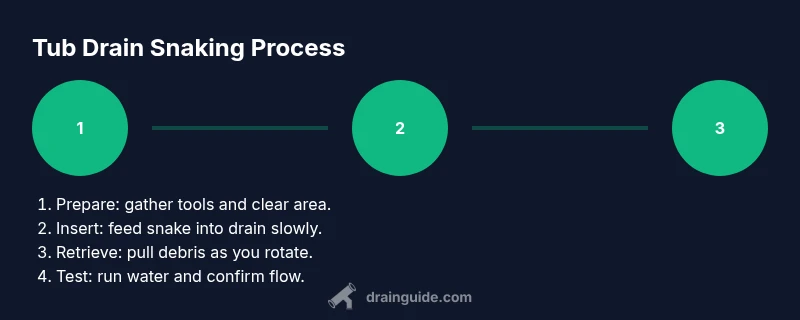
Clear the space around the tub and set up a bucket. Put on rubber gloves, eye protection if available, and ensure the tub area is dry. This reduces slips and keeps debris contained.
Tip: Have towels ready and avoid working near electrical outlets. - 2
Assemble and inspect the snake
Uncoil the snake to the required length; inspect for kinks or sharp edges. If you’re using a manual auger, attach the appropriate tip and ensure the crank operates smoothly.
Tip: Lubricate the cable gently with a drop of water or mild soap if it’s dry. - 3
Insert the snake into the drain
Carefully insert the tip into the tub drain and start feeding the cable toward the clog. Maintain steady pressure and avoid forcing the cable through tight bends.
Tip: Keep the drain cover off to monitor progress and prevent snagging. - 4
Rotate and advance to break the clog
Slowly rotate the crank or rotate the snake manually while pushing forward; the goal is to grab hair and debris and break up the blockage. If resistance increases, pull back slightly and reattempt from a different angle.
Tip: Small, patient movements are more effective than brute force. - 5
Retrieve debris and assess flow
Withdraw the cable gradually and wipe debris from the snake as it returns. Reinsert if needed to further clear the path, then test drainage by running water.
Tip: Collect what you pull out to inspect what caused the clog. - 6
Clean up and verify
Flush the drain with hot water for several minutes; observe drainage speed. Reposition the drain cover and tidy the area. Store the snake properly after cleaning and drying it.
Tip: Sanitize touched surfaces to prevent bacterial growth.
Got Questions?
Can I use chemical drain cleaners before trying a snake for tub drain?
Chemical cleaners can help light clogs, but they aren’t a substitute for snaking, especially hair clogs. They may react with metal parts or leave residue that complicates future fixes. If a snake is available, use it first and follow with water flush.
Chemicals aren’t a substitute for snaking; if possible, try the snake first and flush with water afterward.
How deep should I insert the snake into a tub drain?
Start with a few inches of insertion and gradually feed the cable toward the clog. Do not force the snake through bends; if you hit resistance, back off slightly and reorient.
Start with a few inches, then feed slowly—don’t force through bends.
What if water still drains slowly after using the snake?
If drainage remains slow after a few passes, the clog may be deeper in the line. You can attempt a second pass; if it still doesn’t clear, consider professional help to avoid damaging the system.
If it’s still slow after a few passes, consider calling a professional.
Is a power auger necessary for tub drains?
Not usually. For typical tubs, a manual snake suffices. Power augers are reserved for stubborn blockages or long runs and require more experience to avoid damage.
Usually not; a manual snake is enough for most tubs.
Are there safety concerns I should know when snaking a tub drain?
Yes. Protect your eyes and hands, keep the area dry, unplug nearby electronics, and stop if you smell sewage or gas. If you’re unsure, call a professional.
Yes—protect yourself, stay dry, and stop if you smell gas or sewage.
Watch Video
The Essentials
- Identify the clog type to choose the right snake.
- Follow safety steps to prevent injury and damage.
- Insert, rotate, and retract gradually for effective clearing.
- Test drainage before finishing and clean up afterward.
- Prevent future clogs with routine maintenance.