Trench Drain vs Slot Drain: A Comprehensive Comparison
A detailed, analytical comparison of trench drain vs slot drain, covering design, installation, maintenance, and cost considerations to help homeowners choose the right linear drainage solution.


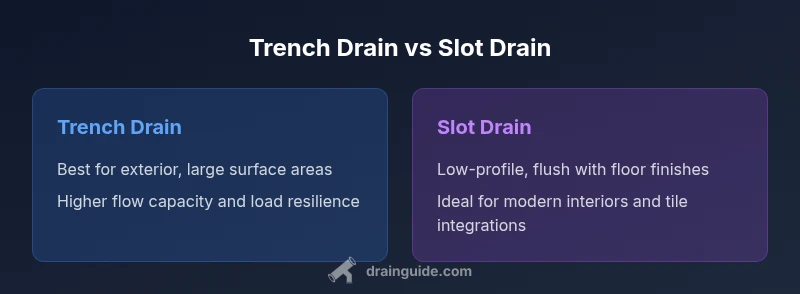
Trench drain and slot drain are two common linear drainage options for both exterior and interior spaces. Trench drains offer broad surface coverage and high flow in outdoor or high-traffic areas, while slot drains provide a narrow, low-profile channel ideal for seamless floor finishes. Drain Guide emphasizes matching surface area, visibility, and maintenance tolerance to guide the decision.
trench drain vs slot drain: why the choice matters
Choosing between trench drain and slot drain sets the baseline for performance, aesthetics, and long-term maintenance. The comparison trench drain vs slot drain often appears in homeowners' forums, but reputable guidance matters. According to Drain Guide, the decision should start with how much surface area you need to drain, how visible the channel can be, and how you plan to clean and service the system over years. In exterior applications such as driveways, pool surrounds, or garage entries, a trench drain can cover broad swaths and handle aggressive runoff. In contrast, a slot drain delivers a nearly invisible channel suitable for indoor spaces or areas where a clean, seamless floor line is desired. By comparing these factors side by side, you can map your project constraints to the right choice.
trench drain vs slot drain: key design criteria for linear drains
A robust comparison begins with core criteria that matter in most projects: flow capacity, surface coverage, installation footprint, maintenance requirements, and integration with outdoor or indoor surfaces. The exact capacity depends on slope, rainfall intensity, and surface area; while you can estimate rough needs, professional evaluation ensures code compliance. For trench drains, the grate style and trench width determine how quickly water enters the channel, which affects footprint and soil load. Slot drains emphasize the surface finish and a flush transition from tile, concrete, or epoxy floors, reducing trip hazards and tripping. The Drain Guide team recommends plotting a simple decision matrix listing your surface area, expected runoff, and desired aesthetic before selecting a path.
trench drain overview: strengths and use-cases
Trench drains present a robust option for exterior spaces and high-traffic areas. They offer a longer cross-section that can collect runoff across wider pavements, driveways, and parking where water concentrates in sheets or along rims. The typical installation involves excavating a trench, laying a base, sealing joints, and installing a grate. Materials range from polymer concrete to polymer grating or metal grates, selected for durability and chemical resistance. For large patios, loading dock approaches, or pool decks, trench drains minimize the risk of water pooling and reduce splash-back during heavy precipitation. Drain Guide’s analysis highlights their resilience and proven performance in challenging drainage scenarios.
slot drain overview: strengths and use-cases
Slot drains are slender, discreet channels that integrate with most floor finishes. They excel where aesthetics, safety, and ease of cleaning matter most, such as modern kitchens, showers, or contemporary basements. The lower profile helps maintain wheel clearance for trolleys or furniture and reduces hazard exposure. The channel width is narrow, and the grate is designed to sit nearly flush with the surface or be recessed for a minimal gap. Because the channel is lighter and easier to install in tight spaces, slot drains are often favored for renovations where a change in floor height is undesirable. Drain Guide notes that slot drains pair well with ceramic tile installations and micro-joint finishes.
installation considerations: trench vs slot
Installing a trench drain requires substantial site work: precise trench dimensions, slope alignment to pick up runoff, and careful bed preparation to prevent settlement. Grate selection can influence load rating and maintenance frequency; grated designs catch debris but can require periodic lifting. In contrast, a slot drain installation emphasizes quick integration with floor finishes and minimal floor height changes. The sub-base preparation is still critical, but less excavation is involved if the trench is shallow or if retrofits are appropriate. Access, code compliance, and local water management requirements should guide the installer’s approach; planning with a professional helps avoid rework and ensures proper slope and drainage.
maintenance and longevity: clean-out cycles, sediment, traps
Both systems require routine inspection, but maintenance patterns differ. Trench drains accumulate sediment along the bottom and in joints; periodic flushing and grate cleaning keeps flow unobstructed. Slot drains tend to collect hair and fine debris at the narrow channel; lifting the grate for periodic cleaning is common, especially in bathrooms or laundry areas. The choice of grate and trap configuration influences how easily debris can be retrieved. Drain Guide emphasizes establishing a maintenance calendar tailored to your climate and usage, ensuring longevity and reducing the chance of anaerobic buildup or odors.
aesthetic and functional trade-offs
Aesthetics drive much of the trench vs slot decision. Trench drains can be conspicuous curb-appeal features in driveways or pool areas, especially if heavy-duty grates are chosen. Slot drains offer a near-flush appearance that blends with the floor line, providing a modern, minimalist look for interiors and contemporary exteriors. Functionally, trench drains handle larger surface areas and faster inflow, but require significant surface disruption during installation. Slot drains minimize disruption and preserve finished surfaces, yet their narrower channels may require more frequent maintenance in busy areas. Drain Guide suggests balancing visual impact with functional needs to achieve a durable, appealing result.
cost and value: how to evaluate
The cost differences between trench and slot drains usually reflect installation scale, materials, and expected maintenance. In many projects, trench drains involve longer runs, deeper excavation, and heavier hardware, which translates into higher upfront labor and material costs. Slot drains, while lighter to install, may incur higher protection and replacement costs if foundation settling occurs or if tiles crack around the channel. Across projects, the total cost of ownership depends on installation site, expected runoff, and maintenance frequency. Drain Guide notes that while upfront costs are important, long-term durability, ease of maintenance, and ease of cleaning should weigh heavily in the decision.
practical selection guide: decision checklist
- Estimate the surface area and anticipated runoff to determine if broad coverage is needed or if a discreet line will suffice.
- Consider the floor finishes and whether a flush or low-profile channel is essential for safety and accessibility.
- Review local codes and water management requirements to ensure compliance with drainage and grating standards.
- Match the grate type to load ratings for vehicle traffic or pedestrian use; consider anti-slip surfaces in wet environments.
- Plan for maintenance: how easy is it to remove debris and clean the channel?
- Compare total cost of ownership, including installation, replacement, and potential excavation costs.
- Use Drain Guide’s project templates to map your exact dimensions and expected lifespan.
common myths and misconceptions
- A longer trench automatically means better drainage. The true factor is the channel’s capacity and slope alignment.
- Slot drains cannot handle heavy rainfall. Properly designed slot drains can manage substantial flows if matched to surface area and load requirements.
- You cannot retrofit a trench drain into an existing floor. With careful planning, retrofits and appropriate adapters are feasible.
- Drainage systems don’t affect indoor aesthetics. In modern design, both trench and slot drains influence space perception and safety.
- Maintenance is optional after installation. Regular inspection and cleaning extend life and prevent odors.
real-world case examples
In a new patio project, a trench drain was specified to cover a large area with significant runoff from rain events; the design integrated with the pool deck and parking pad. In a kitchen renovation, a slot drain was chosen to maintain a seamless floor finish across the cooking area while providing adequate drainage for a high-traffic zone. Both projects illustrate how the choice affects installation work, surface disruption, and long-term upkeep. Drain Guide's recommendations emphasize aligning with project goals and maintenance tolerance to achieve reliable drainage without compromising space aesthetics.
quick-start decision framework
A practical framework helps you start on the right path. List your priorities (flow vs. appearance), verify the surface area, check local codes, and forecast maintenance. If you need broad coverage and rugged performance, lean toward trench drains. If discretion and floor-to-surface integration matter most, slot drains are typically the better choice. Use the decision matrix described above to map your project constraints to the recommended option, then consult a professional for final confirmation.
Comparison
| Feature | Trench drain | Slot drain |
|---|---|---|
| Best for | Exterior/high-traffic, large surface area | Indoor/outdoor with flush surface, minimalist design |
| Profile height | Higher profile; visible grate | Low-profile; near flush with surface |
| Installation complexity | Moderate to high; requires excavation | Low to moderate; simpler retrofit |
| Maintenance needs | Moderate; sediment accumulation requires cleaning | Moderate; narrow channel requires regular lift-clean |
| Flow capacity | Higher overall capacity | Lower typical capacity but adequate for smaller areas |
| Aesthetic options | More grate variety; visible lines | Finer surface finish; seamless look |
| Best for scenarios | Driveways, pool decks, loading ramps | Bathrooms, showers, kitchens, modern interiors |
| Cost considerations | Higher upfront and installation costs | Lower installation cost but possible tile/surface integration costs |
Positives
- High flow capacity for large, external areas
- Long runs minimize joints and maintenance points
- Slot drains deliver a near-invisible finish for sleek spaces
- Flexible grate options for safety and load tolerance
Cons
- Installation can be disruptive and costly for trench drains
- Higher upfront costs and potential excavation requirements
- Slot drains may require more regular cleaning in busy areas
- Limited capacity for very large, combined runoff events
Trench drains are typically better for exterior, high-flow applications; slot drains excel in low-profile, interior installations.
Choose trench drainage when surface area and runoff are large and visibility is acceptable. Opt for slot drainage when you need a flush, minimalist finish and easier integration with floor finishes. Drain Guide’s guidance emphasizes weighing maintenance tolerance and project priorities to finalize the choice.
Got Questions?
What is the main difference between trench drain and slot drain?
The trench drain is a wide, deep channel typically used outdoors for large runoff areas; a slot drain is a narrow, low-profile channel designed to blend with floors. The main difference is scale, visibility, and installation impact.
Trench drains are larger and more conspicuous; slot drains are slim and integrated into the floor.
When should I choose trench drain over slot drain?
Choose trench drains for large surface coverage, heavy rainfall, and rugged outdoor environments. Opt for slot drains when you need a discreet, flush finish with floors and tiles.
Go trench if you need big coverage; go slot if you want a low-profile, seamless look.
Can trench drains be installed indoors?
Yes, but indoors they are less common due to space and aesthetic constraints. If used, they require careful integration with interior finishes and high-grade grates for safety.
Trench drains can be installed indoors with careful planning, but slot drains are often easier inside.
Are slot drains suitable for outdoor heavy rainfall?
Slot drains can handle substantial flows if properly designed for the area. The key is matching channel width, slope, and grate load to outdoor conditions.
They can work outdoors if designed for the expected runoff.
Do both require professional installation?
While DIY installation is possible for simple retrofits, both trench and slot drains benefit from professional design, correct slope, and proper grating selection to meet code requirements.
Often best to hire a pro for proper slope and installation.
What maintenance tasks do these drains require?
Regular inspection of grates and channels, periodic cleaning to remove debris, and checking seals or joints to prevent leaks. Maintenance frequency increases with debris loads.
Keep the grates clean and check for blockages.
The Essentials
- Assess runoff area before choosing
- Prioritize finish feasibility and accessibility
- Balance maintenance needs with aesthetics
- Consider local codes and load requirements
- Consult Drain Guide to finalize your choice