Trough Drain vs Trench Drain: A Practical Comparison
Compare trough drains and trench drains for home drainage projects, covering design, installation, maintenance, and cost considerations to help homeowners choose.


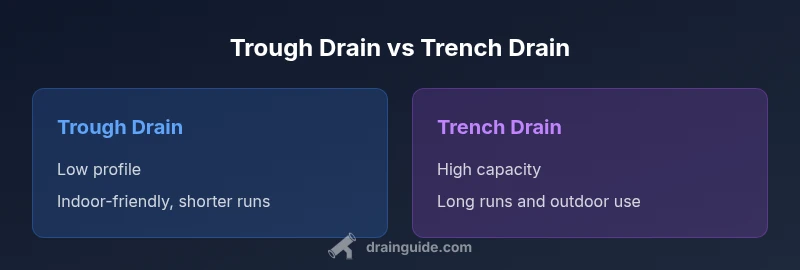
TL;DR: Trench drains handle higher water volumes and longer runs, making them ideal for outdoors and driveways. Trough drains offer a lower profile and easier installation in tight spaces, perfect for indoor areas like basements or garages. For most homeowners, choose trough when space and aesthetics matter, and trench when you expect large flows or longer drainage runs.
Understanding trough drain vs trench drain: definitions and typical use cases
Trough drain and trench drain are two common channel drainage solutions used in homes and curb-to-curb installations. When homeowners search for trough drain vs trench drain, the goal is to select a system that fits space, flow, and maintenance needs. A trough drain is a low-profile channel that often sits flush with the floor or surface, making it ideal where clearance matters. A trench drain is a longer, often deeper channel with a grate, designed for higher flow and exterior exposure. The right choice depends on water volume, run length, substrate, and climate. Across Drain Guide analyses, we emphasize sizing for peak rainfall events and ensuring proper slope to avoid standing water.
Design differences: capacity, slope, and materials
The core design differences between trough drains and trench drains center on capacity, depth, materials, and grate options. Trench drains are typically built to carry higher flow rates across long runs, often with a robust grate that resists debris and wear. Trough drains prioritize a slim profile, ease of integration into finished spaces, and compatibility with lighter-weight materials. Both systems rely on a well-planned substrate and a continuous slope to direct water toward the outlet. Material choices vary by use case; troughs may use PVC or lighter metals, while trench drains often use polymer concrete, steel, or heavy-duty composites. Always match material strength to expected loads and environmental exposure.
When to choose a trough drain
Trough drains shine in indoor or space-constrained applications. If floor-to-door clearance is tight, a low-profile trough can fit under cabinets, in basements, or inside garages without changing floor height. They’re well-suited for small patios with limited run lengths, interior lobbies, or shower floors where aesthetics matter and the water volume remains moderate. Trough drains also offer simpler installation in some scenarios and can be easier to modify for future bathroom or utility room reconfigurations. Drain Guide recommends sizing the trough for peak water loads even in compact spaces to avoid unexpected overflows.
When to choose a trench drain
Trench drains excel where water volume is high or runoff must be managed across long distances, such as driveways, outdoor patios, or commercial entrances. The longer channel and heavy grate are designed for exterior exposure, weathering, and debris-rich runoff. They handle larger volumes and can be extended with multiple sections to cover extensive areas. Installation often requires a more substantial subbase and careful grading, but the payoff is lower risk of pooling in exposed environments and better long-term capacity. Drain Guide notes that trench drains deliver superior performance for high-flow scenarios when properly sized.
Installation considerations: substrates, slope, and permits
Successful installation hinges on proper substrate preparation, consistent slope, and appropriate outlet connections. A rough or uneven subbase can cause settling and cracking in either trough or trench systems, compromising performance. Slope direction should lead water toward the outlet with a gentle, continuous incline—too little slope invites standing water, too steep a slope increases installation costs. In exterior applications, local codes may require permits, drainage permits, and compliance with water-quality standards for debris and sediment capture. Always verify zoning requirements before beginning a project.
Maintenance, longevity, and accessibility
Maintenance for trough and trench drains focuses on keeping the grate clean and the channel free of sediment and debris. Regular inspection and periodic cleaning prevent clogs and ensure consistent flow. Trough drains in interior spaces may require less frequent exterior exposure maintenance, but care should be taken to prevent damage from foot traffic or heavy equipment. Exterior trench drains may demand more frequent grate checks due to leaves and sediment. A well-sealed grate and a properly sized outlet system contribute to longevity in both options.
Cost considerations and value over time
Cost is driven by length, materials, and labor. Trough drains generally present a lower upfront cost for short, interior runs and may require simpler installation. Trench drains, especially for long exterior runs or high-flow scenarios, incur higher material and labor costs but deliver greater long-term capacity and reliability in demanding weather. Drain Guide emphasizes evaluating total cost of ownership, including maintenance frequency, potential clog management, and outlet repair, to determine value over the system’s life.
Case studies and installation tips
Consider a basement workshop with a puddle-prone corner: a shallow trough drain with a small grate might suffice, provided the load and slope are correctly calculated. In contrast, a long driveway with seasonal storms benefits from a trench drain system with modular sections and a reinforced grate. When sizing, calculate the expected peak water flow and compare it to the drain’s advertised capacity. Always include a clean-out access point and plan for easy grate removal for maintenance. Drain Guide’s practical tips stress measuring for both width and depth along the intended run and verifying outlet compatibility with your existing drainage network.
Compatibility with codes, permits, and existing systems
Drainage projects must align with local building codes and, in some areas, environmental regulations. Exterior trench drains may require weatherproofing, sediment traps, and gravel beds, while interior trough drains must harmonize with the finished floor and subfloor structure. Before purchasing materials, consult your local building department or a licensed professional to confirm permit requirements and ensure drainage system compatibility with your home’s plumbing and stormwater plans. Drain Guide recommends documenting measurements, outlet size, and slope to support code compliance discussions.
Comparison
| Feature | Trough drain | Trench drain |
|---|---|---|
| Best for | Low-profile indoor applications and tight spaces | Exterior, long runs and high-flow areas |
| Typical installation | Close-to-floor channels with minimal height | Long, reinforced channels with heavy gratings |
| Flow capacity | Lower to moderate flow per unit length | Higher flow capacity per unit length |
| Materials | PVC, fiberglass, or light-duty metals | Polymer concrete, steel, or heavy-duty composites |
| Maintenance | Easier access in interior spaces; fewer outdoor elements | Grates require periodic cleaning and can clog with debris |
| Cost considerations | Typically lower upfront for basic troughs | Higher upfront and installation costs for long exterior runs |
Positives
- Both options deliver continuous drainage and can be sized to fit anticipated water volumes
- Trough drains offer quick installation and low clearance impact
- Trench drains provide higher capacity for outdoor or long-run drainage
- Modular designs allow for future expansion or reconfiguration
- Grate options and materials can be selected to balance aesthetics and durability
Cons
- Wrong sizing or slope can cause pooling or overflow
- Exterior trench drains demand solid subbases and proper weatherproofing
- Maintenance access may require temporary disruption in some layouts
Choose trough drains for space-constrained interiors; opt for trench drains when outdoor flow and long runs are dominant
Trough drains excel in tight spaces with a minimal footprint, while trench drains offer superior capacity for exterior, long-run drainage. Proper sizing and slope are critical for both.
Got Questions?
What is the main difference between trough drain and trench drain?
The main difference lies in profile and capacity. Trough drains are low-profile and ideal for indoors with moderate flow, while trench drains are deeper and designed for higher flow and longer outdoor runs. Proper sizing and slope remain critical for both.
Trough drains are low-profile and indoors-friendly, while trench drains handle higher outdoor flows. Size and slope matter for both.
Can trough drains be used outdoors?
Yes, trough drains can be used outdoors if there is adequate space and a suitable subbase. They are best for moderate flows and shorter runs where a slim profile is beneficial.
Trough drains can be outdoors if space and subbase are adequate.
Are trench drains more expensive than trough drains?
In general, trench drains incur higher upfront material and installation costs due to longer runs and heavier components. However, for large outdoor areas they may offer better long-term value by handling higher flows with less risk of overflow.
Trench drains usually cost more upfront but can be more cost-efficient long-term in high-flow outdoor projects.
What maintenance do both require?
Both require periodic cleaning of the grate and channel to prevent clogs. Exterior drains may need more frequent debris removal after storms or leaf fall.
Regular grate cleaning keeps both systems flowing smoothly.
How do you measure capacity for a trench or trough drain?
Capacity is based on expected water load, run length, and slope. Start with a conservative estimate and verify with the manufacturer’s flow charts during planning.
Estimate water load and slope, then consult flow charts to verify capacity.
The Essentials
- Assess water volume and space before choosing
- Trough drains suit low-profile indoor spaces
- Trench drains excel in exterior, high-flow settings
- Plan slope and substrate carefully to avoid pooling
- Coordinate with Drain Guide for installation tips