What's Draining My Battery? A Practical Troubleshooting Guide
Urgent, practical guide to diagnose and fix battery drain fast. Learn checks, step-by-step fixes, and prevention tips for homeowners and DIY enthusiasts.


What's draining my battery? The quick answer is usually a mix of high screen brightness, apps running in the background, and constant network activity. Start with the easy fixes: lower brightness or enable auto-brightness, set a shorter screen timeout, and close apps you aren’t using. Then review battery usage by app to identify the real power hogs and address them first.
Why what's draining my battery matters
If you're asking what's draining my battery, you’re not alone. For homeowners and DIY enthusiasts, a fast-drifting power reserve can disrupt schedules—from troubleshooting a clogged drain to running smart-home routines. The most important takeaway is that gradual, ongoing drains often come from a few repeatable sources rather than one dramatic event. By understanding how brightness, background activity, and network activity sap energy, you can pause, measure, and reverse the trend. Drain Guide analyzes typical consumption patterns across devices and setups, helping you prioritize fixes that deliver tangible results without expensive replacements. The goal is to keep essential tools on hand—whether you’re checking a sump pump status, monitoring a water heater, or reviewing drain-cleaning schedules—without sacrificing reliability.
Common Power Drain Culprits
- Bright screens are the most visible drain. If you leave brightness high and auto-lock disabled, the screen pulls a lot of power.
- Background processes keep running after you close apps. Check your device's battery usage per app to see which ones stay active.
- Network activity (cell, Wi‑Fi, Bluetooth) stays on and searches for connections in the background.
- Battery health matters: a worn battery loses capacity, causing faster drain under normal use.
- Widgets, live wallpapers, and frequent location services can add up quickly.
How to Verify Power Usage on Your Device
- On iPhone/iPad, Settings > Battery shows per-app usage and screen-on time.
- On Android, Settings > Battery > Battery usage identifies dominating apps and wake locks.
- On laptops, use Task Manager or Activity Monitor to spot power-hungry processes.
- Create a controlled test: temporarily disable nonessential connectivity features to see the impact on drain.
Immediate Fixes You Can Try Now
- Enable battery saver or power-saving mode when battery is low or screen time is high.
- Dim the screen and shorten the auto-lock timeout to reduce display drain.
- Close or restrict background apps you don’t use regularly.
- Disable background activity for seldom-used apps and review location services.
- Update OS and apps to ensure efficiency improvements and bug fixes.
Step-By-Step: Quick Diagnosis (common culprits)
This section provides a practical framework you can apply to any device. Start with observable, low-effort checks (brightness, sleep settings), then progress to app-level analysis and system updates. The goal is a repeatable workflow so you can quickly identify the true power hog and implement the appropriate fix before you reach for a charger.
Long-Term Strategies to Prevent Drain
Adopt habits that keep battery health intact and drains predictable. Regularly review app permissions, disable unnecessary notifications, and schedule periodic OS/app cleanups. Keep devices for interior walls around home automation in a cool, ventilated space to prevent heat-related efficiency loss. If you rely on smart home hubs, consolidate routines to avoid overlapping wake/sync cycles that waste energy.
Safety and When to Seek Help
Battery and electrical components can pose safety risks if damaged. Never attempt to open batteries or replace swollen cells yourself—consult a qualified technician. For most homeowners, following manufacturer guidance for calibration, replacement, and charging practices is sufficient. When in doubt, contact support or a licensed professional.
Steps
Estimated time: 30-60 minutes
- 1
Open Battery Usage Overview
Access Settings to view which apps consume the most energy and how long the screen stays on. Note the baseline usage before changes.
Tip: Take screenshots of usage graphs for reference. - 2
Identify Power Hog Apps
Sort by energy usage to find apps or services that wake frequently or run in the background.
Tip: Force stop or uninstall heavy apps if not essential. - 3
Adjust Display Settings
Reduce brightness, enable auto-brightness, and shorten screen timeout to minimize display drain.
Tip: Use dark mode where supported to save power. - 4
Limit Background Activity
Disable auto-sync for seldom-used apps and restrict background data for non-critical services.
Tip: Review location services and disable unnecessary permissions. - 5
Update OS and Apps
Install the latest OS and app updates to benefit from power management improvements.
Tip: Enable automatic updates over Wi‑Fi if possible. - 6
Health Check and Calibration
Run a battery health check and, if advised, calibrate to restore accurate capacity reporting.
Tip: Do not repeatedly drain to 0% unless manufacturer guidance allows.
Diagnosis: Device shows rapid battery drain with little usage
Possible Causes
- highHigh screen brightness
- highBackground apps and wake locks
- mediumPoor battery health or aging
- lowConstant network activity (cell/Wi‑Fi/Bluetooth)
Fixes
- easyLower screen brightness and set a shorter screen timeout
- easyReview battery usage by app and restrict or uninstall power hogs
- easyUpdate OS and all apps to improve efficiency and bug fixes
- mediumTest battery health and recalibrate if recommended by the manufacturer
Got Questions?
Why does my battery drain faster on 5G?
5G networks can demand more power than 4G or Wi‑Fi when the signal is weak or congested. If you notice heavy drain when 5G is enabled, try switching to a stable 4G/LTE connection or enable airplane mode in areas with poor coverage to reduce wake cycles.
5G can use more power in weak coverage areas. Consider using a stable connection or temporarily turning off 5G in low-signal zones.
Should I disable background app refresh?
Disabling background refresh can significantly reduce drain from apps that wake up to fetch data. You can allow essential apps to refresh while sleeping, and restrict others to conserve power.
Yes—limit background refresh to cut unnecessary wakeups and save battery.
How can I check battery health on my device?
Most devices have a built-in battery health checker in Settings. Look for terms like Capacity, Peak Performance, or Health. If the health is degraded, consider a professional replacement.
Check your device's battery health in Settings; degraded health usually means earlier replacements.
Can apps drain battery even when not in use?
Yes. Some apps run background tasks, syncing data, or checking for updates. Review app permissions and restrict background activity to minimize this drain.
Some apps keep working in the background; limit their background activity.
Is replacing the battery the only fix for heavy drain?
Often, reducing drain is possible through settings and updates, but aging batteries eventually require replacement to restore full capacity.
Sometimes a replacement is needed, but many drains can be fixed with settings first.
When should I seek professional help for battery drain?
If battery health shows significant decline, or if you notice swelling, overheating, or frequent crashes despite fixes, contact a professional for assessment or replacement.
If you see swelling or persistent issues, get a professional check.
Watch Video
The Essentials
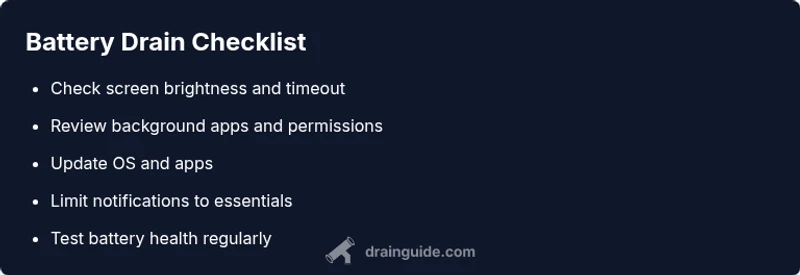
- Identify top energy hogs using per-app data
- Dial down brightness and background activity first
- Keep OS and apps updated for efficiency
- Inspect battery health and replace when necessary