Why is My Battery Drain So Fast? A Practical Troubleshooter Guide
Discover practical, step-by-step methods to diagnose why your battery drains quickly, with actionable fixes, safety tips, and prevention strategies for 2026.


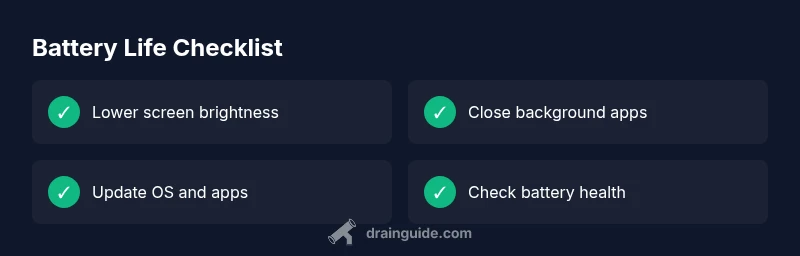
Most battery drain comes from high screen brightness, many background apps, and aging batteries. Quick fixes: 1) lower brightness and disable auto-brightness, 2) close or restrict background activity and push notifications for unused apps, 3) enable Battery Saver or Low Power Mode and check battery health. If the issue persists, run OS updates and consider hardware replacement if needed.
Understanding the Issue
If you’ve ever wondered why is my battery drain so fast, you’re not alone. Modern devices run heavy software, often with screens bright, radios active, and background processes quietly gobbling power. In 2026, many drain problems are not a mystery but a mix of simple misconfigurations and aging hardware. Drain Guide emphasizes that a methodical approach helps homeowners fix issues quickly and avoid costly replacements. By starting with the basics and moving toward targeted diagnostics, you’ll regain control over your device’s battery life and minimize downtime.
In practice, the most common culprits are easy to address: screen brightness, background activity, and a battery that has lost capacity. Understanding how each factor drains power sets you up for fast wins and longer-term savings. Drain Guide’s team notes that even devices with excellent hardware can suffer if software settings aren’t optimized. The goal is to reduce the energy demand while preserving functionality, so you get more use from each charge.
Remember: the strategy is 70% about discovery and 30% about action. A clear plan can save you time, frustration, and needless wear on the battery.”
Quick Checks You Can Do Today
There are several fast checks you can perform to curb rapid battery drain without needing tools or expertise. First, reduce screen brightness and disable auto-brightness so the display doesn’t stay disproportionately bright in dark rooms. Second, review active apps and background processes; shut down or restrict those that run continuously in the background. Third, turn off unnecessary network features like Location Services, Bluetooth, and background app refresh for apps you don’t use regularly. Fourth, enable Battery Saver or Low Power Mode when you’re not charging and you’re away from a power outlet. Fifth, ensure the OS and critical apps are up to date, as updates often include energy efficiency improvements. Finally, if the device has a measurable health decline, run a built-in battery health check or diagnostic tool. These steps address the majority of cases and buy you time while you assess hardware readiness.
Drain Guide recommends documenting each change so you can see what helps and what doesn’t. This habit also makes it easier to explain the issue to a technician if you need professional help later.
If you still notice rapid drain after these checks, you’re likely dealing with a deeper software conflict or an aging battery that needs replacement. The good news is that most users experience noticeable improvement after the simple steps outlined above.
Diagnosing Through a Simple Flow
A practical diagnostic flow moves from observable symptoms to concrete causes and solutions. Start with the symptom: big drops in battery life after minimal use, or a device that dies after a short period of light use. Next, consider the most common causes: screen brightness, background activity, and battery health. If these aren’t the culprit, examine network use, app-specific drain, and recent software changes.
At this stage, you’ll form a working hypothesis for each probable cause, then test each one with a targeted fix. If the drain recurs after a specific change, you’ve isolated the culprit. If you’re unsure, repeat the process while keeping changes modest so you can track impact precisely. Drain Guide’s approach helps homeowners stay organized and avoid guesswork.
Safety and backups come first: ensure you have data backed up before performing major resets or battery replacements. If you’re uncomfortable performing any step, seek professional help sooner rather than later.
Common Causes and How to Spot Them
The most frequent drivers of rapid battery drain include high screen brightness, a proliferation of background apps, and aging battery capacity. A phone or tablet with a cracked battery may also show unusual power loss. Network conditions can force constant radio activity, especially with poor signal strength. Background syncing and location services can quietly drain power as well. Finally, a recent OS or app update can introduce energy-hungry features or bugs that accelerate drain. By monitoring usage statistics, you can differentiate between a temporary spike and a persistent issue that requires action. Drain Guide emphasizes checking the simplest items first and moving toward more complex diagnostics only as needed.
To detect software-related drain, compare battery usage by app across a few days of typical use. If a single app shows disproportionate drain after an update, consider reinstalling it or replacing it with an alternative. If multiple apps with similar behavior appear, the system or OS is likely involved. For hardware-related drain, only a battery replacement will restore expected performance. In all cases, keep a log of power usage to guide future adjustments.
Drain Guide’s 2026 findings reinforce that proactive maintenance reduces long-term costs and extends device life. A practical maintenance routine—checking updates, background activity, and screen settings—translates into meaningful gains over time.
Practical Fixes and When to Try Them
Fixes fall into a natural order: start with the simplest changes and progress to more involved actions only if needed. First, adjust display settings and limit background activity. Second, check for rogue apps or processes that started after a recent update. Third, update your OS and essential apps, then reboot to apply changes. Fourth, examine battery health in the settings panel (or a manufacturer-provided diagnostic tool) to assess capacity loss. If health is degraded, plan for a battery replacement. Fifth, test if hardware components like a loose connector may be causing power loss and have a professional check if you suspect hardware faults. Finally, for devices with removable batteries, consider replacing the battery when capacity falls below a practical threshold.
As you work through fixes, verify impact after each step. If the drain rate drops, you’ve identified a causal factor. If not, move to the next recommended fix. Routine checks every few weeks can prevent future drains from becoming urgent issues. Drain Guide’s approach is to empower homeowners to solve problems without getting stuck in a cycle of trial and error.
Safety, Pitfalls, and Best Practices
Battery work carries safety considerations. Never attempt to open a device beyond what your warranty covers, and avoid using unknown third-party chargers or tools. Battery replacement should be performed using manufacturer-approved parts and procedures to prevent damage or fire risk. Avoid charging devices on flammable surfaces and never leave a device charging unattended for extended periods. A common pitfall is skipping updates or ignoring battery health data; both habits increase the likelihood of sudden drain or device failure. Always back up data before performing major resets or service, and seek professional help if you encounter signs of swelling, overheating, or malfunctioning charging ports. By following standard safety practices and sticking to validated fixes, you reduce risk and extend device longevity.
Drain Guide emphasizes safety as the foundation of any repair plan. If you’re unsure about your device’s battery condition or if a fix seems risky, contact a technician or the device manufacturer’s support line. A cautious, informed approach protects you and your device while delivering reliable results.
Steps
Estimated time: 60-90 minutes
- 1
Check display brightness and auto-brightness
Open display settings and ensure brightness is set to a comfortable level, preferably with auto-brightness disabled in dim environments. Observe whether the drain rate improves after this change.
Tip: Keep brightness around 40-60% during normal use to maximize battery life. - 2
Identify power-hungry apps
Go to battery usage in settings and list apps by energy consumption. Focus on those with the highest drain and decide whether to restrict, update, or uninstall them.
Tip: Some apps appear heavy only after recent updates; re-check after reinstalls. - 3
Limit background activity
Disable background refresh for apps you don’t need constantly updating. Turn off location services for apps that don’t require it in the foreground.
Tip: Use battery saver modes during heavy use or travel. - 4
Update OS and apps
Install the latest OS update and update essential apps. Updates often include fixes for energy inefficiencies and compatibility improvements.
Tip: Restart the device after updates to ensure changes take effect. - 5
Check battery health and charging patterns
Run the built-in battery health check or diagnostic tool. If capacity is significantly degraded, plan for a replacement battery or service.
Tip: Avoid high-power charging devices and avoid frequent full discharges. - 6
Review network and radio usage
If you have poor signal, the device will use more power communicating with a distant tower. Try enabling Airplane Mode in areas with no service, or switch to Wi‑Fi when available.
Tip: Keep Wi‑Fi on when in range of a stable network. - 7
Consider hardware checks
Inspect charging port, battery connector, and cables for wear. If you suspect a hardware fault, seek professional service rather than attempting risky DIY fixes.
Tip: Use manufacturer-approved parts for replacements. - 8
Plan for replacement and prevention
If battery health is poor, schedule a replacement. Maintain good charging habits: avoid overnight charging, use original chargers, and monitor app behavior.
Tip: Create a quarterly battery health check routine.
Diagnosis: Device shows rapid battery drain even with light usage
Possible Causes
- highHigh screen brightness or adaptive brightness
- highMany apps running in the background or frequent background activity
- highAging or degraded battery capacity
- mediumPoor cellular signal causing the radio to stay active
- mediumLocation services and push notifications constantly active
Fixes
- easyLower screen brightness and disable auto-brightness
- easyClose or restrict background apps and disable background refresh for non-essential apps
- easyUpdate OS and critical apps to the latest version
- mediumCheck battery health and consider replacement if degraded
- hardReset settings or perform a factory reset as a last resort
Got Questions?
What causes battery drain on smartphones and tablets?
Battery drain is usually caused by bright screens, many background apps, and aging batteries. Software updates or faulty settings can also contribute. Checking usage stats helps identify the primary culprits.
Most drains come from the screen, background apps, or an aging battery; start by checking usage and settings.
How can I tell which app is draining my battery the most?
Open the device’s battery settings to view a breakdown by app. Sort by energy usage to identify top drains, then consider updating or uninstalling those apps if they’re unnecessary.
Check the battery chart in settings to see which apps use the most power.
Does using Battery Saver really extend my battery life?
Battery Saver reduces system activity and background tasks, which can extend runtime. It’s most effective during heavy use or when charging isn’t convenient.
Battery Saver cuts background activity to stretch charge, especially when you’re away from power.
When should I replace my device battery?
If the battery health shows significant degradation or the device can’t hold a charge despite fixes, replacement is often the best long-term solution.
If the battery health is poor and fixes don’t help, replacement is usually best.
Can charging habits affect battery longevity?
Yes. Avoid overnight charging, use the original charger, and don’t let the battery stay at 0% for long periods. Regular moderate charging is gentler on most batteries.
Charging habits matter; use steady charges and avoid letting the battery stay empty or full for too long.
Watch Video
The Essentials
- Start with the simplest fixes (brightness, background apps).
- Check battery health and OS updates to address aging hardware.
- Monitor usage to identify power-hungry apps and settings.
- Replace aging batteries when capacity is degraded.
- Maintain safe charging habits to prevent future drain.