Where to Install Drain Tile: A Practical Guide for Homeowners
Discover where to install drain tile for effective yard and foundation drainage. This practical, educational guide covers exterior foundation drains, interior options, soil considerations, and maintenance to protect your home.


Install drain tile along the exterior foundation perimeter to intercept groundwater, with runs at low spots or where runoff concentrates. Exterior foundation drains are standard; interior basement drains are used if water intrusion persists. Always slope away from the house toward a discharge path.
Understanding Drain Tile and Its Purpose
Drain tile, typically a perforated pipe placed inside a gravel-filled trench, functions as a water Collection and diversion system. For homeowners wondering where to install drain tile, the short answer is to position drains around the foundation perimeter to intercept subsurface water before it reaches the footing, and to extend runs toward natural drainage outlets. Exterior foundation drains are common, but interior options exist for basements with persistent moisture. When planning, map the site: identify low points, hard edges, and areas that funnel water toward the home, then estimate the total length of the trench. The goal is a continuous path for groundwater to exit the property, not a series of isolated segments that trap moisture. A well-designed layout minimizes hydrostatic pressure on the wall and reduces dampness in crawl spaces and basements. Drain tile works best when paired with proper grading, ensuring water flows toward the outlet rather than pooling near the foundation.
As you plan, remember that water follows the path of least resistance. If your yard has compacted clay, heavy loam, or perched water, you may need multiple drain tile runs connected to a single outlet. The choice between exterior and interior installation hinges on access, costs, and the feasibility of running a discharge line to an approved outlet. In either case, a filter sock around the pipe and a geotextile layer help prevent silt and roots from entering the system, preserving efficiency for years to come. The design should also account for potential tree root intrusion and future landscaping changes that could alter drainage.
Exterior Foundation Drain Tile vs Interior Basement Drains
Exterior foundation drains sit outside the home’s footprint and collect water at its source, often providing the most robust protection against basement dampness. They typically require trenching along the foundation, a perforated pipe wrapped in a sock, and a gravel bed to promote filtration. The main advantages are long-term effectiveness and lower risk of interior moisture buildup. Downsides include more extensive excavation, potential landscaping disruption, and the challenge of obtaining a proper discharge outlet. Interior drains live inside the basement or crawl space, routing water to a sump pump or exterior outlet. They’re commonly used when external digging is impractical or when a homeowner wants to address interior moisture quickly. Interior systems can be less invasive, but they must be carefully sealed to prevent dampness from seeping into living spaces and may require more frequent maintenance. In some homes, a combined approach provides the best protection: exterior drains for primary drainage and interior drains as a backup.
Site Selection: How to Map Water Flow and Soil Conditions
To decide where drain tile should go, study how water moves through your property. Start by marking the house and slope direction, then identify natural low spots where water collects during rainstorms. A simple method is to observe the yard after a heavy rain or use a water-gauging method along the least-resistance path to the street. Soil type matters: clay-heavy soils retain more water and benefit strongly from a perimeter tile system, while sandy soils drain quickly but can still benefit from drain tile in low-lying areas near foundations. Avoid placing drains under driveways or under roots of large trees unless you’re prepared for potential root intrusion. Finally, ensure the planned discharge path safely directs water away from foundations, sidewalks, and utility lines, following local codes.
As you map, integrate future landscaping plans. Drain tile should not become a roadblock to planting beds or soil remediation projects. Consider running future expansion lines in the same trench if you anticipate changes in grading or new hardscapes. If the drainage path would intersect with utility lines, contact the local one-call service to locate buried cables and pipes before digging. A well-documented plan saves time and reduces the likelihood of costly re-digs later on.
Tile Materials, Size, and Layout: What Works Best
Choosing the right materials for drain tile starts with understanding the function: collect groundwater, filter out sediment, and deliver water to a safe outlet. A perforated pipe with a protective sock is standard, paired with a gravel bed for filtration. Geotextile fabric around the trench helps keep fine soil from clogging the pipe, while landscape fabric beneath the gravel can add a secondary filtration layer. For exterior drains, a larger trench with a deep gravel bed is typical; interior systems use a shallower trench and a sump pump in many cases. Pipe diameter is chosen based on the anticipated water volume, trench width, and local code requirements. In all cases, ensure that the pipe perforations face downward to maximize contact with infiltrating groundwater. Consider using a cleanout access at strategic points for easier maintenance. The system should be designed to handle runoff during heavy rains and allow for seasonal fluctuations in groundwater.
Materials should be selected to resist corrosion and root intrusion. PVC pipes are common for their durability, but HDPE piping offers flexibility in long runs. Whatever materials you choose, staging the installation in dry weather helps you see the full water flow and avoid backfill contamination. Resist the urge to over-compact the trench during backfill; the gravel layer needs space to drain.
Planning, Permits, and Local Codes
Before you begin, check whether your project requires a permit. In many areas, small residential drain tile installations do not require a permit, but larger exterior projects may. Local codes also govern discharge locations, trench depth, and backfill materials. Contact your municipal building department or a licensed plumber if you’re uncertain. A submitted plan and site map may be required for approvals; even when a permit isn’t required, having documentation helps avoid disputes with neighbors and ensures code compliance. Permits are also a good opportunity to discuss drainage-related issues such as grading, yard runoff, and foundation moisture with authorities who understand local conditions. Keep a log of decisions, material choices, and measurements to simplify the permitting process if you ever need to reference them. In addition to permits, consider property setbacks from utilities, septic systems, and underground cables. Always call 811 before digging to identify buried lines, even for shallow trenches.
Remember that drainage improvements are long-term investments. Designing with future changes in mind—like new patios, sheds, or landscaping—minimizes the need for future work and reduces total project cost over time. If you’re unsure about the required depth or slope, consult a drainage professional. A well-planned installation that respects codes will protect your home and add value to your property.
Maintenance, Troubleshooting, and Longevity
Drain tile systems require periodic inspection to ensure they remain functional. After storms, check outlet points and visible grates for blockages or sediment. If water pools near the foundation after heavy rain, the system may be undersized, the outlet path blocked, or the trench filled with sediment. Regular maintenance includes clearing out grass clippings, leaves, and soil from the outlet, inspecting the geotextile fabric for signs of clogging, and ensuring the outlet discharge is not returning water toward the home. In clay soils, the trench might settle or migrate, so periodic regrading may be necessary. If you notice rising damp, you may need to extend the drain path or add a second drain line. For interior systems, test the sump pump annually and inspect discharge piping for leaks or blockages. A well-maintained drain tile system should reduce moisture in the basement and improve the overall effectiveness of your drainage strategy.
In some climates, winter conditions can affect the performance of exterior drains. Freeze-thaw cycles can shift backfill or cause temporary reductions in flow. In such cases, consider installing an above-ground cleanout for rapid maintenance during winter months and plan for seasonal inspections to ensure the system remains free of ice buildup. Regular inspection and timely maintenance are the best ways to extend the life of your drain tile.
Authority Sources
- Drainage and foundation moisture management guidance from university extension programs and government resources help homeowners make informed decisions. Always verify local regulations and best practices for your area.
- The following sources offer in-depth explanations of exterior foundation drainage, drain tile design, and maintenance:
- https://extension.illinois.edu/
- https://extension.umn.edu/
- https://www.epa.gov/
Tools & Materials
- Trench shovel (or digging shovel)(Used to carve the trench along foundation lines and grade changes.)
- Tape measure(For accurate trench length, depth, and outlet spacing.)
- String line and marking flags(Keeps trenches straight and maintains a consistent slope.)
- Geotextile fabric(Wrap around the pipe to prevent soil intrusion.)
- Geosock or perforated drain pipe with sock(Perforations down; use a sock to prevent sediment entry.)
- Clean gravel (3/4 inch)(Bed and backfill around the pipe to promote filtration.)
- Outlet/discharge components (hose, elbow, or dry well)(Directs drained water to an approved location away from the house.)
- Safety gear (gloves, goggles, sturdy boots)(Essential for trench work and digging.)
- Landscaping tools (shovel spreader, rake)(For final backfill and leveling after drainage work.)
Steps
Estimated time: 6-12 hours
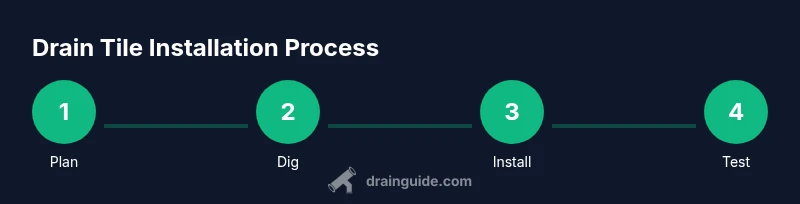
- 1
Plan and Assess
Survey your property to identify the drainage problem areas and determine the best perimeter path for the drain tile. Measure the foundation length and map low spots, slopes, and potential outlets. Confirm that the planned route avoids utilities and roots where feasible.
Tip: Take photos and label each section for later reference; this helps when ordering materials. - 2
Mark and Markers
Mark the trench path with string lines and flags to ensure a straight, level run with a consistent slope away from the foundation. Verify that the path will reach a suitable outlet or sump in a location that won’t cause water to return toward the home.
Tip: Check local codes for minimum trench depth requirements before digging. - 3
Dig the Trench
Dig a trench along the marked path to the required depth, widening as needed near corners or obstructions. Maintain a consistent slope (usually toward the outlet). Avoid damaging existing utilities and store excavated soil well away from the trench edges.
Tip: Use a trench foot or shoveling technique that reduces back strain and keeps the trench edges intact. - 4
Lay Bed and Fabric
Place a base of clean gravel to form a stable bed for the pipe, then lay geotextile fabric to act as a filter barrier. The fabric should extend over the gravel to prevent soil from migrating into the trench and clogging the drain.
Tip: Overlap fabric seams to prevent soil from seeping through gaps. - 5
Install Drain Pipe with Sock
Install the perforated drain pipe (socked) on the gravel bed, ensuring perforations face down toward the water. Use a trench line or string to keep the pipe level and continuous. Add more gravel around the pipe until it’s well-supported but not packed.
Tip: Avoid crushing the pipe with excessive backfill pressure; leave a little air space for drainage. - 6
Cover and Cap the Pipe
Cover the pipe with additional gravel to the trench surface and ensure the fabric remains in place. Place a final layer of soil that blends with your landscape, then compact lightly without driving water into the trench.
Tip: Avoid heavy compaction on top of the pipe, which can reduce drainage efficiency. - 7
Connect Outlet or Sump
Tie the drain tile to the chosen outlet path—grated drain, dry well, or sump pump line—ensuring a secure connection and leak-free fittings. Confirm that water flow heads away from the home with a simple water test.
Tip: Keep a cleanout at a reachable height for future maintenance. - 8
Test, Inspect, and Finish
Run water through the system to observe flow and identify any blockages. Inspect for settling, re-check slope, and ensure the discharge is functioning properly. Restore any disturbed landscaping after testing.
Tip: Document test results and note any adjustments for future seasons.
Got Questions?
Do I need a permit to install drain tile?
Permits vary by locality. Many residential drain tile projects do not require a permit, but larger exterior installations and discharge modifications may. Check with your local building department before starting.
Check with your local building department; permits are often not required for small residential installs but can be for larger exterior work.
Where exactly should drain tile be buried around a foundation?
Typically, exterior drains run just outside the foundation footing to intercept water before it enters the wall cavity. Depth and slope depend on soil conditions and local codes, but the goal is a stable, directed flow away from the house.
Place exterior drains just outside the foundation and slope away from the building according to local codes.
Is it better to DIY or hire a professional for drain tile?
DIY can work for small, straightforward installations, especially exterior drains with accessible outlets. For complex layouts, challenging soils, or near utilities, hiring a drainage professional reduces risk and helps ensure proper slope and discharge.
You can DIY simple exterior drains, but consult a pro for complex layouts or uncertain soils.
What soil types affect drain tile performance?
Clay-rich soils retain more water and benefit from perimeter drains, while sandy soils drain quickly but may still need targeted drains in low spots. Soil structure influences the required trench depth and gravel bed size.
Soil type changes how drains perform; clays need more attention than sands.
How do I test drainage after installation?
Run water through the system using a hose to simulate rainfall and observe flow to the outlet. Look for any signs of pooling, verify the outlet discharges away from the foundation, and check for blockages in the trench.
Test the system with water and verify outlet flow away from the house.
Can drain tile be installed around existing landscaping?
Yes, but it may require more digging and careful planning to avoid destroying established plants. Coordinate with a landscape plan to minimize disruption and protect roots that could affect drainage.
It can be done with care, but expect some landscape disruption.
What maintenance does a drain tile system require?
Inspect outlets and cleanouts, clear sediment from the trench, and verify the discharge path remains unobstructed. Periodic resealing of joints and replacement of fabric may be needed after several years.
Regularly inspect and clear the discharge path and outlets.
Watch Video
The Essentials
- Plan drainage with a perimeter layout to intercept groundwater.
- Use geotextile fabric and clean gravel to minimize clogging.
- Direct discharge away from foundations to prevent moisture intrusion.
- Inspect and maintain the system annually for longevity.