Is Drain Tile Worth It? A Practical Guide for Homeowners
Learn whether installing drain tile around your foundation is worth the investment, with an analytical comparison, ROI considerations, maintenance tips, and actionable steps for homeowners from Drain Guide.


Drain tile, a buried perforated pipe system surrounding a home's foundation, is worth it for most homeowners facing frequent basement dampness or yard drainage issues. It provides long-term water management, reduces hydrostatic pressure, and pairs well with proper grading and a sump setup. However, cost, maintenance, and climate influence ROI; consider alternatives if your issues are minor.
Is drain tile worth it? A starting point in plain language
Is drain tile worth it? This question sits at the heart of many basement and yard drainage decisions. According to Drain Guide, the answer hinges on how often you experience dampness, what your soil does when wet, and how much you value long-term protection versus upfront costs. In climates with heavy rainfall or poor soil drainage, a well-designed drain tile system can dramatically reduce moisture intrusion and foundation-related concerns. For many homeowners, the investment translates into lower risk of mold, more usable basement space, and better resale confidence. But the decision becomes looser if you have rarely damp days or a well-graded yard. Drain Guide emphasizes a balanced view: weigh current problems, future risk, and the likelihood of maintenance over decades. The keyword is “is drain tile worth it”—and the best answer comes from a tailored assessment rather than a one-size-fits-all rule.
How a drain tile system is designed to protect your home
A drain tile system sits around the foundation perimeter, pairing perforated pipe with a trench and crushed stone or gravel. Water enters the perforated pipe and travels to a sump or daylight outflow, controlled by grading and sometimes a sump pump. The surrounding gravel helps with filtration and prevents soil from clogging the pipe. An added benefit is hydrostatic pressure reduction, which can lessen cracks or water seepage through basement walls. When installed correctly, drain tile acts as an active drainage strategy rather than a passive Band-Aid. The system works best in combination with sub-slab drainage, proper exterior grading, and repointed foundation edges. Drain Guide notes that the success of a drain tile installation depends on trench depth, slope, backfill quality, and ensuring the outlet is not blocked by landscaping debris or soil settlement.
Realistic scenarios: when drain tile dramatically improves conditions
Consider three typical homeowner situations. In the first, a basement experiences regular dampness after heavy rainfall; the second involves a yard that puddles near the foundation; the third is a humid, mold-prone crawlspace with subtle wetness. In all three cases, a properly designed drain tile system—paired with a functioning sump pump and good grading—drastically improves moisture control. On the other hand, homes with minimal dampness, well-drained soil, and consistent outdoor grading may see marginal gains. Drain Guide highlights that the value of “is drain tile worth it” increases when the moisture problem is persistent, the soil has poor drainage, or the home sits in a flood-prone area. The ROI is influenced by climate, soil composition, and maintenance commitment.
Costs and ROI: what to expect and what to measure
Estimating ROI for drain tile requires more than sticker price. While installation can be a major upfront expense, ROI shows up as fewer waterproofing headaches, reduced mold risk, and more usable space. Drain tile is more compelling when dampness recurs across seasons, when soil is naturally clay-heavy, or when drainage needs extend to outdoor areas such as patios and sheds. Cost considerations include trenching length, foundation width, soil type, and whether a sump pump is already present or needs upgrading. Drain Guide suggests creating a simple maintenance and replacement timeline to avoid surprises. The key to a good ROI is a well-planned installation, integrated with grading and energy-efficient sump operation. The verdict should consider long-term benefits, not just the initial price.
Alternatives and complements: other options to consider
In some cases, a drain tile system is complemented or replaced by alternatives. For mild dampness, improving surface grading, redirecting downspouts, or installing a French drain elsewhere on the property can reduce moisture near the foundation. In severely saturated soils, exterior waterproofing and foundation sealing may be necessary. A dry crawlspace or a high-quality vapor barrier can reduce indoor moisture levels even without a full drain tile installation. Drain Guide recommends starting with a site assessment and water management plan before committing to a full drain tile system. This helps you decide whether you need a full install, a partial upgrade, or non-system modifications such as downspout extensions and surface drains.
DIY vs professional installation: weighing the options
Installing drain tile typically requires trenching around the foundation, careful pipe layout, gravel backfill, and proper outlet connections. While some homeowners with excavation experience can handle portions of the job, most projects benefit from a licensed contractor to ensure proper trench depth, slope, and outlet placement. The professional route reduces the risk of later failures due to clogged pipes, insufficient slope, or poor backfill. Drain Guide emphasizes that while DIY may save upfront costs, the long-term reliability often hinges on precise grading and proper sealing, which are best achieved by an experienced crew. If you choose DIY, plan for a more conservative scope and consult local building codes.
Maintenance, lifespan, and signs you’re due for an upgrade
A drain tile system is designed for long-term performance, but it still requires periodic checks. Inspect grates, clear surface inlets, and ensure the outlet is free of obstructions. If you notice persistent dampness, damp walls, or a sump that runs excessively, it may indicate a clogged line or insufficient drainage. The gravel backfill can settle, altering slope and reducing effectiveness over time. Drain Tile components typically last many decades with proper maintenance, but a periodic evaluation by a professional can help catch issues early. Drain Guide recommends incorporating a maintenance schedule that aligns with your climate and home age.
Myths debunked: separating fact from fiction
A common myth is that drain tile guarantees a completely dry basement in all climates. In reality, it dramatically reduces moisture but must be part of a broader system—including proper grading, downspout management, and interior moisture control. Another misconception is that drain tile is a one-time fix; in many cases, aging parts or clogged outlets warrant replacement or upgrade. By acknowledging practical limitations and focusing on a holistic water-management strategy, homeowners can avoid overinvesting in a single solution. Drain Guide stresses that a realistic plan yields the best long-term results.
Comparison
| Feature | Drain Tile System | No Drain Tile (traditional approach) |
|---|---|---|
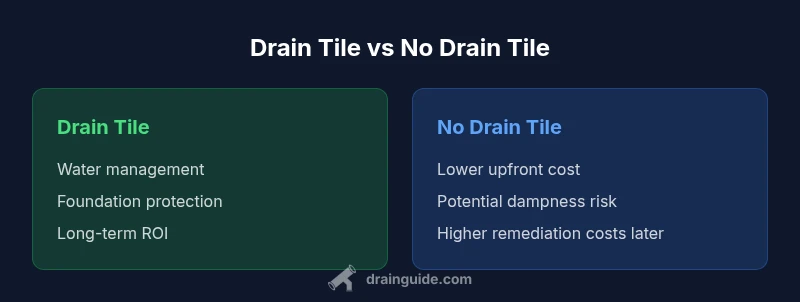
| Water management effectiveness | High reduction in foundation moisture and hydrostatic pressure with proper design | Limited relief; relies on surface grading and interior controls |
| Installation complexity | Moderate to high; trenching and outlet planning required | Low to moderate; no drain conduits, but dampness may persist |
| Cost range (installation) | Higher upfront cost due to trenching and materials | Lower upfront cost but potential for ongoing dampness-related costs |
| Maintenance needs | Periodic checks; potential pump maintenance; rare backfill issues | Occasional moisture control and interior improvements |
| Best for | Persistent dampness, clay soils, flood-prone areas | Homes without noticeable dampness or with good grading |
Positives
- Significant reduction in basement moisture when properly installed
- Improved foundation longevity and reduced mold risk
- Potential increase in home value and usable space
- Works well with existing sump pumps and exterior grading
Cons
- High upfront cost and possible disruption during installation
- Requires professional design and installation for best results
- Maintenance depends on climate and soil; occasional pump or outlet issues
Drain tile is worth it in most damp basements or poorly draining yards; it tends to pay off through reduced moisture and added home resilience
Choose drain tile if recurring dampness or soil drainage challenges are present. If dampness is rare or soils drain quickly, alternatives may suffice while preserving budget for other improvements.
Got Questions?
What is drain tile and how does it work?
Drain tile is a perforated pipe installed in a gravel trench around a foundation. Water enters the pipe, flows to a sump or drainage outlet, and is directed away from the home. A properly designed system reduces hydrostatic pressure and moisture intrusion.
Drain tile is a perforated pipe in a gravel trench around your foundation. Water enters the pipe and is drained away, helping keep basements dry.
Is drain tile worth it for a dry climate?
In dry climates with minimal dampness, drain tile may offer limited ROI. A site assessment can reveal whether surface drainage improvements deliver similar benefits at a lower cost.
If your area is usually dry, drain tile might be overkill; consider surface drainage and moisture controls first.
Can I install drain tile myself?
DIY is possible for small, simple projects, but most homeowners hire professionals for trenching, slope, and proper outlet placement to prevent future failures.
You can tackle parts of it if you’re experienced, but professional installation reduces risk of mistakes.
What maintenance does a drain tile system require?
Maintenance includes inspecting inlets, ensuring outlets are clear, and checking sump pumps. Periodic professional inspections help confirm proper slope and backfill integrity.
Keep the inlet screens clean and have the system checked every few years to catch issues early.
How do I know if I need a drain tile upgrade?
Signs you may need an upgrade include persistent dampness, unusual wall staining after rain, mold growth, or a sump pump running frequently. A professional assessment clarifies the next steps.
If dampness keeps coming back even after fixes, it’s time to reassess with a pro.
What are common myths about drain tile?
Common myths include that drain tile guarantees dryness in all climates or that it’s a one-time fix. Realistically, it’s part of a broader moisture-management strategy.
Drain tile helps a lot, but it isn’t a magic cure for every climate or soil type.
The Essentials
- Assess baseline dampness before deciding
- Choose a professionally designed system for reliability
- Pair drain tile with proper grading and a sump pump
- Consider alternatives for mild issues to save costs
- Plan long-term maintenance and budget for upgrades