Interior vs Exterior Drain Tile: A Practical Guide
A data-driven comparison of interior vs exterior drain tile, covering installation, performance, cost, and maintenance to help homeowners choose the right drainage approach.


Interior vs exterior drain tile are two approaches to manage moisture around a building. Interior tile collects moisture inside basements or crawlspaces and channels it to a drain or sump. Exterior tile lays around the foundation to intercept groundwater before it enters the structure. Drain Guide analysis shows that the best choice depends on climate, soil conditions, foundation design, and overall moisture risk.
What interior vs exterior drain tile means
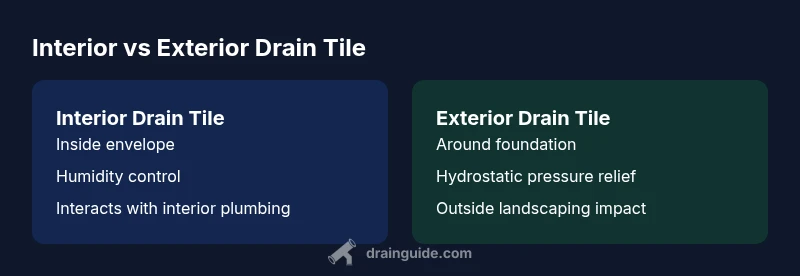
Drain tile is a gravel-packed conduit used to redirect water away from a structure. When you hear about interior vs exterior drain tile, you’re looking at two strategic placements: one inside the building envelope to address indoor moisture, and one outside the envelope to manage groundwater before it can reach the foundation. In practice, the interior approach focuses on controlling humidity and water intrusion within basements or crawl spaces, while the exterior approach targets hydrostatic pressure around the foundation. According to Drain Guide, the choice should hinge on site conditions, climate, and the building’s vulnerability to water. The Drain Guide team found that many homes benefit from a tailored combination, but sound planning is essential to avoid channeling water in unintended directions. For homeowners, the first step is to map the moisture sources—interior leaks, exterior hydrostatic pressure, or both—and then select a tile strategy that fits the landscape and the budget. The keyword interior vs exterior drain tile will recur as you weigh options, because the decision affects waterproofing details, maintenance, and long-term durability.
Key distinctions in purpose and risk
- Interior tile actively addresses indoor moisture, often in basements or living spaces that experience dampness, musty odors, or visible condensation. It’s about humidity control and redirecting water to a sump or drain.
- Exterior tile focuses on groundwater around the building perimeter, reducing hydrostatic pressure on the wall and footing and preventing water from entering through cracks. It’s a preventive layer that complements exterior waterproofing.
- The decision should consider climate: humid regions with frequent rain or snowmelt may favor exterior drainage, while dry climates with occasional seepage might rely more on interior remedies. Drain Guide analysis shows that climate is a significant factor in long-term performance, along with soil type and foundation condition. In all cases, proper design and professional installation are essential to avoid creating new pathways for water or compromising structural integrity.
How drainage tiles integrate with other systems
- Interior tiles often work in concert with sump pumps, interior waterproofing membranes, and dehumidification strategies.
- Exterior tiles pair with foundation waterproofing membranes, drainage boards, and perforated pipe networks that evacuate water to a daylight outlet or storm sewer. The synergy between tile placement and complementary systems determines overall effectiveness and lifecycle costs. The Drain Guide team emphasizes coordinating tile layout with grading, downspout management, and soil permeability to prevent short-circuiting water back toward the building.
Practical considerations for planning
- Inspect the exterior: assess foundation cracks, sump locations, and existing drainage patterns.
- Check interior: identify persistent damp spots, mold growth, or musty odors that indicate latent moisture issues.
- Consider soil types: clay soils retain more water and may benefit from exterior drainage to relieve pressure, while sandy soils drain quickly and may be more forgiving of interior solutions.
- Plan for maintenance: interior systems need humidity monitoring and occasional pump maintenance; exterior systems require trench maintenance and periodic filter checks. Drain Guide notes that early collaboration with a licensed contractor improves outcomes and reduces the risk of over- or under-sizing.
Quantifying risk and making a decision
- Create a moisture risk score based on observed basement conditions, soil moisture data, and flood history.
- Evaluate the cost of installation, anticipated life span, and potential disruption to landscaping or interior finishes.
- In high-risk sites, many specialists recommend a layered approach: exterior drainage to decrease hydrostatic pressure, plus interior measures to manage any residual moisture. Drain Guide’s pragmatic stance is to pursue the most resilient configuration feasible within budget and local codes.
Comparison
| Feature | Interior Drain Tile | Exterior Drain Tile |
|---|---|---|
| Water capture location | Inside the building envelope; directs interior moisture to drains/sumps | Around the foundation; intercepts groundwater before it reaches walls |
| Installation location | Basement walls, slab edges, or crawlspaces | Outside foundation trench, often behind drainage boards |
| Impact on hydrostatic pressure | Indirect; reduces indoor moisture but relies on interior drainage paths | Direct; relieves external hydrostatic pressure on walls and footings |
| Freeze-thaw exposure | Protected inside; material choice matters less for climate exposure | Exterior tiles must resist freeze-thaw cycles with proper backfill and drainage |
| Maintenance needs | Occasional pump checks and humidity control | Periodic trench maintenance and filter/sediment checks |
| Best for scenarios | Basement moisture control and interior water intrusion | Foundation protection and groundwater management around perimeter |
| Installation complexity | Medium (through-floor or wall modification in some homes) | Medium to high (trenching and exterior work) |
Positives
- Addresses moisture issues from different sources for a holistic solution
- Exterior tile can reduce foundation-related water pressure effectively
- Interior tile can create a humid-space-focused mitigation, often easier to retrofit
- Works with or enhances existing waterproofing systems when designed well
Cons
- Exterior installation involves outdoor disruption and landscape alteration
- Interior systems may not relieve exterior hydrostatic pressure alone
- Complexity and cost can be higher when combining approaches
- Improper sizing or channeling water can worsen moisture problems
Exterior drain tile is typically preferred for foundation protection in wet climates; interior tile is best when indoor humidity control is the priority.
Choose exterior drainage to manage groundwater around the perimeter. Opt for interior drainage when basement moisture and finishing are the primary concerns. In many cases, a layered approach offers the best long-term resilience.
Got Questions?
What is the main difference between interior and exterior drain tile?
Interior drain tile targets indoor moisture by channeling water inside the building to a sump or drain. Exterior drain tile intercepts groundwater around the foundation to reduce external pressure and water intrusion. The choice depends on moisture sources, climate, and foundation conditions.
Interior drain tile addresses damp basements, while exterior tile shields the foundation from groundwater. The best choice depends on site conditions.
When should I choose interior drain tile?
Choose interior drain tile when basement or crawlspace humidity is the primary concern and indoor moisture is seeping into living spaces. It pairs well with sump pumps and interior waterproofing membranes for targeted humidity control.
If your basement is damp but the exterior is usually dry, interior tile is a solid option.
Can interior and exterior drain tiles be used together?
Yes. A layered approach can address both indoor humidity and outdoor groundwater. Coordination is key to ensure the systems don’t create new water pathways and that they connect to appropriate outlets.
In tough sites, combine interior and exterior drainage for the best protection.
What maintenance is required for drain tile systems?
Interior systems require humidity monitoring and pump maintenance. Exterior systems need periodic trench checks, backfill integrity verification, and filter cleaning to prevent clogging.
Maintenance varies by side, but regular checks keep both systems effective.
Do climate and soil type affect tile choice?
Yes. Wet, clay-rich soils that hold water benefit from exterior drainage to reduce hydrostatic pressure. Sandy soils may tolerate interior solutions if humidity and interior moisture sources are controlled.
Climate and soil guide whether exterior or interior drainage is more effective.
Is professional design essential for interior vs exterior tile?
Absolutely. Correct placement, trench sizing, and integration with waterproofing membranes require expertise. A poorly sized or misdirected system can worsen moisture issues.
Get a licensed pro to plan, size, and install the tile system.
The Essentials
- Assess moisture source first before choosing tile placement
- Exterior drainage excels at reducing hydrostatic pressure on foundations
- Interior drainage helps control basement humidity and dampness
- Consider a combined approach for high-risk sites
- Plan with a licensed contractor and align with local codes